


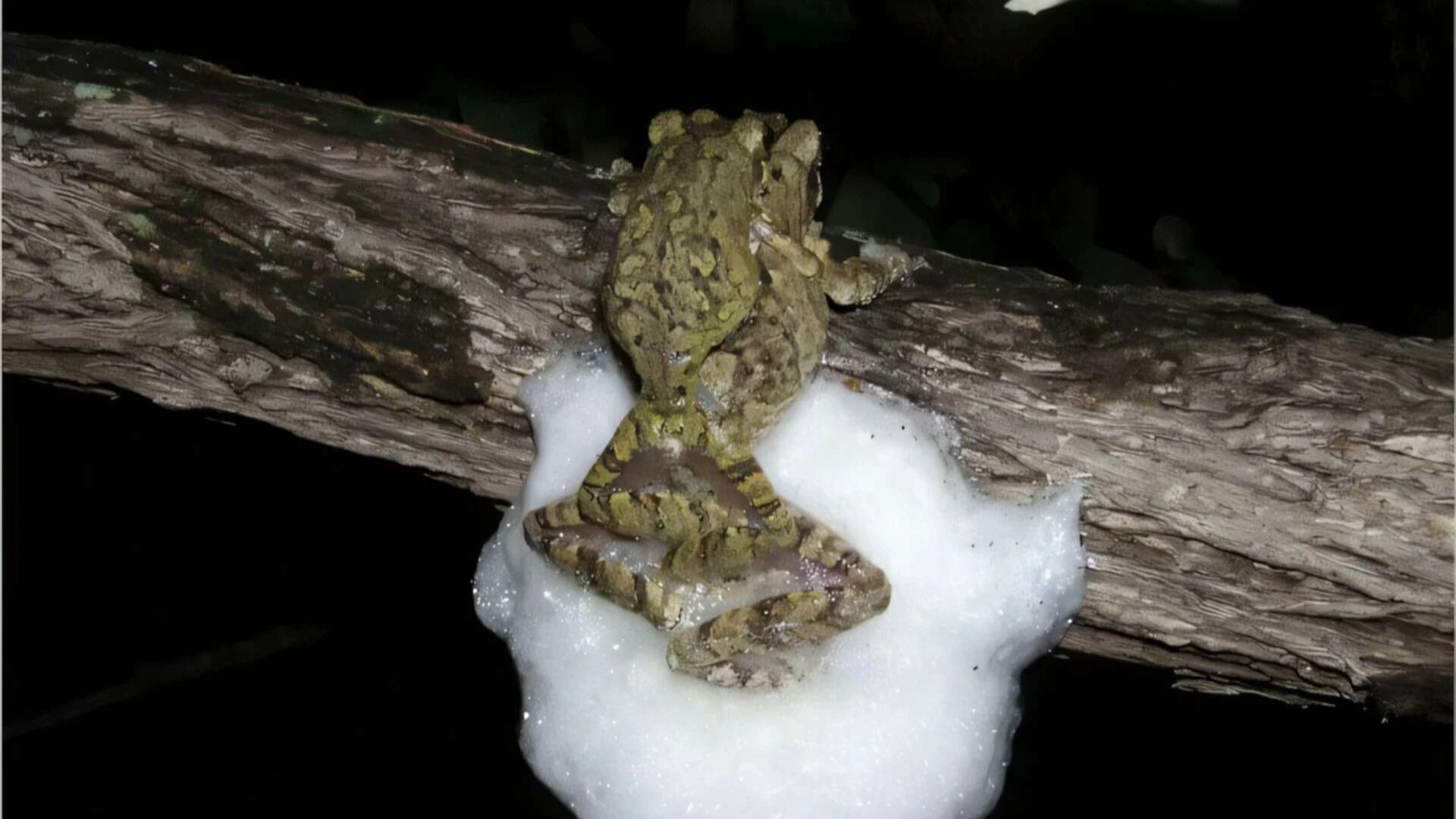
Female African treefrogs mate with several males simultaneously; together they whip up...
Summarized and contextualized by DistantNews.
At a glance
In-depth
Sources not specified
Context piece
- Female African treefrogs mate with multiple males simultaneously to build larger foam nests.
- This behavior supports the "nesting-assistance hypothesis," suggesting males help protect eggs.
- Nests built with multiple males provide better protection against drying out, significantly increasing tadpole survival rates.
In a fascinating display of cooperation, female African treefrogs engage in simultaneous mating with multiple males, a behavior that directly contributes to building larger, more protective foam nests. This strategy offers a compelling explanation for why females in many species choose multiple partners, according to new research.
The study introduces the "nesting-assistance hypothesis," proposing that additional male partners actively help construct better nests, thereby enhancing the survival prospects of tadpoles. Researchers observed African gray foam-nest treefrogs (Chiromantis xerampelina) over a full breeding season, finding a direct correlation between male assistance and nest quality.
During the hot, rainy nights of southeastern Africa's summer, females construct nests by whipping a mixture of fluid and water into a thick foam using their hind legs. This process takes several hours and requires fertilization from male partners throughout. While some females mate with a single male, most attract several, with groups of 10 to 15 males being common. These males don't just fertilize eggs; they actively participate in whipping the foam alongside the female, increasing the nest's size and stability.
The larger nests are crucial for protecting hundreds of eggs from drying out in the intense heat for nearly a week until the tadpoles hatch. Nests built by a single pair were found to be small and often dried out before hatching. In contrast, nests constructed with the help of multiple males retained moisture longer, ensuring the tadpoles' survival. In return for their labor, these males gain a share in fathering the offspring, making this cooperative breeding strategy a winning formula.
DistantNews Editorial
Originally published by Times of India. Summarized and contextualized by our editorial team with added local perspective. Read our editorial standards.
More Stories


From Our Blog

What Press Freedom Means for the News You Read

What Gets Lost (and Found) When News Is Translated

The Critical Role of Diaspora Media in Global News

What Travellers Should Know About Countries with Restricted Press

A Digital Nomad's Guide to Following Local News
