

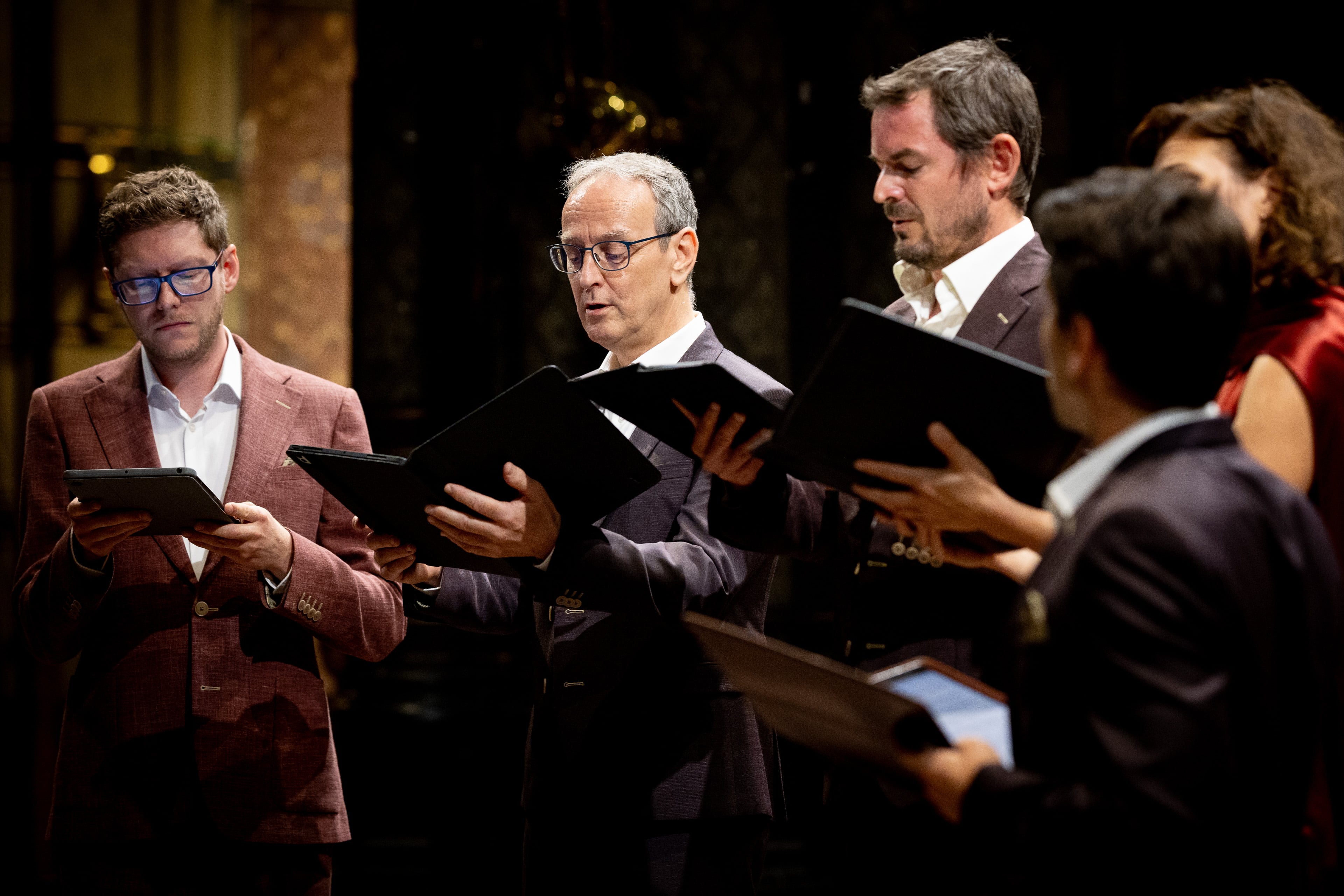
 Image: Johan Beckers (EL PAÍS)
Festival 'Laus Polyphoniae' Echoes Distant Voices of Past Eras
Translated from Spanish and summarized by DistantNews. Read the original for the full story.
At a glance
In-depth
Sources not specified
Context piece
- The 'Laus Polyphoniae' festival in Antwerp celebrates Renaissance polyphony, exploring diverse vocal techniques and lesser-known composers.
- This year's festival focuses on the transitional period around 1600, highlighting shifts in compositional style and performance practices.
- Featured composers include Richard Dering, Pierre Bonhomme, Estêvão Lopes Morago, and Kryštof Harant, musicians who navigated the transition from the Renaissance to the Baroque era.
The 'Laus Polyphoniae' festival in Antwerp is currently exploring the rich landscape of Renaissance polyphony, offering a platform to hear the human voice in its myriad forms. The festival provides a perfect setting to witness the diverse applications of polyphony, from the number of singers employed to the integration of instruments and the inclusion or exclusion of female voices.
This year's edition has set its chronological horizon around 1600, a pivotal moment of transition not only in compositional style but also in singing techniques and ornamentation. The festival embraces this transitional period, showcasing how composers and performers navigated the shift from the late Renaissance to the early Baroque.
The human voice is only one, but there are multiple ways to use it. Likewise, polyphony can be sung in very diverse ways, and the Laus Polyphoniae festival in Antwerp is the perfect place to verify this.
Beyond showcasing renowned composers like Tomás Luis de Victoria, the festival delves into the works of less familiar musicians. This includes Richard Dering, an English composer who found refuge and published in Brussels and Antwerp due to religious persecution; Pierre Bonhomme, a choirmaster from Liège; Estêvão Lopes Morago, a Portuguese composer trained in Évora; and Kryštof Harant, a Czech nobleman, soldier, and composer. These figures experienced firsthand the musical evolution of their time.
Many of these composers lived during a period where biographical details were scarce, with the exact birth dates of some remaining uncertain. Festivals like 'Laus Polyphoniae' serve a crucial purpose by expanding musical horizons and introducing audiences to these historically significant yet often overlooked figures, encouraging a deeper understanding and appreciation of early music.
This should be at least one of the purposes that give a festival reason to be: to invite not to hear the usual, but to broaden horizons, to enlarge our musical maps, assuming the risks that this entails.
About this summary
Originally published by El País in Spanish. Translated, summarized, and contextualized automatically by DistantNews, with a note on how the source frames the story. Not individually reviewed before publishing. How this works.
More Stories


From Our Blog

What Gets Lost (and Found) When News Is Translated

The Critical Role of Diaspora Media in Global News

What Travellers Should Know About Countries with Restricted Press

A Digital Nomad's Guide to Following Local News

How the Same Story Looks Different in Different Countries
