


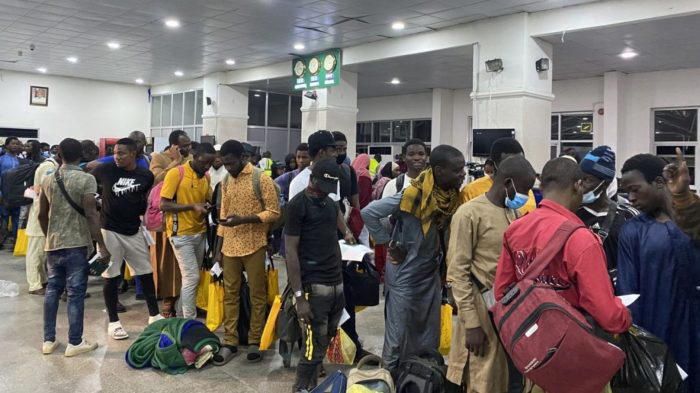
FG to engage South Africa over compensation for returning Nigerians
Summarized and contextualized by DistantNews.
At a glance
News
Named sources
Context piece
- Nigeria's Federal Government will seek compensation from South Africa for Nigerians forced to abandon businesses and properties due to anti-immigrant tensions.
- The Acting Nigerian High Commissioner stated that records of lost assets are being compiled for discussions with South African authorities.
- The government also aims to address claims that many Nigerians in South Africa are undocumented, attributing issues to delays in processing legal immigration documents.
The Nigerian Federal Government plans to engage South Africa to secure compensation for its citizens who lost businesses and valuable properties while returning home amid renewed anti-immigrant tensions. Alexander Ajayi, the Acting Nigerian High Commissioner to South Africa, announced this on Tuesday during a television appearance as another group of Nigerians was expected to arrive in Lagos.
In terms of the businesses, just three days ago, myself and the South African Deputy Minister of Finance were together and we were discussing this. I took up the discussion with her and we have agreed that we are going to ask our people who are returning to begin to document what they are leaving behind, and that was the message yesterday before this set that is due to land in Lagos.
Ajayi explained that the Nigerian government is compiling records of businesses and properties left behind by returning nationals. This documentation will serve as the basis for discussions with South African authorities regarding potential compensation. He noted that this process is a critical next step following the voluntary evacuation program.
I have asked them before they left yesterday to document very accurately those things they were leaving behind in terms of businesses, in terms of even cars, movable and immovable properties. We can now take it up with the South African government. That is the next step we are going to take.
"I have asked them before they left yesterday to document very accurately those things they were leaving behind in terms of businesses, in terms of even cars, movable and immovable properties," Ajayi stated. "We can now take it up with the South African government. That is the next step we are going to take."
So, this repatriation will not end with just taking people to Nigeria. We are going to systematically follow up on the information given to us, and I told them to be very accurate with what they are going to give because we are going to work with the South African government to get to the exact locations of all these businesses, shops and properties and present them to the South African government for possible compensation because we will not allow the labour people have suffered to build over the years to just go down the drain or be taken over by people.
He emphasized that the repatriation efforts would be followed by systematic follow-ups to ensure the labor and investments of Nigerians are not lost or taken over. Ajayi also addressed claims about undocumented Nigerians in South Africa, asserting that most entered legally. He attributed the situation to systemic delays in processing immigration documents by the South African Home Office, which has left many foreign nationals in a state of limbo despite their initial legal entry.
In the last three or four years there have been a deluge of applications at the South African Home Office which were not attended to due to systemic issues. So, because of this many, not only Nigerian nationals, were caught in this web of delay, so you cannot rightly claim that these were undocumented because most of them came to the country legally in terms of how somebody should migrate.
DistantNews Editorial
Originally published by Vanguard. Summarized and contextualized by our editorial team with added local perspective. Read our editorial standards.
More Stories


From Our Blog

How the Same Story Looks Different in Different Countries

What Gets Lost (and Found) When News Is Translated

The Critical Role of Diaspora Media in Global News

What Travellers Should Know About Countries with Restricted Press

A Digital Nomad's Guide to Following Local News
