


Fiber-to-the-Home Internet Still Fails to Become a Hit in Germany
Translated from German and summarized by DistantNews. Read the original for the full story.
At a glance
Newswire
From a news agency
Context piece
- Fiber-optic lines passed 28.7 million German households and businesses in June, but only 7.9 million had activated fiber service.
- The 27.5% take-up rate remained close to the previous year’s level, with price, adequate VDSL service and landlord resistance cited as possible factors.
- The industry faces high construction costs and investor concerns while providers debate when Germany should shut down DSL networks.
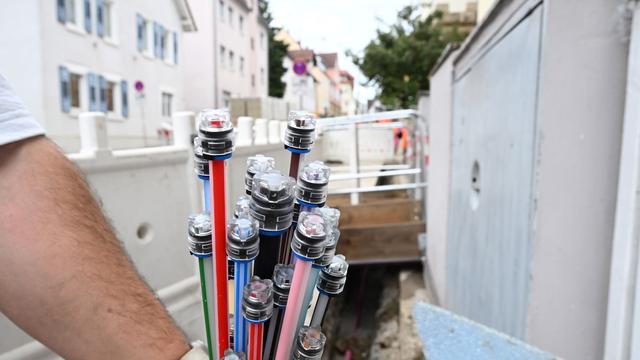
Germany is laying fiber-optic cable at an expanding pace, but most households and businesses are not signing up. An analysis by consultancy IW Consult, commissioned by broadband association Breko, put the take-up rate at just 27.5 percent in June, roughly unchanged from a year earlier.
Fiber had reached the streets outside 28.7 million households and businesses, a measure known as “Homes Passed.” Yet only 7.9 million had activated a fiber connection and signed an FTTH contract. In mid-2025, the corresponding figures were 24.3 million homes passed and 6.6 million activated.
Fiber is perhaps a touch more expensive.
Not everyone without a contract is rejecting fiber. Some tenants want the service but cannot obtain it because their landlords refuse. Price may also be a factor. Breko President Norbert Westfal said fiber might be “a touch more expensive,” although he described its quality and capacity as better and its price as reasonable compared with copper-based DSL and VDSL.
Germany has a relatively capable VDSL network.
Existing VDSL connections may also be good enough for many users. Breko Managing Director Stephan Albers said Germany has a relatively capable VDSL network compared with other European countries. He nevertheless sees rising demand for bandwidth as people use artificial-intelligence applications, work from home and seek broader digital participation.
The industry is under pressure from weak demand, high rollout costs, investor skepticism and tight budgets. Companies such as Deutsche Glasfaser have lowered their expansion targets. Breko wants a mandatory process ending with the shutdown of Germany’s final DSL lines by 2035, while Deutsche Telekom wants to decide itself whether and when to switch off the technology.
People and businesses want more bandwidth, and that is increasingly a criterion.
About this summary
Originally published by Die Zeit in German. Translated, summarized, and contextualized automatically by DistantNews, with a note on how the source frames the story. Not individually reviewed before publishing. How this works.
More Stories



From Our Blog

What Gets Lost (and Found) When News Is Translated

How the Same Story Looks Different in Different Countries

The Critical Role of Diaspora Media in Global News

What Travellers Should Know About Countries with Restricted Press

A Digital Nomad's Guide to Following Local News
