


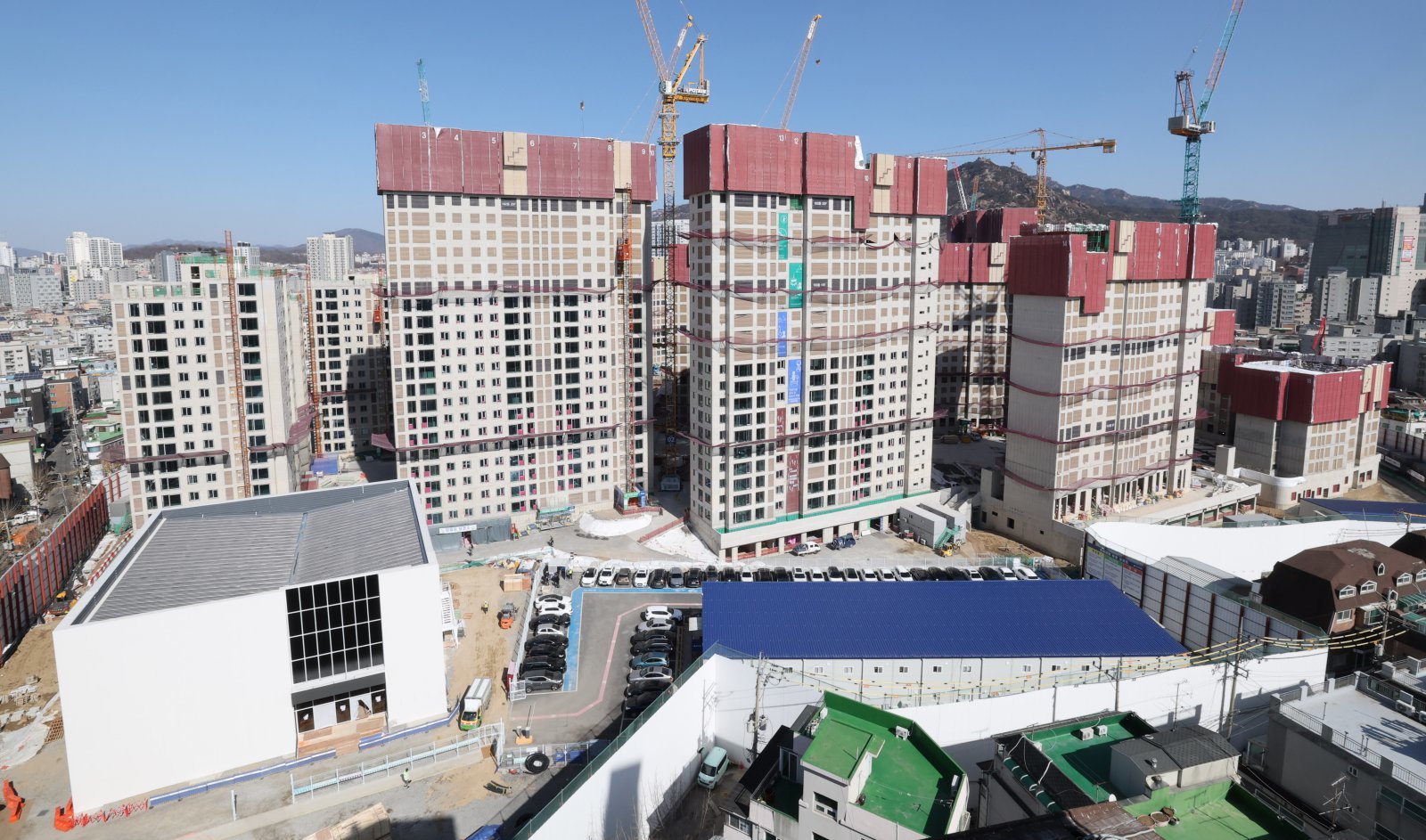
Financial sector's PF loan delinquency rate hits 10-year high amid rising default concerns
Translated from Korean, summarized and contextualized by DistantNews.
At a glance
News
Official statement
Context piece
- South Korean financial institutions are experiencing their highest real estate project financing (PF) loan delinquency rates in a decade.
- Despite a decrease in overall PF loan balances, the amount of loans with "significant" or "high-risk" classifications has increased.
- Efforts to resolve or restructure distressed PF projects have slowed considerably this year.
South Korea's financial sector is grappling with a surge in overdue real estate project financing (PF) loans, reaching levels not seen in approximately ten years. The delinquency rate for PF loans across financial institutions climbed to 4.65% by the end of the first quarter of 2024, a notable increase from 3.88% at the close of 2023. This marks the highest point since the third quarter of 2016, when the rate stood at 4.95%.
The situation is particularly acute for securities firms, where the PF loan delinquency rate soared to 30.43% in the first quarter, up from 28.38% in the previous quarter. Within this segment, bridge loans saw a delinquency rate of 46.93%, while the main PF loans were at 23.18%. Banks also experienced a rise, with their PF delinquency rate hitting 1.32%, the highest since late 2017. Insurance companies saw their rate increase to 2.27%, a level not observed in over a decade. Other financial entities like mutual finance companies and savings banks also reported escalating delinquency rates.
Compounding these concerns, while the overall PF loan balance has been shrinking, decreasing by 18.7 trillion won over the past two years to 115.5 trillion won by the first quarter of 2024, the volume of loans classified as "significant" or "high-risk" has paradoxically grown. These high-risk exposures increased by 1.7 trillion won to 16.4 trillion won in the first quarter of 2024, reversing a downward trend seen in the latter half of last year.
Furthermore, the pace of resolving or restructuring distressed PF projects has dramatically slowed. In the first quarter of 2024, the volume of such activities plummeted to 400 billion won, a sharp decline from 2 trillion won in the fourth quarter of 2023 and 3.8 trillion won in the third quarter. Financial authorities attribute this slowdown to a reduced number of distressed projects and seasonal factors, while policymakers are planning new funds and credit expansions to support normalization efforts.
DistantNews Editorial
Originally published by Dong-A Ilbo in Korean. Translated, summarized, and contextualized by our editorial team with added local perspective. Read our editorial standards.
More Stories


From Our Blog

What Gets Lost (and Found) When News Is Translated

The Critical Role of Diaspora Media in Global News

What Travellers Should Know About Countries with Restricted Press

A Digital Nomad's Guide to Following Local News

How the Same Story Looks Different in Different Countries
