


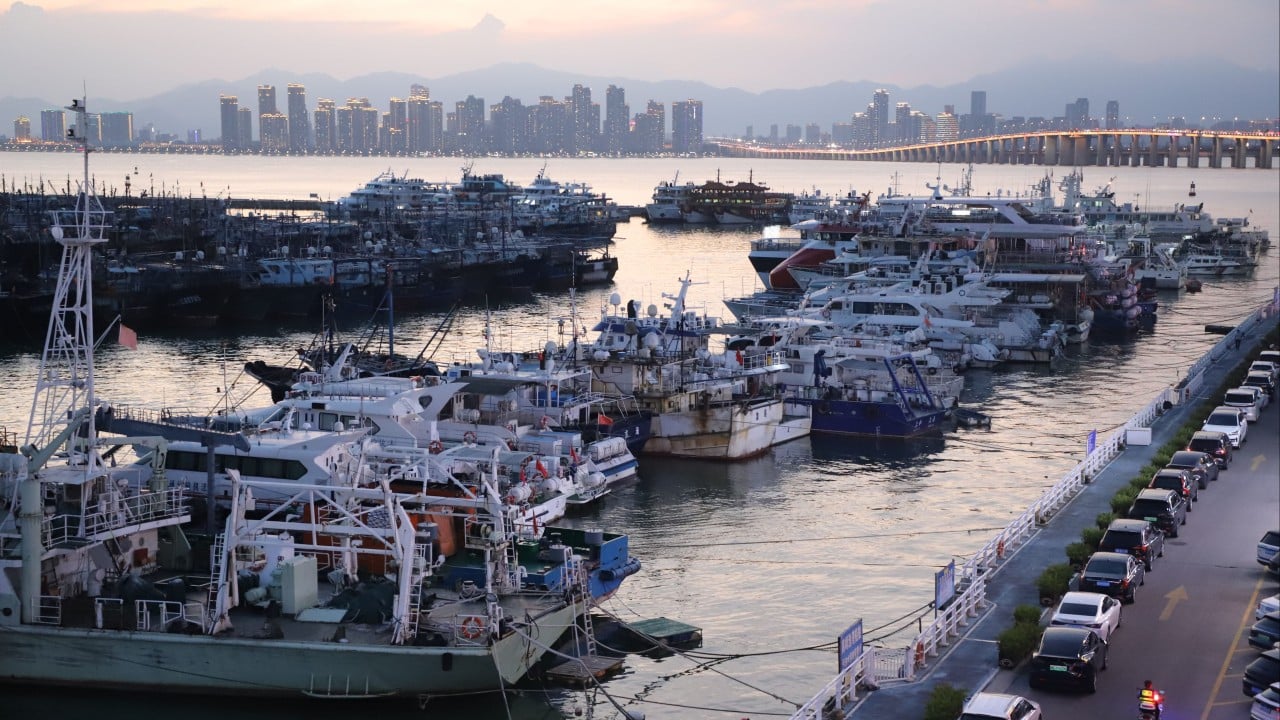
Flights disrupted as ex-Super Typhoon Bavi nears China's coast
Translated from English, summarized and contextualized by DistantNews.
At a glance
News
Sources not specified
Ongoing story
- Flights are being canceled and airlines are offering refunds as Typhoon Bavi weakens and approaches China's coast.
- The typhoon is expected to make landfall between Fujian and Zhejiang provinces.
- Authorities have issued an orange alert, anticipating heavy rainfall across Taiwan and China.
China's eastern coast is bracing for the arrival of Typhoon Bavi, which has weakened from its super typhoon status but continues to pose a threat. Flight disruptions are already widespread, with cancellations reported at numerous airports and airlines activating special assistance channels for rebooking and refunds.
Flights have been cancelled and airlines are offering refunds in at least 10 airports, as a weakened Typhoon Bavi nears China’s coast, where it is expected to land between Fuqing in Fujian province and Wenling in Zhejiang.
Zhoushan airport in Zhejiang province has canceled 14 flights, while Wenzhou has seen 17 inbound flights grounded. Major carriers, including Air China, China Southern Airlines, China Eastern Airlines, and Hainan Airlines, are providing fee-waiver options for passengers affected by the storm's path.
The National Meteorological Center downgraded Bavi to "severe typhoon" status on Friday, noting that winds at its center have decreased to 45 meters per second. Despite the weakening, the storm is still projected to make landfall between Fuqing in Fujian province and Wenling in Zhejiang province.
Bavi has weakened to “severe typhoon” status, with winds at its centre dropping to 45 metres per second as it continues towards China’s coast.
An orange alert, the second-highest level in China's four-tier warning system, remains in effect. Forecasters predict that Bavi will bring heavy rainfall over the next 24 hours to both Taiwan and mainland China, adding to the potential impact of the storm.
The forecaster maintained an orange alert, the second-highest in a four-tier system.
DistantNews Editorial
Originally published by South China Morning Post in English. Translated, summarized, and contextualized by our editorial team with added local perspective. Read our editorial standards.
More Stories


From Our Blog

Countries Without a Free Press: What You Need to Know

What Press Freedom Means for the News You Read

What Gets Lost (and Found) When News Is Translated

The Critical Role of Diaspora Media in Global News

What Travellers Should Know About Countries with Restricted Press
