


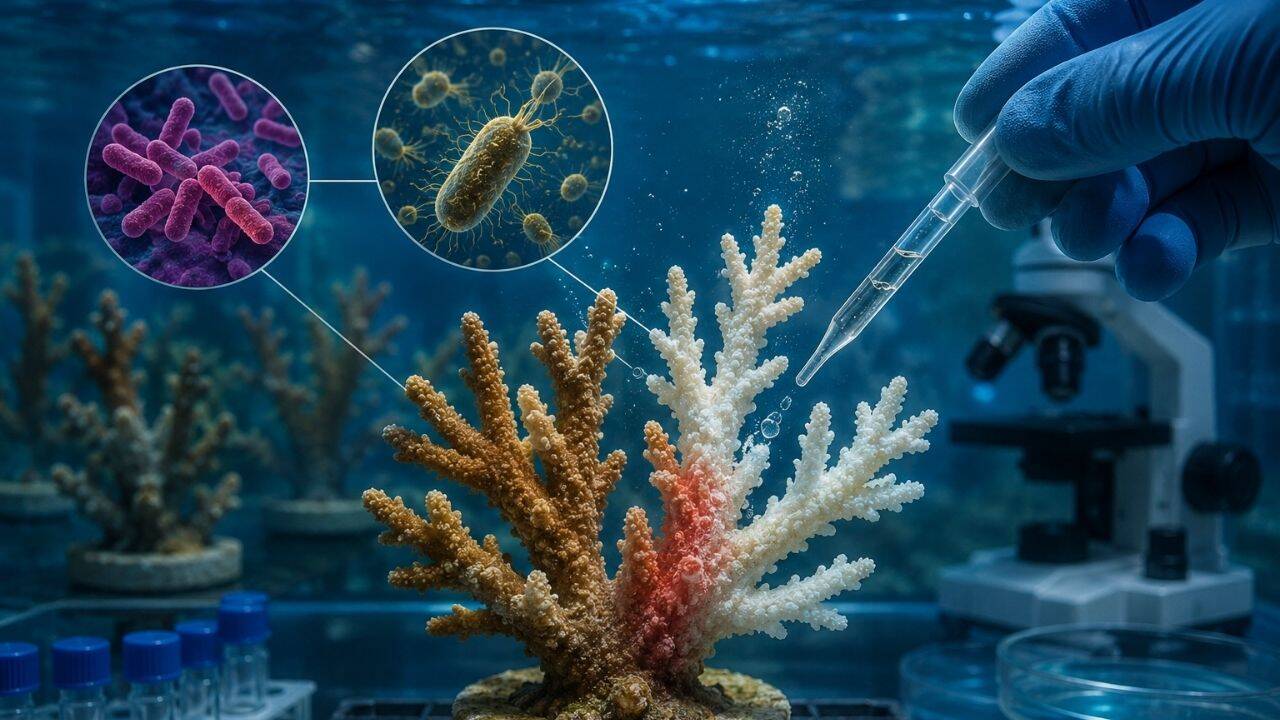
Florida tests expose corals to predatory bacteria; over half resist disease spread
Translated from English, summarized and contextualized by DistantNews.
At a glance
News
Documents & data
New plan
- Researchers in Florida tested a novel method using predatory bacteria to combat disease in endangered Caribbean corals.
- Approximately 57% of treated coral fragments resisted the spread of a harmful bacterium, showing the potential of beneficial microbes.
- This approach, detailed in The ISME Journal, aims to control coral diseases without disrupting the delicate balance of their natural microbial communities.
In a promising development for coral reef conservation, researchers in Florida have explored an innovative approach to combat bacterial diseases threatening endangered Caribbean corals. Instead of antibiotics, which can harm beneficial microbes, scientists tested the use of naturally occurring predatory bacteria to prey on disease-causing pathogens.
The study, published in The ISME Journal, focused on staghorn coral (Acropora cervicornis), a critically endangered species. Researchers in laboratory settings exposed healthy coral fragments to Vibrio coralliilyticus, a bacterium known to infect corals, especially in warmer waters. Subsequently, some fragments were treated with Halobacteriovorax, a marine bacterium that hunts and consumes other bacteria.
Results indicated that about 57% of the coral fragments treated with Halobacteriovorax showed limited bleaching, confined to the initial infection site. This suggests the predatory bacteria effectively controlled the spread of the harmful pathogen. In contrast, untreated infected corals exhibited more extensive tissue damage and bleaching, highlighting the rapid progression of the disease when unchecked.
Crucially, the predatory bacteria significantly reduced the population of Vibrio coralliilyticus while largely leaving the coral's natural microbiome undisturbed. This targeted approach offers a potential advantage over traditional antibiotics, which often eliminate both harmful and beneficial microbes, thus disrupting the delicate microbial balance essential for coral health, nutrient absorption, and stress recovery.
DistantNews Editorial
Originally published by Times of India in English. Translated, summarized, and contextualized by our editorial team with added local perspective. Read our editorial standards.
More Stories



From Our Blog

What Press Freedom Means for the News You Read

What Gets Lost (and Found) When News Is Translated

The Critical Role of Diaspora Media in Global News

What Travellers Should Know About Countries with Restricted Press

A Digital Nomad's Guide to Following Local News
