


Flying Squid Nominated for Invertebrate of the Year in UK
Translated from Finnish, summarized and contextualized by DistantNews.
At a glance
In-depth
Sources not specified
Context piece
- A British newspaper has nominated the flying squid for invertebrate of the year.
- Flying squid can leap from the water and glide for dozens of meters using their fins and tentacles.
- These cephalopods likely use their aerial abilities to escape predators.
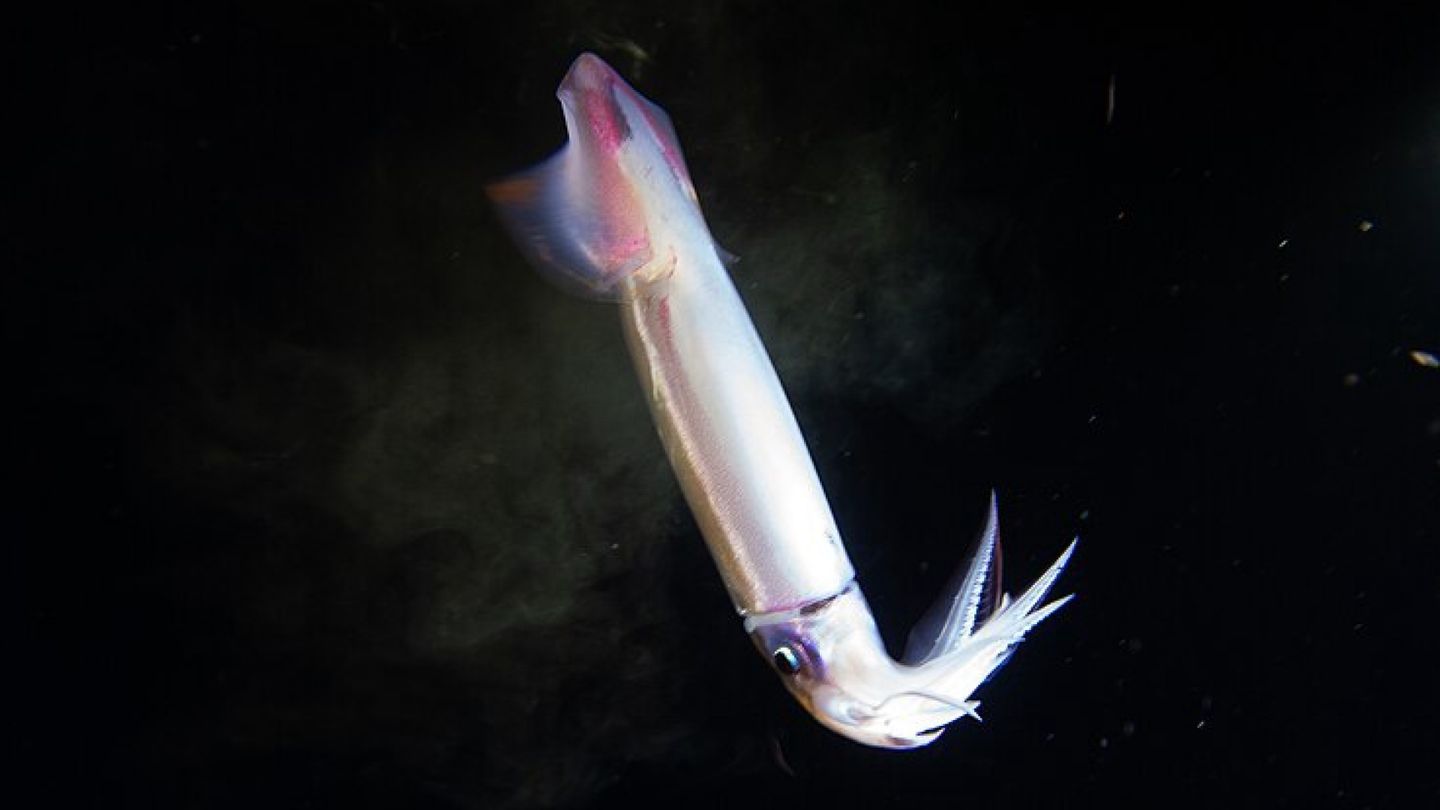
While many are familiar with the flying fish, the existence of a flying squid might be less known. These remarkable cephalopods, specifically the "liitokalmarit," possess the ability to propel themselves out of the water and glide for considerable distances, using their fins and tentacles to control and extend their flight.
Flying squid are capable of leaping out of the sea and flying for tens of meters. They can even control and extend their glide with their fins and tentacles.
The British newspaper The Guardian recently highlighted these creatures, putting the flying squid forward as a candidate for invertebrate of the year. This nomination recognizes the squid as a particularly agile mollusk, a fact that seafarers have apparently known for centuries.
Capturing photographic evidence of these elusive creatures in action has been rare due to the unpredictable nature of their aerial displays. However, Japanese researchers managed to document an entire swarm of these squids in flight fifteen years ago. While sailing east of Tokyo in the Pacific Ocean, they observed about a hundred squids leaping from the water, possibly startled by the ship's waves.
The flying squid is a candidate for invertebrate of the year in the newspaper.
These flying squids are typically small, around twenty centimeters long, and numerous species exist. Scientists have investigated their unique mode of flight. The squid utilizes a jet propulsion system, drawing water into its mantle and expelling it through a siphon. This powerful expulsion allows them to launch into the air at speeds of up to 11 meters per second, or about 40 kilometers per hour, enabling glides of up to 30 meters. During flight, they spread their tentacles and fins to maximize lift, streamlining their bodies upon re-entry into the water.
Sailors have known about the existence of flying squid for centuries.
It is believed that this gliding ability serves as a defense mechanism against predators. Some speculate that they might also leap for enjoyment during long swims. So, if a pub quiz asks for the world's only flying mollusk, the answer is now known.
Japanese researchers managed to prove an entire swarm of squids in the air fifteen years ago.
DistantNews Editorial
Originally published by Helsingin Sanomat in Finnish. Translated, summarized, and contextualized by our editorial team with added local perspective. Read our editorial standards.
More Stories



From Our Blog

What Gets Lost (and Found) When News Is Translated

The Critical Role of Diaspora Media in Global News

What Travellers Should Know About Countries with Restricted Press

A Digital Nomad's Guide to Following Local News

How the Same Story Looks Different in Different Countries
