


Following the elephant's footsteps: The race to save the last domesticated elephants in Dak Lak
Translated from Vietnamese, summarized and contextualized by DistantNews.
At a glance
In-depth
Sources not specified
Context piece
- The population of domesticated elephants in Vietnam's Dak Lak province is declining due to aging and environmental factors.
- Several recent deaths of older elephants, including a 44-year-old male and a female who was domesticated in 1974, highlight the growing risk to the wild elephant population.
- Conservation efforts face challenges as most remaining elephants are between 40-50 years old, impacting their health, reproductive capabilities, and the success of breeding programs, with multiple past attempts at successful births ending in tragedy.
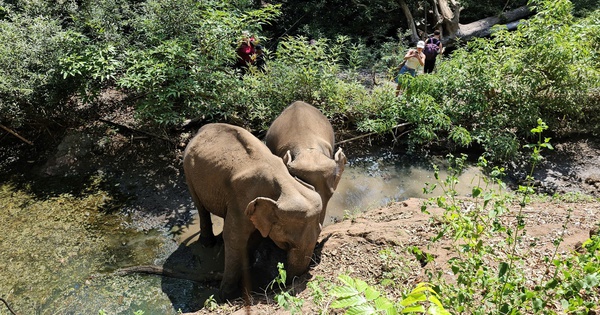
The dwindling population of domesticated elephants in Vietnam's Dak Lak province faces an increasingly precarious future, with aging herds and environmental pressures accelerating their decline. Recent months have seen the loss of several key individuals, including P Lăng, a 44-year-old male elephant weighing 4.6 tons, who died unexpectedly at the Dak Lak Elephant Conservation Center. Prior to this, in 2024, Bắk Khăm, a female elephant domesticated since 1974, perished after an incident while foraging in the forest.
Conservationists are grappling with the reality that the majority of the province's domesticated elephants are now between 40 and 50 years old. This advanced age brings with it a heightened risk of illness, declining health, and reduced reproductive capacity, posing significant challenges to efforts aimed at preserving this unique population. The Dak Lak Elephant Conservation Center, located near Yok Don National Park, currently cares for many of the province's remaining domesticated elephants, where staff meticulously monitor their condition in hopes of finding a path toward population recovery.
Dak Lak has experienced numerous setbacks in its attempts to successfully breed domesticated elephants. Despite the involvement of domestic and international experts, three female elephants have carried pregnancies to term, only for each to end in heartbreaking loss. These failures underscore the complex biological hurdles involved in elephant reproduction, particularly with older animals.
The uterine canal of elephants has a very special structure, it is a curved and reversed path. Mothers like Ban Nang or Bắc On were over 40 years old but giving birth for the first time. The ability to push, to expand the uterus of old elephants is no longer strong enough to be decisive, causing the calf to get stuck and suffocate inside.
Cao Đăng Quân, head of the elephant team and a veterinarian who has cared for the herd since 2017, recounted the difficult cases. In October 2017, Ban Nang, an elephant over 40, went into labor after researchers studied her reproductive cycle with Dutch specialists. Despite the calf developing fully without deformities, it died from suffocation during birth. Similar tragic outcomes occurred in December 2019 and February 2020 with elephants Bắc On and Bắk Khăm, whose calves did not survive. Quân explained that the unique, reversed structure of an elephant's birth canal, combined with the reduced strength and flexibility of older mothers, can lead to complications where the calf becomes stuck and suffocates. Post-mortem examinations revealed the calves were physically perfect, with the sole cause of death attributed to the mother's age.
In late 2025, the center received two female elephants, both around 40 years old, from Đồng Nai province, offering a glimmer of hope for potential reproduction. Staff are closely monitoring their health and collecting weekly samples to screen for potential diseases that could impact their well-being. The dedicated efforts of the conservation team continue, driven by the urgent need to safeguard the future of Dak Lak's last domesticated elephants.
Post-mortem examinations of all calves were perfect, the only flaw was that the mother was past the breeding age.
DistantNews Editorial
Originally published by Thanh Niên in Vietnamese. Translated, summarized, and contextualized by our editorial team with added local perspective. Read our editorial standards.
More Stories


From Our Blog

What Gets Lost (and Found) When News Is Translated

The Critical Role of Diaspora Media in Global News

What Travellers Should Know About Countries with Restricted Press

A Digital Nomad's Guide to Following Local News

How the Same Story Looks Different in Different Countries
