


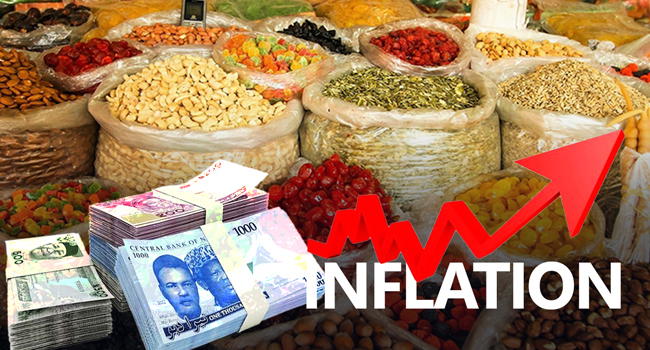
Food inflation still rising despite drop in headline rate
Summarized and contextualized by DistantNews.
At a glance
News
Documents & data
Context piece
- Nigeria's headline inflation rate slightly decreased to 15.91 percent in June 2026, down from 15.93 percent in May.
- Despite the overall slowdown, food inflation increased to 17.52 percent year-on-year in June, driven by rising prices of essential food items.
- The National Bureau of Statistics report highlights regional variations in food inflation, with Kogi, Niger, and Benue experiencing the highest increases.
Nigeria's headline inflation rate saw a marginal decrease in June 2026, inching down by 0.02 percentage points to 15.91 percent from 15.93 percent in May. This slight moderation follows three consecutive months of rising inflation, offering a small reprieve to consumers. The core inflation basket also contributed to this slowdown, decreasing by 0.9 percent month-on-month.
In June 2026, the headline inflation rate was 15.91 percent, down from 15.93 percent in May 2026 and stood at 25.29 percent in the same month of the preceding year (June 2025).
However, the relief is tempered by a persistent rise in food inflation. The food index climbed 0.56 percentage points to 17.52 percent year-on-year in June, up from 16.96 percent in May. This increase is attributed to higher average prices for a range of items, including crayfish, pepper, tomatoes, and various yam and cassava products.
On a month-on-month basis, the headline inflation rate in June 2026 was 1.66 percent, which was 0.09 percent lower than the rate recorded in May 2026 (1.75 percent).
On a month-on-month basis, food inflation saw a more significant jump, rising by 0.77 percentage points to 3.75 percent in June from 2.98 percent in May. This indicates a faster pace of price increases for food items within the month.
The Food inflation rate in June 2026 was 17.52 percent on a year-on-year basis and stood at 25.41 percent in the same month of the preceding year (June 2025).
The National Bureau of Statistics (NBS) report also detailed significant regional disparities. Year-on-year food inflation was highest in Kogi (53.02 percent), Niger (43.83 percent), and Benue (40.83 percent). Conversely, Katsina, Rivers, and Imo recorded the slowest year-on-year increases. Month-on-month, Katsina, Kebbi, and Niger experienced the highest food inflation rates, while Borno, Benue, and Bayelsa saw the slowest rises.
On a Month-on-Month basis, however, June 2026 food inflation was highest in Katsina (16.82 percent), Kebbi (9.79 percent) and Niger (8.96 percent), while Borno (-3.54 percent), Benue (-2.36 percent), and Bayelsa (-1.34 percent) recorded the slowest rise in Food inflation on a Month-on-Month basis
DistantNews Editorial
Originally published by Vanguard. Summarized and contextualized by our editorial team with added local perspective. Read our editorial standards.
More Stories


From Our Blog

How the Same Story Looks Different in Different Countries

What Gets Lost (and Found) When News Is Translated

The Critical Role of Diaspora Media in Global News

What Travellers Should Know About Countries with Restricted Press

A Digital Nomad's Guide to Following Local News
