

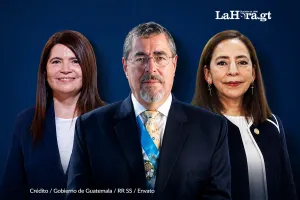

Foreign Minister Hopes New Prosecutor Will End Political Persecution
Translated from Spanish and summarized by DistantNews. Read the original for the full story.
At a glance
News
Named sources
Context piece
- Guatemalan Foreign Minister Carlos Martínez expressed hope that the new Attorney General will resolve cases involving political persecution.
- Martínez specifically mentioned the cases of Chaclán, Pacheco, and Zamora, suggesting they have been unjustly detained and that the new prosecutor will help restore justice.
- The new Attorney General, who replaces a U.S.-sanctioned predecessor, faces the challenge of cleaning up the justice system and addressing political persecution against journalists and indigenous leaders.
Guatemalan Foreign Minister Carlos Martínez has voiced strong optimism regarding the appointment of the new Attorney General, signaling a potential turning point in the nation's struggle against political persecution and judicial irregularities. Speaking at an EFE-Casa de América forum in Madrid, Martínez explicitly referenced the cases of indigenous leaders Chaclán and Pacheco, expressing confidence that the incoming prosecutor will bring about a swift resolution and potentially restore their freedom. This sentiment underscores a widely held belief within Guatemala that the judicial system has been marred by bias and undue influence in recent years.
I have hope and confidence that with the new prosecutor, these types of cases will be completely cleared up, that they can regain their freedom, because we see that within the Guatemalan judicial system there are evidently preferences.
Martínez's remarks highlight the systemic issues plaguing Guatemala's public ministry, which he believes have deviated from their intended function. He emphasized that the new Attorney General's mandate includes rectifying these perceived injustices, particularly concerning emblematic cases like those of Chaclán, Pacheco, and Zamora. The minister's assertion that these individuals, despite opportunities to flee, chose to remain and face their legal battles, speaks volumes about their commitment and the perceived lack of substantive evidence against them. The focus on these cases is seen as crucial for rebuilding public trust in the administration of justice.
I do not doubt that there are people who do not want him to arrive. It is evident, but what I believe is that he is going to re-establish an order with a way of how the Public Ministry worked that has been lost in recent years. And that goes through these cases that are emblematic.
Furthermore, the appointment comes at a critical juncture, with the new Attorney General set to succeed Consuelo Porras Argueta, an official previously sanctioned by the U.S. and the EU for alleged corruption. This transition presents a significant opportunity for reform. Martínez acknowledged the challenges ahead, including potential resistance from those who benefit from the status quo, but stressed the necessity of a thorough 'purification' of key positions within the ministry. He described this not as a 'witch hunt' but as a fundamental step to dismantle entrenched structures that have undermined justice over the past eight years. The initial period under the new leadership is anticipated to be the most demanding, but the ultimate goal is to restore a semblance of order and fairness to Guatemala's judicial processes, ensuring that investigations are conducted rigorously and cases are prosecuted based on merit rather than political expediency. The minister also touched upon the contentious issue of Cuban medical brigades, admitting U.S. pressure regarding their presence, a matter that Guatemala has decided to discontinue.
I believe there is a debt with them, with them as leaders, with them as the head of a movement (...) that was a special moment of pressure around what was considered electoral fraud that the Public Ministry does not stop pointing out.
About this summary
Originally published by Prensa Libre in Spanish. Translated, summarized, and contextualized automatically by DistantNews, with a note on how the source frames the story. Not individually reviewed before publishing. How this works.
More Stories

From Our Blog

News in Translation: What Gets Lost, and How We Keep the Framing

Diaspora Media: How Communities Abroad Follow Home

Traveling Where the Press Is Not Free: How to Read the News There

The Digital Nomad's Guide to Local News

The Same Story, Different Countries: How Coverage Changes at the Border
