

Foreign seasonal workers crucial for Saxony-Anhalt's agriculture amid declining domestic workforce
Translated from German, summarized and contextualized by DistantNews.
At a glance
News
Sources not specified
Context piece
- The number of foreign seasonal workers in Saxony-Anhalt's agricultural sector has more than doubled since 2015.
- This increase contrasts with a significant decline in domestic agricultural workers, down 19 percent over the past decade.
- Farms increasingly rely on foreign labor, primarily from Poland and Romania, to meet harvest demands due to a shrinking domestic workforce and rising wages in origin countries.
Farms in Germany's Saxony-Anhalt state are increasingly dependent on foreign seasonal workers to manage harvests, as the number of domestic agricultural laborers continues to decline. The region's agricultural sector saw a significant drop in German workers, decreasing by 28 percent over the last decade to approximately 10,270.
In contrast, the number of foreign employees in agriculture has more than doubled since 2015, rising from 708 to 1,889. These workers, predominantly from Poland and Romania, now constitute about 16 percent of all insured agricultural employees in the state. This trend is partly attributed to the agricultural industry's structural changes, with fewer, larger farms relying more on mechanization.
the need for workers can 'no longer be met solely by employees from within the country.'
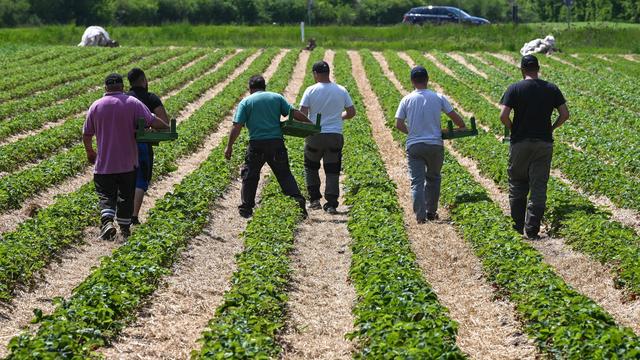
Foreign workers play a crucial role, especially during peak harvest seasons. In June 2025, around 1,070 individuals were employed short-term in agriculture, with over 800 of them being foreign nationals. These short-term positions are limited to 70 days per year and are vital for tasks like harvesting asparagus, strawberries, and cucumbers.
Finding sufficient seasonal staff is becoming more challenging for agricultural businesses. Rising wage levels in countries of origin make working in Germany less financially appealing. Furthermore, farms must invest in adequate accommodation and competitive working conditions to attract and retain these essential workers. Markus Behrens, chairman of the BA regional directorate for Saxony-Anhalt-Thuringia, stated that the labor demand cannot be met solely by domestic workers, highlighting that these seasonal laborers are the "reliable backbone" of the intensive spring and summer months, ensuring domestic produce can be harvested.
Seasonal workers, primarily from Poland and Romania, are therefore 'the reliable backbone' of the labor-intensive spring and summer months and help ensure that domestic food can be harvested.
DistantNews Editorial
Originally published by Die Zeit in German. Translated, summarized, and contextualized by our editorial team with added local perspective. Read our editorial standards.
More Stories

From Our Blog

What Gets Lost (and Found) When News Is Translated

How the Same Story Looks Different in Different Countries

The Critical Role of Diaspora Media in Global News

What Travellers Should Know About Countries with Restricted Press

A Digital Nomad's Guide to Following Local News
