


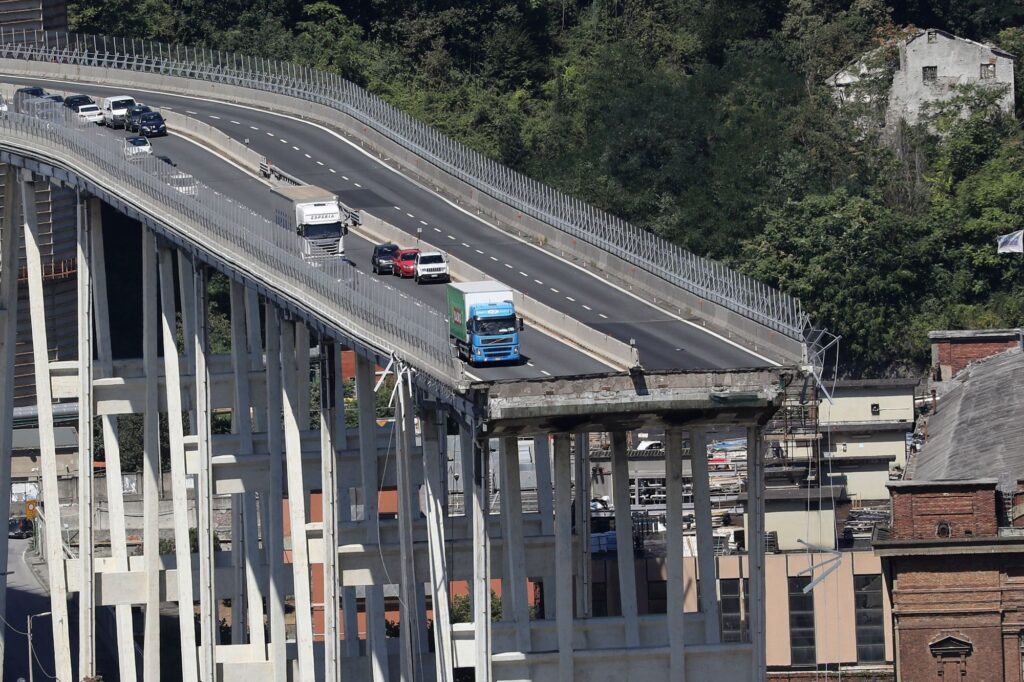
Former Autostrade CEO Sentenced to 12 Years in Genoa Bridge Collapse Trial
Translated from Malay, summarized and contextualized by DistantNews.
At a glance
News
Named sources
Outcome reported
- An Italian court sentenced 32 individuals, including former Autostrade CEO Giovanni Castellucci, for their roles in the 2018 Genoa bridge collapse that killed 43 people.
- Castellucci received a 12-year sentence for causing death by negligence and dereliction of duty related to the Morandi Bridge collapse.
- The court found that essential maintenance work on the bridge had been neglected for decades, contributing to the disaster.
An Italian court has handed down sentences to 32 defendants, including former Autostrade CEO Giovanni Castellucci, for their involvement in the 2018 collapse of the Morandi Bridge in Genoa, which claimed the lives of 43 people. The ruling marks a significant step in holding those responsible accountable for one of Italy's worst infrastructure disasters.
Giovanni Castellucci, the former CEO of the highway operator Autostrade, was found guilty of causing death by negligence and dereliction of duty. He received a 12-year prison sentence. Castellucci is already serving time for his role in a 2013 accident where a bus crash killed 40 people after hitting a viaduct barrier.
The majority of the accused were former executives and technicians from Autostrade per l’Italia (ASPI), the company managing nearly half of Italy's highways, and the engineering firm Spea, which was responsible for the bridge's maintenance. Other convicted individuals include former Spea head Antonino Galata and officials from Italy's Ministry of Infrastructure.
Michele Mitelli, ASPI's maintenance director, was sentenced to 11 years, while the company's deputy head, Paolo Berti, received five years and six months. "Today, we can say that those responsible for the deaths of our family members have finally been identified. We are here for our loved ones and to remember them," said Michele Matti Altadonna, a victim's relative who lost his brother in the tragedy.
Investigations revealed that no essential maintenance was performed on the bridge's supporting cables at pillar number nine between its inauguration in 1967 and its collapse 51 years later. While reinforcement work had been done on pillars 10 and 11, work on pillar nine was still in the planning stages before the structure gave way during peak traffic. Lawyers for the victims' families argued that the collapse was not accidental but preventable. Italy's Deputy Minister of Transport, Edoardo Rixi, called the verdict a crucial step toward truth and justice, stating, "The collapse was not fate, but the result of grave errors and negligence by those responsible for ensuring safety. It is right that those at fault are finally held accountable."
DistantNews Editorial
Originally published by Utusan Malaysia in Malay. Translated, summarized, and contextualized by our editorial team with added local perspective. Read our editorial standards.
More Stories


From Our Blog

What Gets Lost (and Found) When News Is Translated

The Critical Role of Diaspora Media in Global News

What Travellers Should Know About Countries with Restricted Press

A Digital Nomad's Guide to Following Local News

How the Same Story Looks Different in Different Countries
