

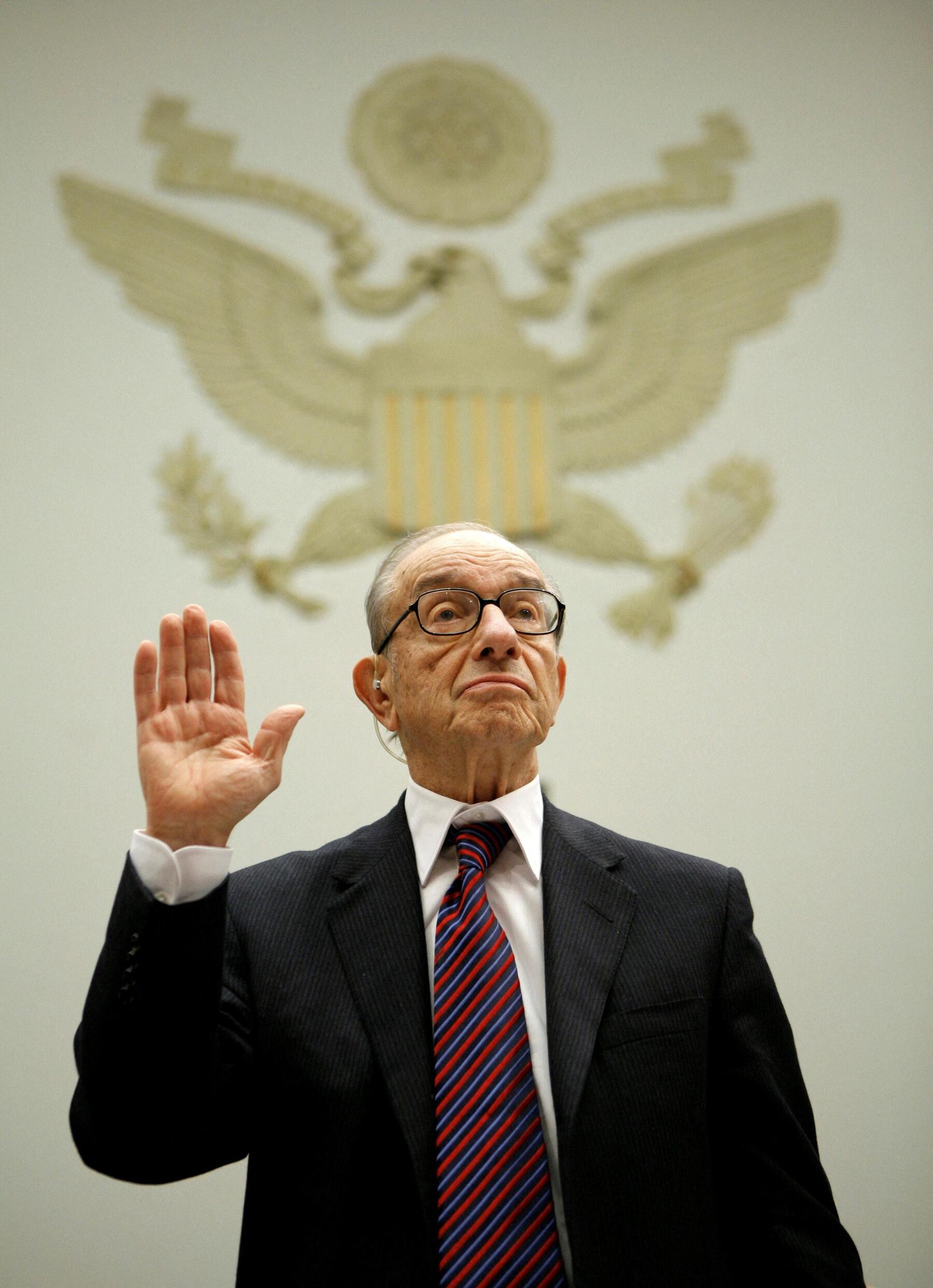
Former Fed Chair Alan Greenspan dies at 100
Translated from German, summarized and contextualized by DistantNews.
At a glance
News
Sources not specified
Outcome reported
- Former U.S. Federal Reserve Chair Alan Greenspan has died at age 100.
- Greenspan led the influential central bank from 1987 to 2006, shaping U.S. economic policy through periods of growth and crisis.
- While initially celebrated for fostering economic expansion, his policies later faced criticism for contributing to speculative bubbles and the 2008 financial crisis.
Alan Greenspan, the former chairman of the U.S. Federal Reserve who guided American economic policy for nearly two decades, has died at the age of 100. Greenspan passed away at his home due to complications from Parkinson's disease, as reported by NBC News, citing his wife, Andrea Mitchell.
Greenspan's tenure at the helm of the world's most influential central bank, from 1987 to 2006, left an indelible mark. He was known for his often cryptic communication style, which became a distinct feature of Federal Reserve policy.
His leadership coincided with the second-longest economic expansion in U.S. history, from March 1991 to March 2001. Greenspan's decision to allow the economy to grow, resisting calls to raise interest rates due to inflation fears, was credited with contributing significantly to years of U.S. prosperity. He famously anticipated a productivity boom in the mid-1990s that would curb inflation.
However, the former jazz musician's monetary policy skills were later questioned. Critics argued that his approach fueled the creation of speculative bubbles and laid the groundwork for the severe financial crisis of 2007-2009.
DistantNews Editorial
Originally published by Die Presse in German. Translated, summarized, and contextualized by our editorial team with added local perspective. Read our editorial standards.
More Stories


From Our Blog

What Gets Lost (and Found) When News Is Translated

The Critical Role of Diaspora Media in Global News

What Travellers Should Know About Countries with Restricted Press

A Digital Nomad's Guide to Following Local News

How the Same Story Looks Different in Different Countries
