

/nginx/o/2026/07/12/17777695t1hbd74.jpg)
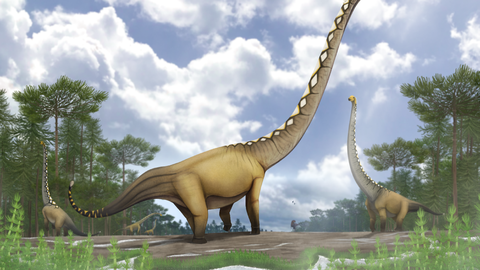
Fossil of long-necked dinosaur discovered in Thailand, suggesting wider sauropod migration
Translated from Estonian, summarized and contextualized by DistantNews.
At a glance
News
Sources not specified
Context piece
- Paleontologists have discovered a new species of dinosaur belonging to the Mamenchisauridae family in northeastern Thailand.
- The newly identified species, Uragasaurus kalasinensis, lived in the region approximately 150 to 145 million years ago during the Late Jurassic period.
- This finding suggests that sauropods, previously thought to be exclusive to East Asia, also migrated to Southeast Asia.
Paleontologists have unearthed a new species of dinosaur in northeastern Thailand, a discovery that sheds new light on the ancient migration patterns of sauropods. The fossil belongs to the Mamenchisauridae family, a group of long-necked dinosaurs previously believed to be primarily confined to East Asia.
The newly identified species has been named Uragasaurus kalasinensis. It roamed the area that is now Thailand during the Late Jurassic period, roughly 150 to 145 million years ago. This significant find challenges earlier assumptions about the geographical distribution of these massive herbivores.
The discovery of Uragasaurus kalasinensis in Southeast Asia provides evidence that sauropods, characterized by their exceptionally long necks and tails, had a broader range than previously understood. It suggests a migration or wider presence of this dinosaur group across the Asian continent during the Jurassic era.
DistantNews Editorial
Originally published by Postimees in Estonian. Translated, summarized, and contextualized by our editorial team with added local perspective. Read our editorial standards.
More Stories


From Our Blog

What Gets Lost (and Found) When News Is Translated

The Critical Role of Diaspora Media in Global News

What Travellers Should Know About Countries with Restricted Press

A Digital Nomad's Guide to Following Local News

How the Same Story Looks Different in Different Countries
