

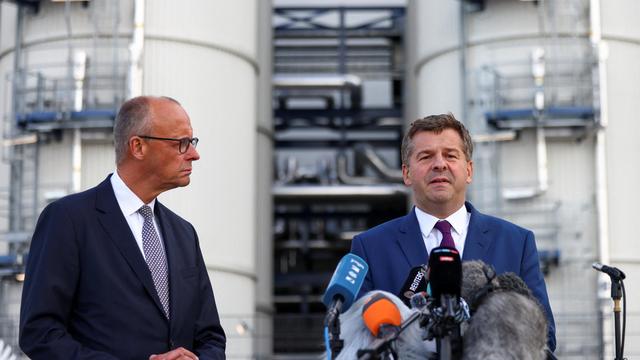

Friedrich Merz Should Read Habermas Now
Translated from German and summarized by DistantNews. Read the original for the full story.
At a glance
Analysis
Named sources
Ongoing story
- Friedrich Merz faces a potentially pivotal state election in Saxony-Anhalt as disillusionment grows among even loyal Christian Democrats.
- His promises of a sharper CDU course, lower welfare spending, less debt and migration, and stronger growth have not produced the results supporters expected.
- The article links the frustration surrounding Merz to broader crises of democratic legitimacy that can benefit the AfD and other authoritarian forces.
Germany’s political summer break is over, but one question still lingers: why did Chancellor Friedrich Merz choose to vacation at Lake Tegernsee rather than in Saxony-Anhalt, where the scenery is also attractive?
deeply permeated by religious references
Perhaps Merz followed the advice of his friend Wolfram Weimer. In a 2006 book, Weimer wrote that Bavaria was “deeply permeated by religious references” and that a holiday there was “more interesting than in Saxony-Anhalt.” The CDU will certainly not put that line on campaign posters before Saxony-Anhalt votes on September 6. The election could become Merz’s fateful test.
Even loyal Union supporters have grown bitterly disappointed with the chancellor. Merz promised them “pure CDU”: a firm line, a hard edge and clear decisions. He pledged more work and less work-life balance, less Bürgergeld, less debt and fewer migrants, alongside cleaner cities. He also promised to halve the AfD’s support and double economic growth.
more interesting than in Saxony-Anhalt
That has not quite worked out. Instead, Merz appears to have offended almost every section of the population, with the possible exception of private pilots, since he is one himself. The article asks why the chancellor has run into limits and disappointments similar to those faced by his predecessors, and why the AfD and authoritarian forces benefit from crises of democratic legitimacy. Its answer points toward Jürgen Habermas, who is presented as having anticipated the problem.
pure CDU
About this summary
Originally published by Die Zeit in German. Translated, summarized, and contextualized automatically by DistantNews, with a note on how the source frames the story. Not individually reviewed before publishing. How this works.
More Stories


From Our Blog

News in Translation: What Gets Lost, and How We Keep the Framing

The Same Story, Different Countries: How Coverage Changes at the Border

Diaspora Media: How Communities Abroad Follow Home

Traveling Where the Press Is Not Free: How to Read the News There

The Digital Nomad's Guide to Local News
