


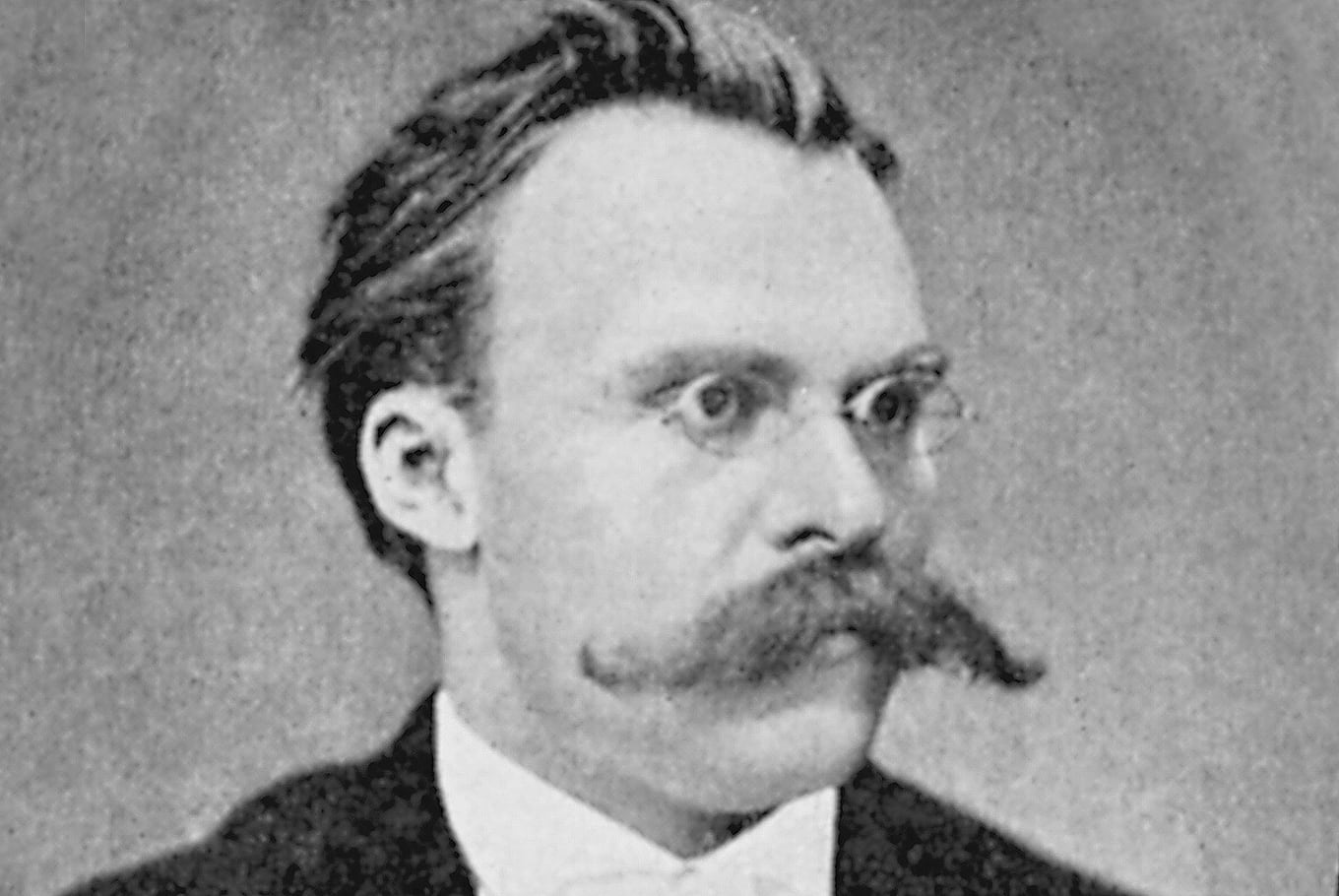
Friedrich Nietzsche, on the search for truth: 'There are no facts, only interpretations'
Translated from Spanish, summarized and contextualized by DistantNews.
At a glance
Interview
Named sources
Context piece
- Philosopher Darío Sztajnszrajber discusses contemporary philosophy's challenge to the traditional search for absolute truth, citing Nietzsche's idea that "there are no facts, only interpretations."
- Sztajnszrajber distinguishes between everyday truths, scientific truths, and philosophical truths, noting that the latter seeks a more ontological or existential meaning.
- He also rejects social media's formulas for personal success, favoring Epicurus' concept of "ataraxia" or imperturbability, and finds personal fulfillment in the desire to know and constant wonder.
The traditional philosophical quest for absolute truth faces significant challenges from contemporary thought, according to philosopher Darío Sztajnszrajber. In an exclusive interview with LA NACION, Sztajnszrajber explained that the very definition and pursuit of philosophy have evolved. He highlighted the persistent notion that philosophy is the search for truth, but noted this becomes problematic when some philosophical currents conclude that "truth is that there is no truth."
It was also changing a lot the way we define philosophy, its search. That idea, which still survives in many philosophical currents, that philosophy is the search for truth, generates its problems when some philosophical currents establish that ultimately the human being finds the truth and the truth is that there is no truth.
This leads to a conceptual loop, reminiscent of Friedrich Nietzsche's controversial assertion that "there are no facts, but only interpretations." Sztajnszrajber differentiates between everyday truths, which are functional for daily life; scientific truths, which focus on the "how" things work; and philosophical truths. The latter, he suggests, delves into a more ontological or existential realm, seeking a broader sense of meaning rather than just functionality.
I think one thing is everyday truth, another is scientific truth, and another is philosophical truth.
"One thing is that things work, and another is that they are true. And that's where we can discuss what we seek in the name of truth. You can associate it with an existential, more transcendent purpose," Sztajnszrajber stated. He emphasized that while everyday and scientific truths are concerned with practical operation, philosophical inquiry probes deeper into the nature of being and meaning.
One thing is that things work, and another is that they are true. And that's where we can discuss what we seek in the name of truth. You can associate it with an existential, more transcendent purpose.
Regarding happiness, Sztajnszrajber dismisses the simplistic success formulas prevalent on social media. He champions the Epicurean concept of "ataraxia," defined as the imperturbability of the soul and the pursuit of minimal pleasures. He shared a personal anecdote about his mother, who equated happiness with the absence of external disturbances, aligning with this Epicurean notion. At 58, Sztajnszrajber admits he doesn't have a definitive answer to the purpose of life, but finds personal realization in his continuous desire to learn and his persistent sense of wonder.
The imperturbability of the soul and the pursuit of minimal pleasures.
DistantNews Editorial
Originally published by La Nación in Spanish. Translated, summarized, and contextualized by our editorial team with added local perspective. Read our editorial standards.
More Stories



From Our Blog

What Gets Lost (and Found) When News Is Translated

The Critical Role of Diaspora Media in Global News

What Travellers Should Know About Countries with Restricted Press

A Digital Nomad's Guide to Following Local News

How the Same Story Looks Different in Different Countries
