

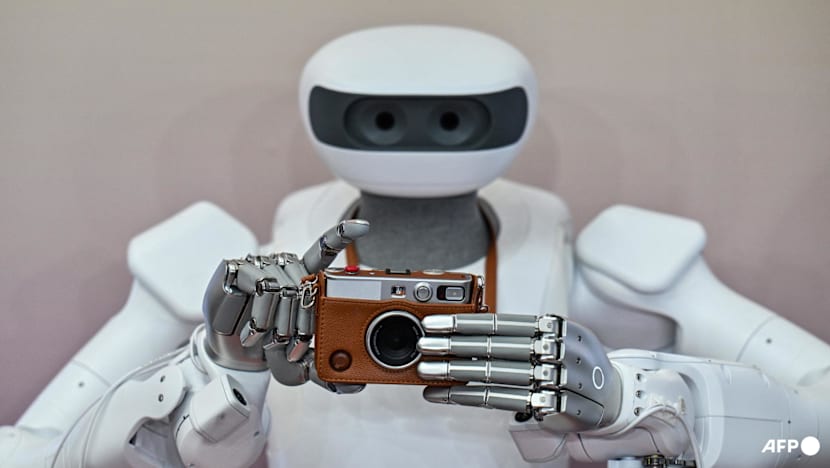
From robot dogs to AI doctors: Inside Hangzhou's technology revolution
Summarized and contextualized by DistantNews.
At a glance
In-depth
Named sources
Context piece
- Hangzhou, China, is rapidly integrating artificial intelligence into daily life, moving beyond research labs into sectors like transportation, healthcare, and robotics.
- The city, known as Alibaba's birthplace, now hosts over 500 AI companies, including prominent "Six Little Dragons," driving China's next wave of AI innovation.
- AI applications range from intelligent traffic management and autonomous cleaning robots with conversational abilities to advanced healthcare solutions, showcasing Hangzhou's technological revolution.
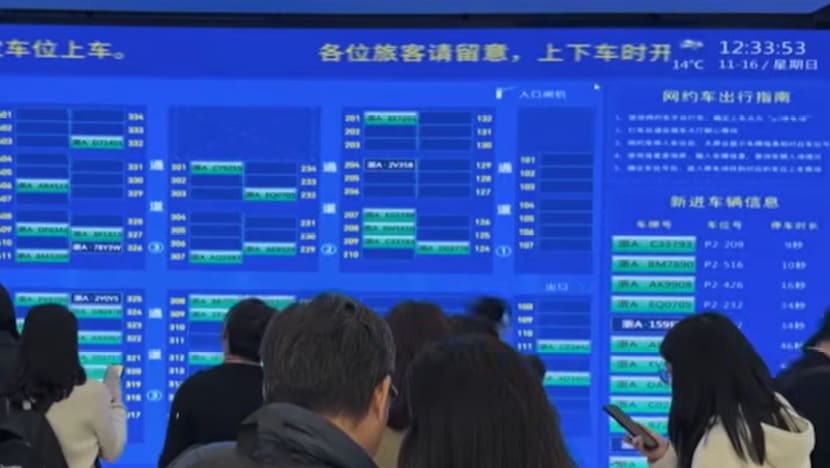
Hangzhou, Zhejiang province, is transforming into a hub where artificial intelligence is seamlessly woven into the fabric of everyday life. Beyond the confines of research labs, AI is now actively reshaping how residents commute, work, and receive services. A glimpse of this transformation is evident at Hangzhou West Railway Station, where AI-powered cameras manage vehicle parking bays and relay information to passengers waiting comfortably in a lounge, eliminating the usual chaotic scramble for rides.
A few friends are chatting there. The man in the red shoes is taking pictures, so I'll sweep gently. I'm worried I might bump into you. Could you move a little?
Long recognized as the birthplace of e-commerce giant Alibaba, Hangzhou has cultivated an environment conducive to technological growth. A potent combination of abundant engineering talent, substantial investment capital, and supportive business policies has fueled the emergence of more than 500 AI companies. Among these are the "Six Little Dragons" – DeepSeek, Deep Robotics, Game Science, Unitree Robotics, BrainCo, and Manycore Tech – which are collectively spearheading China's next generation of AI advancements.
While DeepSeek's rapid ascent has recently placed Hangzhou back in the global spotlight, the city's AI ambitions extend far beyond chatbots and large language models. AI is being actively deployed across various sectors, including healthcare, logistics, manufacturing, robotics, and public services, with novel applications continuously surfacing. For instance, at Udeer.AI, founder and CEO Robin Chen is developing a "versatile brain" for machines. One notable application is an autonomous cleaning robot that possesses sophisticated environmental awareness and communication skills.
This patch of ground is so clean, I almost feel embarrassed to sweep it.
This cleaning robot demonstrates its advanced capabilities by politely interacting with pedestrians, even commenting on the presence of a photographer. Chen explained that the robot interprets its surroundings in real-time, recognizing the number of people, their attire, and even their gender to adjust its cleaning behavior. The company's breakthrough, termed "intelligent targeted cleaning," significantly enhances efficiency by enabling the robot to identify precisely where cleaning is needed, avoiding the redundant coverage typical of home robot vacuums. Chen highlighted that their core product is a general-purpose intelligent system, indicating a broad applicability for their AI technology.
For a site that’s already clean … if we still do a full coverage the way a home robot vacuum does, efficiency would be very low. This robot can recognise exactly where it needs to clean, which greatly improves efficiency.
DistantNews Editorial
Originally published by CNA. Summarized and contextualized by our editorial team with added local perspective. Read our editorial standards.
More Stories


From Our Blog

What Gets Lost (and Found) When News Is Translated

The Critical Role of Diaspora Media in Global News

What Travellers Should Know About Countries with Restricted Press

A Digital Nomad's Guide to Following Local News

How the Same Story Looks Different in Different Countries
