


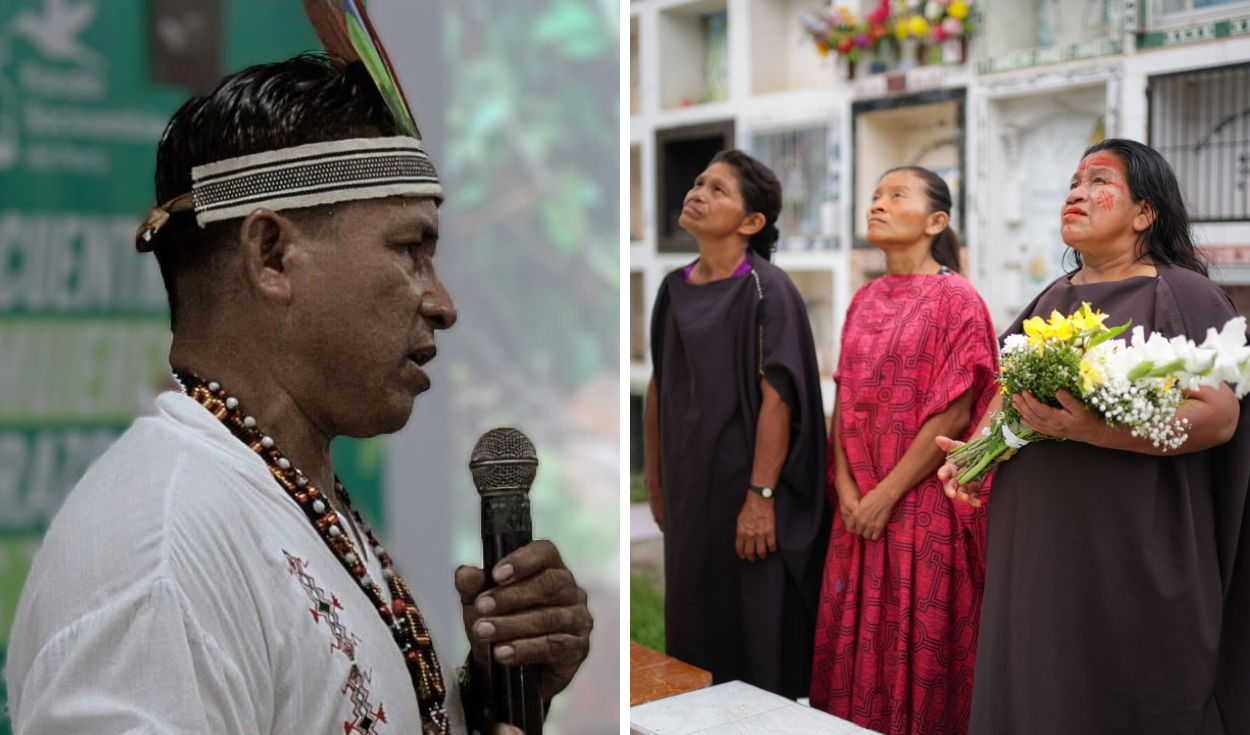
From Saweto to Quinto Inuma, danger persists for families of murdered Indigenous leaders in the Amazon
Translated from Spanish and summarized by DistantNews. Read the original for the full story.
At a glance
In-depth
Named sources
In the courts
- Convictions in the Saweto killings and the murder of Kichwa defender Quinto Inuma have not ended threats to their relatives or communities.
- Widows and children remain away from their communities because of fears of retaliation and face financial hardship.
- Aidesep says 37 Indigenous leaders and community members were killed in Peru’s Amazon between 2013 and 2025, while illegal logging, land invasions and drug trafficking continue.
The convictions brought only partial relief to the families of Indigenous leaders murdered in Peru’s Amazon. Widows and children remain away from their communities, fearing retaliation, while economic hardship compounds the loss. They also say the illegal activities their relatives denounced continue to expand across their territories.
The four Saweto leaders were killed in 2014. Kichwa environmental defender Quinto Inuma was murdered in 2023 despite receiving state protection measures. Their cases are part of a longer record of violence: Aidesep, the Interethnic Association for the Development of the Peruvian Rainforest, says 37 Indigenous leaders and community members were killed in the Amazon between 2013 and 2025.
Inuma was killed on Nov. 29, 2023, while returning to Santa Rosillo de Yanayacu in San Martín’s Huimbayoc district. He had reported illegal logging, invasions and drug trafficking inside and outside his community’s territory. On Aug. 24, nearly three years after the killing, a court ruled that the attack had been planned as retaliation for his environmental defense work. Four defendants received first-instance prison sentences ranging from 15 to 35 years for contract killing.
As a family, we received the conviction with some relief. It gave us a little peace because we thought they might suddenly be released and put us at risk. But the justice process is not over because I imagine they will appeal.
Kevin Inuma, the defender’s eldest son, said the ruling eased the family’s fear that those accused might be released and pose a further threat. “As a family, we received the conviction with some relief. It gave us a little peace because we thought they might suddenly be released and put us at risk. But the justice process is not over because I imagine they will appeal,” he said.
The family’s lawyer, Cristina Gavancho, said an appeal had not been formally notified by the time of publication but was likely. Kevin Inuma added that his community remains vulnerable because it lacks formal land title. He said migrants are entering the territory to claim land, clear plots of 10 to 15 hectares, raise their commercial value and resell them. The families say fugitives, unpaid civil compensation and pending legal proceedings leave justice incomplete.
There are problems again because many migrants are entering the territory, seeking only to claim spaces in order to traffic them.
About this summary
Originally published by La República in Spanish. Translated, summarized, and contextualized automatically by DistantNews, with a note on how the source frames the story. Not individually reviewed before publishing. How this works.
More Stories
From Our Blog

What Gets Lost (and Found) When News Is Translated

The Critical Role of Diaspora Media in Global News

What Travellers Should Know About Countries with Restricted Press

A Digital Nomad's Guide to Following Local News

How the Same Story Looks Different in Different Countries
