


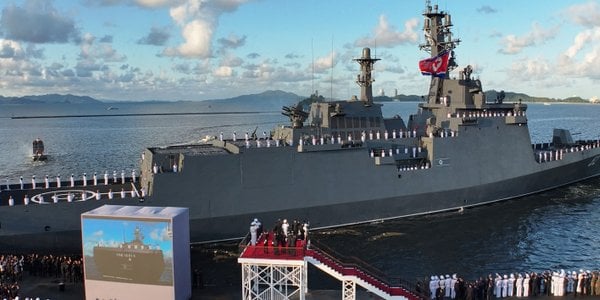

FT: US commandos took part in secret Strait of Hormuz mine-clearing operation
Translated from Polish and summarized by DistantNews. Read the original for the full story.
At a glance
Newswire
Named sources
Ongoing story
- The Financial Times reported that US Navy SEAL divers used maritime drones and underwater equipment in a covert, four-month operation to clear mines from the Strait of Hormuz.
- The operation reportedly caused no US casualties, but shipping companies remain uncertain whether the entire strait is free of mines.
- Mine risks have driven insurance costs sharply higher, while a US maritime information center continued to warn about drifting or uncharted mines.
The Strait of Hormuz was cleared of mines at night by small teams of US Navy SEAL divers using maritime drones, inflatable boats and specialist underwater equipment, the Financial Times reported, citing people close to the operation.
The covert mission lasted four months. It followed a June warning from the International Maritime Organization that Iran had placed about 80 mines in the strategic waterway, through which oil and liquefied natural gas leave the Middle East. The operation came under scrutiny after Donald Trump said last week that “all mines” in the international waters of the strait had been removed or detonated.
The report noted that three US ships typically responsible for mine countermeasures had been outside the region, in the Indian and Pacific oceans, since at least early June. Retired US Navy Captain Bill Hamblet said the forces may have operated from the USS Miguel Keith, an expeditionary sea base assigned to Persian Gulf naval forces.
Typically, a diver has to approach the mine, place an explosive charge and detonate it.
Mine clearance remains a slow and dangerous task. Divers may have to approach a mine, attach an explosive charge and detonate it, Hamblet said. Bryan Clark, a mine-clearance expert at the Hudson Institute, said the teams face attack because their boats and helicopters have limited protection. The Financial Times reported no US casualties from the operation.
Ship operators expressed optimism that the southern section near Oman had been cleared, but questioned whether the entire strait was safe. Mine threats have pushed insurance premiums to as much as ten times their pre-conflict levels, potentially costing about $10 million for a typical supertanker. On the same day Trump announced the clearance, a US Navy-led maritime information center warned of a continuing risk from drifting or uncharted mines. Iran blocked the strait during the first days of a war that began with a US-Israeli attack in February and has said it will control the waterway and charge substantial fees to ships using it.
Mine-clearance forces are exposed to attacks because their boats or helicopters do not have adequate defenses, and the whole operation is slow.
About this summary
Originally published by Rzeczpospolita in Polish. Translated, summarized, and contextualized automatically by DistantNews, with a note on how the source frames the story. Not individually reviewed before publishing. How this works.
More Stories


From Our Blog

News in Translation: What Gets Lost, and How We Keep the Framing

Diaspora Media: How Communities Follow News From Home

Traveling Where the Press Is Not Free: How to Read the News There

The Digital Nomad's Guide to Local News

The Same Story, Different Countries: How Coverage Changes at the Border
