


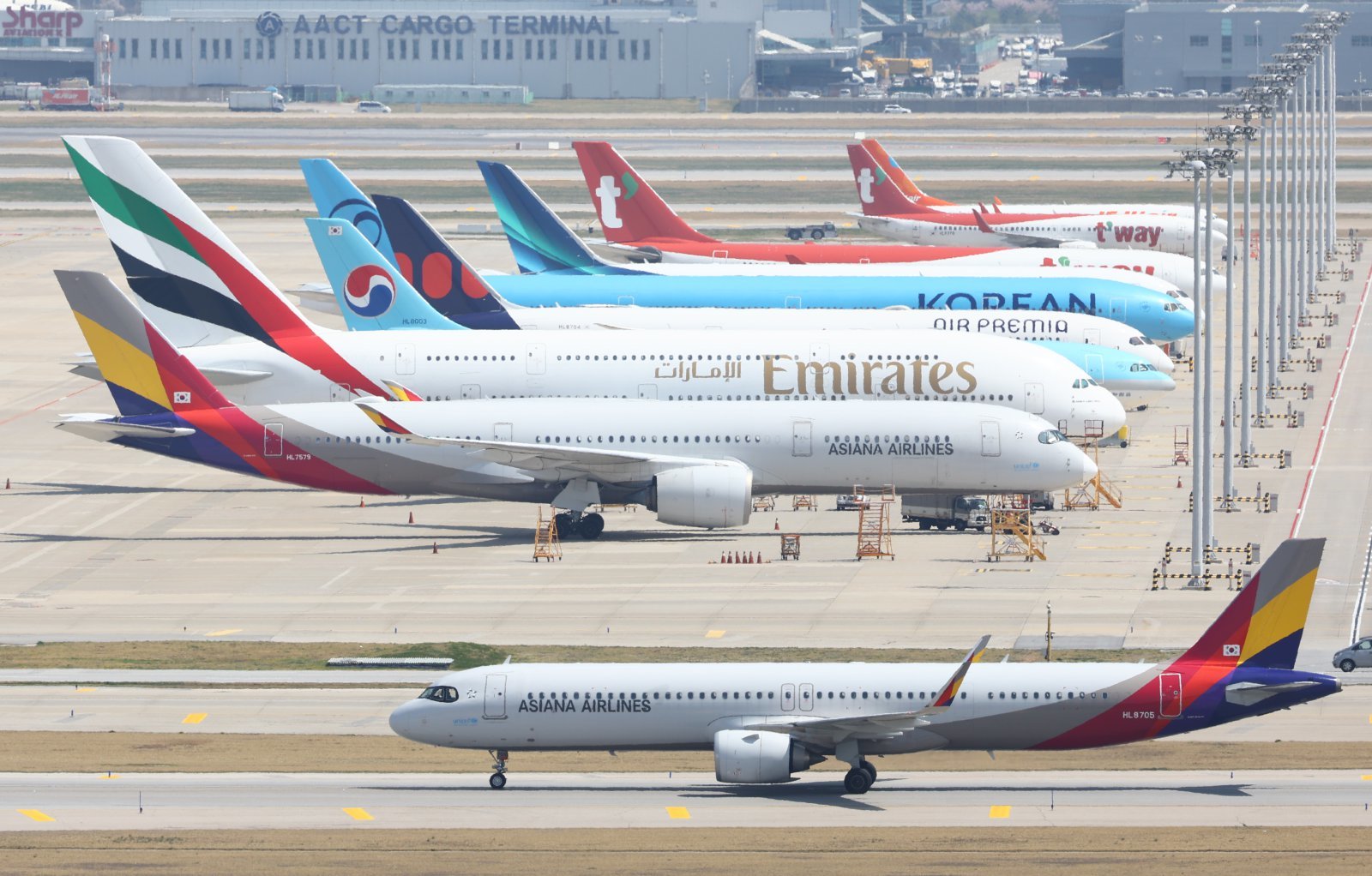
Fuel Surcharges Skyrocket on South Korean Flights, Threatening Travel Demand
Translated from Korean, summarized and contextualized by DistantNews.
TLDR
- South Korean low-cost carriers (LCCs) are significantly increasing fuel surcharges on international flights, with some rising up to six times pre-war levels.
- This surge is attributed to the sharp increase in international airfare prices following Middle East conflicts.
- The rising costs are expected to dampen travel demand, impacting both LCCs and major airlines like Korean Air and Asiana Airlines.
The skies are becoming increasingly expensive for travelers as South Korean airlines, particularly low-cost carriers (LCCs), implement substantial hikes in international fuel surcharges. Following the recent surge in global oil prices, exacerbated by Middle East tensions, airlines are passing on these increased operational costs to consumers. Jin Air and Jeju Air, among others, have announced significant increases, with some surcharges climbing to as much as six times their pre-conflict levels.
This dramatic rise in fuel surcharges, reaching the maximum 33rd tier under the current system for May, means that a round-trip ticket for a family of four to Southeast Asia could now cost an additional 1.48 million won in surcharges alone. Major carriers like Korean Air and Asiana Airlines are also adjusting their surcharges, reflecting the widespread impact of the oil price hikes. For instance, Korean Air's May surcharges range from 75,000 to 564,000 won, a stark increase from March's 13,500 to 99,000 won.
The implications of these escalating costs are significant. Industry experts are voicing concerns that the substantial increase in airfare prices could lead to a contraction in travel demand. Airlines are already responding by adjusting their capacity, with Asiana Airlines, for example, reducing flights on several international routes. The situation underscores the vulnerability of the aviation industry to geopolitical instability and fluctuating energy prices, suggesting that the current cost pressures may persist even if Middle East conflicts subside, due to time lags in oil price adjustments.
The Middle East war may end, but it is highly likely that there will be a time lag before airfare prices fall.
DistantNews Editorial
Originally published by Dong-A Ilbo in Korean. Translated, summarized, and contextualized by our editorial team with added local perspective. Read our editorial standards.
More Stories



From Our Blog

What Gets Lost (and Found) When News Is Translated

The Critical Role of Diaspora Media in Global News

What Travellers Should Know About Countries with Restricted Press

A Digital Nomad's Guide to Following Local News

How the Same Story Looks Different in Different Countries
