

Full opening of Long Thanh interchange boosts connectivity between major expressways
Translated from Vietnamese, summarized and contextualized by DistantNews.
At a glance
News
Sources not specified
New plan
- The Long Thanh interchange, connecting the Ho Chi Minh City-Long Thanh expressway with the Bien Hoa-Vung Tau expressway, has fully opened.
- This new interchange allows seamless traffic flow between the two major expressways, facilitating travel to and from Ho Chi Minh City, Bien Hoa, and Vung Tau.
- The Bien Hoa-Vung Tau expressway, which opened partially on May 18, currently restricts traffic to vehicles under 9 seats and operates at speeds between 60-80 km/h.
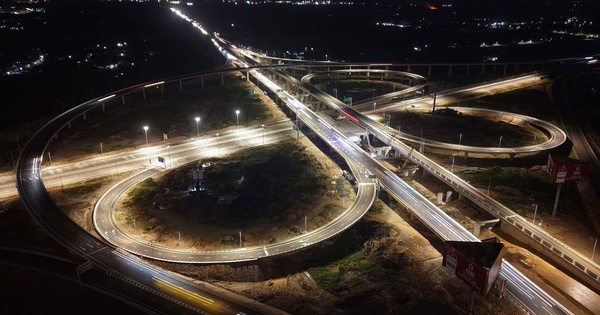
The Long Thanh interchange, a critical piece of infrastructure connecting the Ho Chi Minh City-Long Thanh expressway with the Bien Hoa-Vung Tau expressway, officially opened to all traffic on the evening of June 6.
This multi-level interchange is designed to significantly improve traffic flow and reduce travel times for vehicles moving between these key routes. Commuters traveling from Bien Hoa towards Vung Tau can now easily merge onto the Ho Chi Minh City-Long Thanh-Dau Giay expressway to reach Ho Chi Minh City or Dau Giay. Conversely, traffic from the Ho Chi Minh City-Long Thanh-Dau Giay expressway, National Highway 51, and other connecting routes can now access the Bien Hoa-Vung Tau expressway to head towards Bien Hoa and Trang Bom.
The Bien Hoa-Vung Tau expressway itself, which spans 34.2 km in Dong Nai province and 19.8 km in Ba Ria-Vung Tau province, began partial operation on May 18. Currently, it is limited to vehicles with fewer than nine seats, with speed limits ranging from 60 to 80 km/h. Specific connecting ramps have a reduced speed limit of 50 km/h to ensure traffic safety during this temporary operational phase.
DistantNews Editorial
Originally published by Thanh Niên in Vietnamese. Translated, summarized, and contextualized by our editorial team with added local perspective. Read our editorial standards.
More Stories
From Our Blog

What Gets Lost (and Found) When News Is Translated

The Critical Role of Diaspora Media in Global News

What Travellers Should Know About Countries with Restricted Press

A Digital Nomad's Guide to Following Local News

How the Same Story Looks Different in Different Countries
