


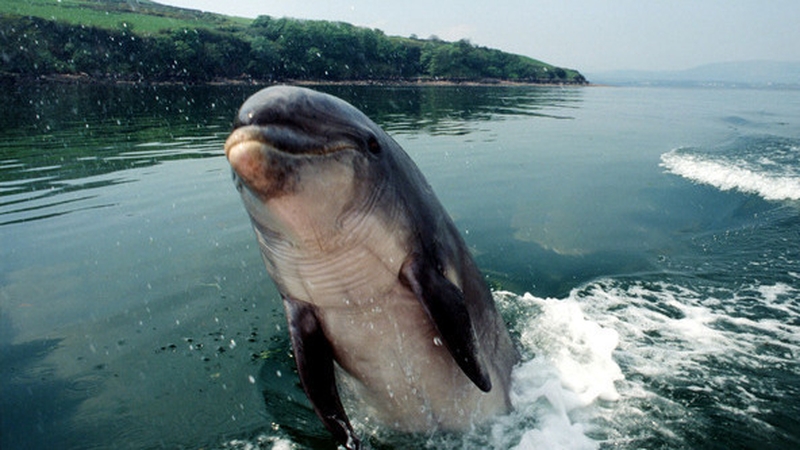
Fungie DNA reveals dolphin's mixed ancestry
Summarized and contextualized by DistantNews.
At a glance
News
Named sources
Outcome reported
- DNA analysis of a wetsuit revealed that Fungie, a famous solitary dolphin in Ireland, had mixed ancestry from both coastal and offshore bottlenose dolphin populations.
- This finding is unusual, as most sampled dolphins in Ireland are genetically linked to one population or the other.
- The study, which used non-invasive sampling, also raises questions about why solitary dolphins separate from their groups and interact with humans.
Scientists have uncovered the surprising genetic heritage of Fungie, Ireland's most famous solitary dolphin, through DNA extracted from a wetsuit. The solitary bottlenose dolphin, who resided in Dingle Harbour, County Kerry, from 1983 until his disappearance in October 2020, possessed a unique genetic mix. Researchers at Atlantic Technological University in Galway analyzed samples from a wetsuit worn by Irish Whale and Dolphin Group member Denis O’Regan, who frequently swam with Fungie.
The DNA analysis revealed that Fungie’s ancestry was a blend of Ireland’s Shannon Estuary bottlenose dolphin population and a larger, distinct offshore population. This mixed ancestry is considered unusual, as bottlenose dolphins studied in Irish waters typically belong to either one specific coastal or offshore group. The study, published in the journal Ecology and Evolution, found that four out of five other well-known solitary dolphins in Irish waters were linked to the offshore population, making Fungie's mixed heritage stand out.
A lot of work has been done to record these unique solitary dolphins, but this study provides a new insight into some of these familiar dolphins using non-invasive sampling techniques and contributes significantly to the wider knowledge of solitary dolphins globally and from where they may originate.
The research, which employed non-invasive sampling techniques, contributes valuable insights into the lives of solitary dolphins. Seán O’Callaghan, a PhD candidate at ATU and co-author of the study, noted that while much research has documented these unique animals, this study offers a new perspective on their origins and behavior using genetic analysis.
Scientists are still exploring the reasons behind these dolphins' solitary nature and their preference for human interaction over socializing with other dolphins. Dr. Simon Berrow, a founding member of the Irish Whale and Dolphin Group, suggested potential factors such as communication barriers, possibly due to different vocal dialects, or distinct ecological needs. The study highlights that understanding why these mammals become solitary remains a significant area of inquiry.
Why these dolphins seek human company rather than socialise with other bottlenose dolphins has long been a mystery. Maybe they do not understand each other and use different vocal dialects, confounding communication, or perhaps they just have very different ecolog
DistantNews Editorial
Originally published by RTÉ News. Summarized and contextualized by our editorial team with added local perspective. Read our editorial standards.
More Stories


From Our Blog

What Gets Lost (and Found) When News Is Translated

The Critical Role of Diaspora Media in Global News

What Travellers Should Know About Countries with Restricted Press

A Digital Nomad's Guide to Following Local News

How the Same Story Looks Different in Different Countries
