


Galvion establishes European hub in Poland, highlighting country's defense industry significance
Translated from Polish, summarized and contextualized by DistantNews.
At a glance
In-depth
Named sources
New plan
- Galvion has established a European production and service center in Gdańsk, Poland, to support NATO and allied nations.
- The facility will focus on manufacturing, modernization, and lifecycle support for defense systems, particularly head protection systems.
- Poland's strategic location and growing role in the European defense industry made it an ideal choice for the Canadian company's expansion.
Galvion, a Canadian company specializing in user-centric innovations and integrated systems for defense, has opened a European production and service center in Gdańsk, Poland. This strategic move underscores Poland's increasing importance in the European defense industry and its role as a hub for NATO and allied nations.
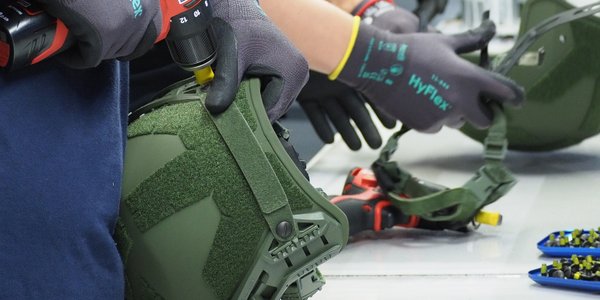
The new facility in Gdańsk will serve as Galvion's European operational center, handling production, modernization, and lifecycle support for defense systems. The company highlights the evolving landscape of European security, where industrial capabilities are becoming as crucial as technological innovation for effective defense readiness. This includes the production, maintenance, and continuous improvement of military equipment throughout its lifespan.
Galvion anticipates significant demand for its products, particularly its advanced head protection systems. The company has a framework agreement with the NATO Support and Procurement Agency (NSPA) and expects nearly two million of its helmets to be equipped by NATO and European armed forces by the end of 2026. These are not just protective gear but increasingly sophisticated platforms integrating power, data transmission, and digital technologies for full soldier integration into the digital battlefield.
Recognizing that many armies have already invested heavily in existing helmet fleets, Galvion has developed the integrated CORTEX™ system. This system allows for the retrofitting of both new and existing helmet models with independent power, data transmission, and digital functions. This approach enhances operational capabilities while preserving the value of previous investments, reflecting a broader trend in defense procurement towards modernization rather than outright replacement.
DistantNews Editorial
Originally published by Rzeczpospolita in Polish. Translated, summarized, and contextualized by our editorial team with added local perspective. Read our editorial standards.
More Stories



From Our Blog

What Gets Lost (and Found) When News Is Translated

The Critical Role of Diaspora Media in Global News

What Travellers Should Know About Countries with Restricted Press

A Digital Nomad's Guide to Following Local News

How the Same Story Looks Different in Different Countries
