

Garry Kasparov warns: Putin's next target could be Baltic states. 'No sign Kremlin is preparing for peace'
Translated from Romanian, summarized and contextualized by DistantNews.
At a glance
Analysis
Sources not specified
Context piece
- Garry Kasparov warns that Russian President Vladimir Putin may escalate the conflict in Ukraine and target Baltic states after upcoming Russian elections.
- Kasparov believes Putin will use military and economic pressure to escalate rather than seek peace, potentially testing NATO's resolve with a limited incursion into a NATO country.
- He points to simplified mobilization laws in Russia as evidence of preparations for further conflict, stating there are no signs the Kremlin is preparing for peace.
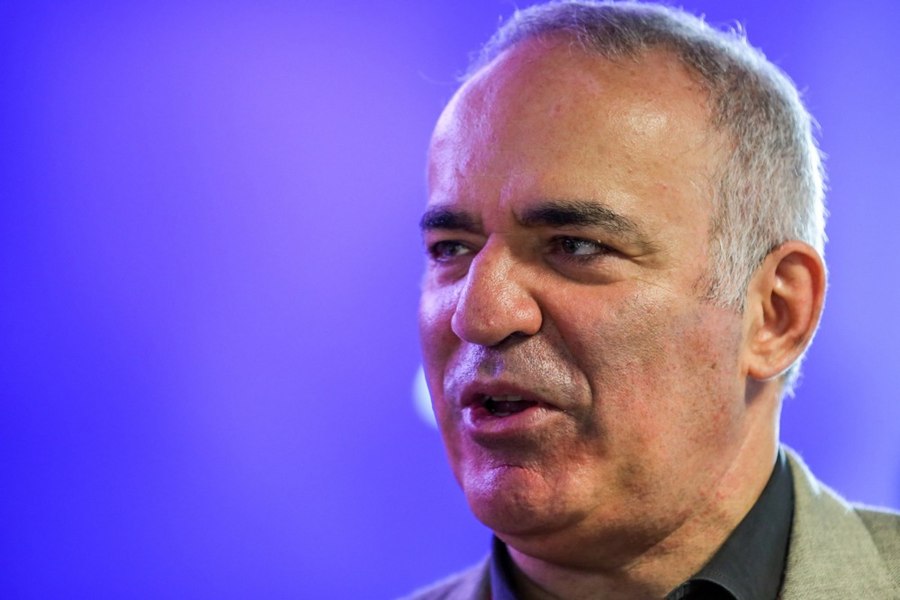
Former world chess champion and prominent Kremlin critic Garry Kasparov has issued a stark warning: Russian President Vladimir Putin is unlikely to seek peace in Ukraine and may instead escalate the conflict, potentially targeting Baltic states after Russia's September parliamentary elections. Kasparov argues that Putin consistently chooses escalation when facing difficulties and that any agreement not involving Russia's defeat would merely grant the Kremlin time to regroup.
Putin has always chosen escalation when he was in trouble. And the next logical step is provocation.
Kasparov's assessment aligns with intensified Ukrainian attacks on Russian military infrastructure. While Kyiv views these strikes as strengthening its negotiating position, Estonian Foreign Minister Margus Tsahkna noted they have weakened Russia's war-sustaining capacity. However, Kasparov contends that continued military and economic pressure on Moscow will compel Putin to escalate, not concede. "Putin has always chosen escalation when he was in trouble. And the next logical step is provocation," Kasparov stated.
A provocation into a NATO country is a plausible scenario.
A plausible scenario, according to Kasparov, involves Russia testing NATO's resolve through a limited incursion into an Eastern flank NATO member, such as Latvia or Estonia. The objective would be to gauge the reaction of the alliance, particularly the United States. He cited recent Russian legislative changes simplifying mobilization procedures, including the elimination of mandatory medical exams for conscription, as indicators that Moscow is preparing for further confrontations. "There is no sign in Russian propaganda, in government actions, or in Putin's speeches that indicates the Kremlin is preparing for peace. All messages convey one thing: war, war, war," the Russian opposition figure asserted.
There is no sign in Russian propaganda, in government actions, or in Putin's speeches that indicates the Kremlin is preparing for peace. All messages convey one thing: war, war, war.
Kasparov dismisses arguments that Russia lacks the resources for a new front. He suggests that Moscow doesn't need a full-scale invasion to undermine NATO's credibility; occupying a border town, especially one with a significant Russian-speaking population, would suffice to test the alliance's response. If the United States fails to intervene, Kasparov believes Putin's objective would be met, effectively rendering NATO obsolete. These warnings come shortly after NATO Secretary General Mark Rutte acknowledged the uncertainty surrounding how Putin could be brought to peace negotiations, as the war in Ukraine enters its fifth year.
Then NATO, practically, would no longer exist.
DistantNews Editorial
Originally published by Adevărul in Romanian. Translated, summarized, and contextualized by our editorial team with added local perspective. Read our editorial standards.
More Stories

From Our Blog

What Gets Lost (and Found) When News Is Translated

The Critical Role of Diaspora Media in Global News

What Travellers Should Know About Countries with Restricted Press

A Digital Nomad's Guide to Following Local News

How the Same Story Looks Different in Different Countries
