


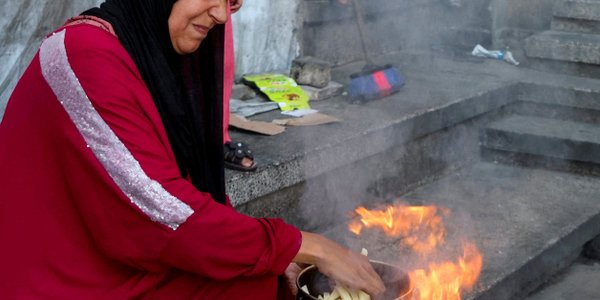
Gaza Faces Worsening Hunger Crisis as Aid Funding Dries Up, Report Warns
Translated from Polish, summarized and contextualized by DistantNews.
At a glance
News
Named sources
Context piece
- Over two-thirds of Gaza's population may face hunger by the end of 2026 due to reduced humanitarian aid funding, according to the Integrated Food Security Phase Classification (IPC).
- While a fragile improvement in food security occurred after a ceasefire in October 2025, access to food remains insufficient for most families, with some resorting to begging.
- Israel denies accusations that its policies cause hunger in Gaza, with COGAT, a military unit, calling the IPC report biased and claiming Hamas intercepts aid.
A stark warning has been issued regarding the escalating food crisis in the Gaza Strip, with projections indicating that over two-thirds of its inhabitants could face hunger by the end of 2026. The Integrated Food Security Phase Classification (IPC) attributes this dire outlook to a significant reduction in humanitarian aid, driven by funding shortages.
Most families still do not have sufficient access to food, and some households are forced to beg or collect food scraps.
The IPC's latest analysis reveals a fragile improvement in Gaza's food security following a ceasefire between Israel and Hamas in October 2025 and subsequent increases in aid delivery. However, this improvement is precarious. The report highlights that while the level of acute malnutrition, particularly among children, has decreased due to renewed food and nutrition programs, most families still lack adequate access to food. Many households are reportedly resorting to begging or scavenging for scraps.
The improvement remains very fragile and - as the authors of the report warn - can be quickly lost.
According to IPC projections, the number of people experiencing acute hunger is expected to rise to over 1.4 million by the end of December, representing approximately 67% of Gaza's population. This situation persists after nearly two years of conflict and mass displacement, leaving the majority of the population heavily reliant on humanitarian assistance. The IPC had previously noted a reduction in famine risk in parts of Gaza, but now cautions that this progress is threatened by diminishing aid.
The IPC report is biased.
Humanitarian programs, such as those for pregnant and breastfeeding women, have seen their reach halved, serving only about 6,000 beneficiaries between January and May of this year. The report attributes these cuts to funding shortfalls and uncertainty surrounding humanitarian organizations' access to Gaza. Meanwhile, Israel consistently rejects claims that its policies are responsible for the hunger crisis. COGAT, the Israeli military unit overseeing aid coordination, has labeled the IPC report as biased, asserting that substantial aid has entered Gaza and that Hamas has been involved in intercepting and looting supplies.
Hamas has been intercepting and looting some of the aid transports.
DistantNews Editorial
Originally published by Rzeczpospolita in Polish. Translated, summarized, and contextualized by our editorial team with added local perspective. Read our editorial standards.
More Stories


From Our Blog

What Gets Lost (and Found) When News Is Translated

The Critical Role of Diaspora Media in Global News

What Travellers Should Know About Countries with Restricted Press

A Digital Nomad's Guide to Following Local News

How the Same Story Looks Different in Different Countries
