

Gaza's forgotten tragedy: No money, no government, no peacekeepers
Translated from German, summarized and contextualized by DistantNews.
At a glance
News
Sources not specified
Context piece
- A new clinic with 30 staff members has opened in Gaza City, aiming to treat up to 100 patients daily, offering a glimmer of hope in the devastated strip.
- Despite this development, the humanitarian situation remains catastrophic, with widespread poor hygiene, rodent infestations, and a lack of clean water nine months after a ceasefire.
- International promises of $17 billion in aid have largely not materialized, and access for NGOs and journalists remains severely restricted, hindering relief efforts.
A new 30-person clinic in Gaza City, capable of treating up to 100 patients daily, has opened, signaling a rare moment of hope in the largely devastated coastal strip. The inauguration was attended by Cardinal Pierbattista Pizzaballa, the Patriarch of Jerusalem, and Greek Orthodox Patriarch Teophilos III. During their visit, the patriarchs also inspected the construction of a school and kindergarten and symbolically planted an olive tree at the Islamic University. Pizzaballa celebrated a mass and watched a World Cup match with local clergy.
However, this development occurs against a backdrop of a dire humanitarian crisis. The situation in Gaza has been overshadowed by regional conflicts, including the war in Iran and Israel's conflict with Hezbollah in Lebanon. Despite promises of reconstruction and a peace initiative from former US President Donald Trump, the Gaza Peace Council has seen little progress. Reports indicate that of the $17 billion pledged in aid, "not a cent" has reached the designated fund, with only a fraction arriving in a JP Morgan account, according to the Financial Times.
The hygienic conditions are extremely bad, skin diseases are spreading.
Residents describe extremely poor sanitary conditions, with skin diseases spreading and reports of rat and bedbug infestations. People are fleeing crowded tents to the beach, where refuse and wastewater accumulate. Nine months after a ceasefire, the humanitarian situation remains catastrophic, with a severe shortage of clean water. Aid reaches the population only under difficult conditions, and many suffer from food scarcity. Calls have been made for unrestricted access for NGOs and journalists to the Gaza Strip.
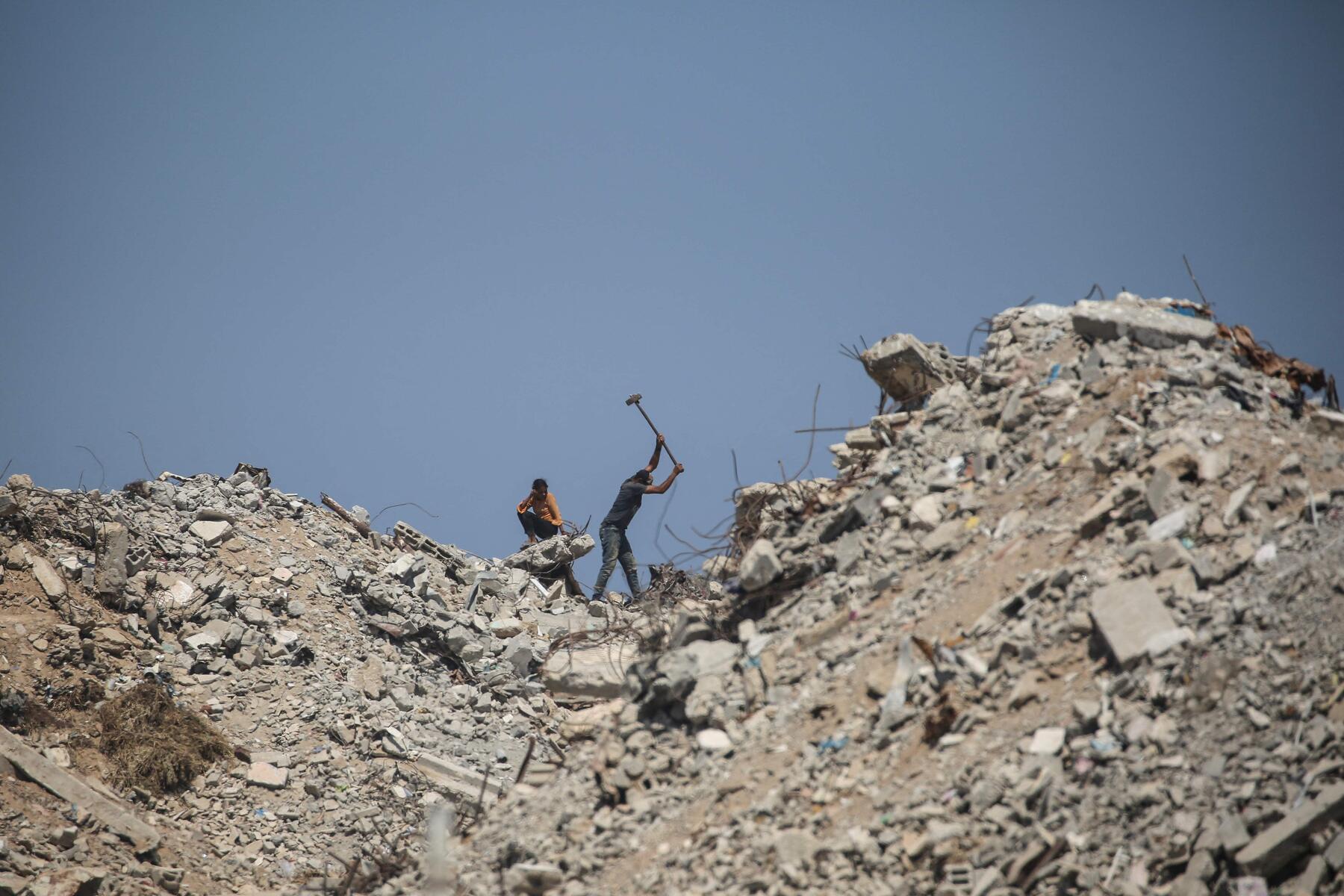
While some improvements were noted by the Gaza Peace Council coordinator Nikolaj Mladenow in a May report to the UN Security Council, he conceded that "there is no restoration." Approximately 85 percent of buildings are partially or completely destroyed, and an estimated 70,000 tons of rubble remain. The disarmament of militant groups remains a key sticking point in any potential peace process.
But there is no restoration.
DistantNews Editorial
Originally published by Die Presse in German. Translated, summarized, and contextualized by our editorial team with added local perspective. Read our editorial standards.
More Stories


From Our Blog

What Gets Lost (and Found) When News Is Translated

The Critical Role of Diaspora Media in Global News

What Travellers Should Know About Countries with Restricted Press

A Digital Nomad's Guide to Following Local News

How the Same Story Looks Different in Different Countries
