


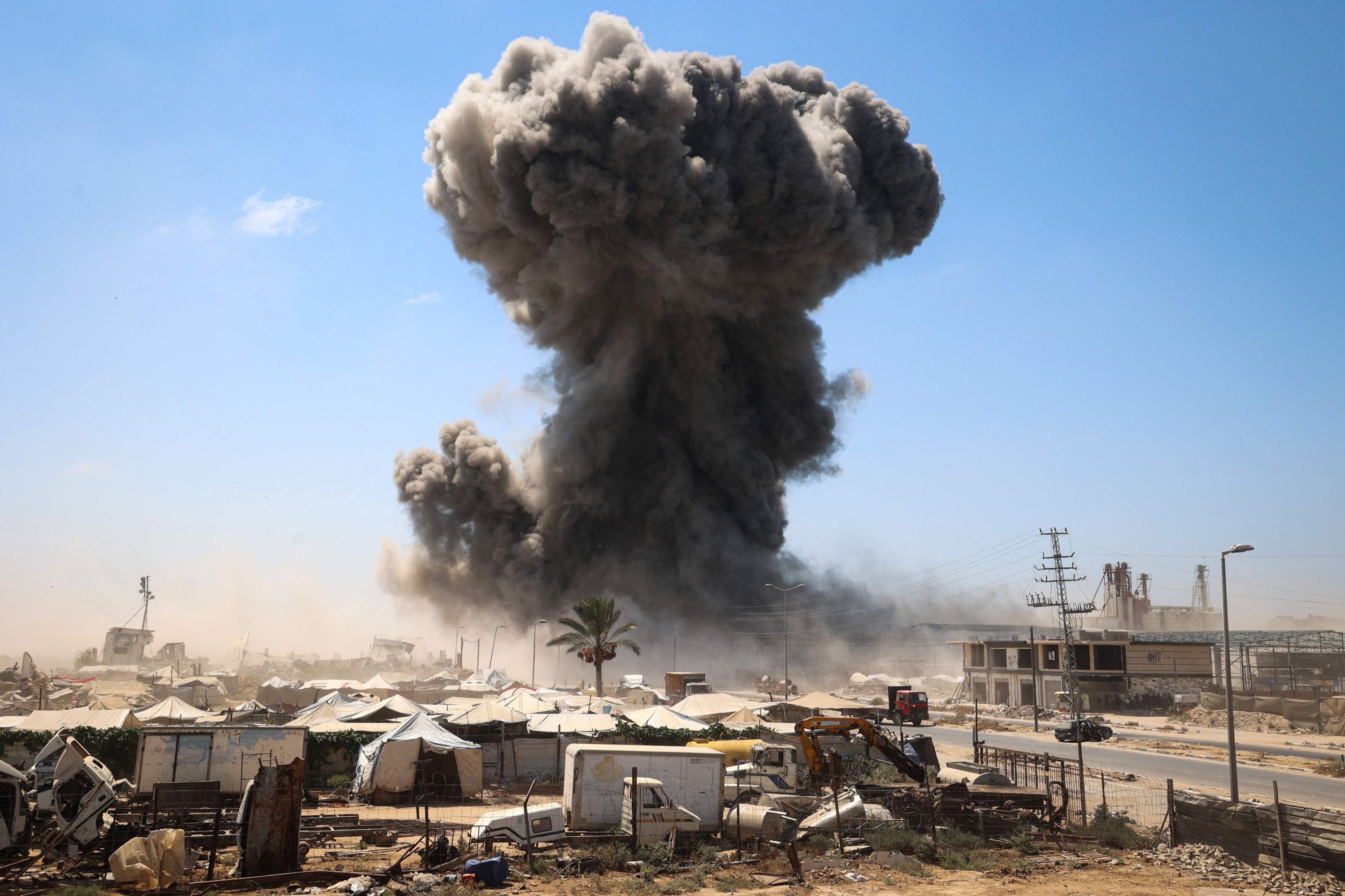
Gaza's Suffering Marginalized Amid Shifting Global Attention
Translated from English and summarized by DistantNews. Read the original for the full story.
At a glance
Analysis
Sources not specified
Context piece
- The Gaza crisis has been downgraded in global attention due to emerging regional conflicts, transforming it from an urgent issue to a peripheral concern.
- A cease-fire has reduced international visibility of the catastrophe without addressing structural issues like settler-colonization or the broader international order.
- Gaza's suffering persists through a slower, institutionalized attrition, with ongoing spatial engineering aiming to de-Palestinize the region by reducing habitable space.
The international community's attention has dramatically shifted away from the ongoing crisis in Gaza, relegating the human suffering there to a peripheral concern. This reordering of the global agenda, influenced by the emergence of new regional conflicts, has diminished the urgency previously associated with Gaza's plight. What was once a crisis demanding immediate collective response now competes with headlines about wars in Ukraine and Iran, energy prices, and geopolitical rivalries.
The cease-fire without ceasing the fire somehow reduced the international visibility of the ongoing catastrophe in Gaza without touching any of its structural drivers.
Despite a cease-fire, the underlying structural drivers of the conflict, including the settler-colonization project in Palestine and the broader international order, remain unresolved. While the number of casualties may be statistically lower, the catastrophe persists. This diminished visibility is attributed to a failure of "attention," a concept describing the capacity to recognize the inviolable human weight of sufferers. Gaza's displacement within international policy hierarchies reflects a recalibration of global geopolitical focus.
Gaza’s displacement within international policy hierarchies is part of a recalibration of global geopolitical attention.
Beneath the operational cover of the cease-fire, a strategy of spatial engineering continues, aiming to de-Palestinize Gaza. This involves rendering northern and central Gaza uninhabitable, creating conditions that force Gazans towards permanent southern concentration or displacement. This physical alteration of the environment serves as a barrier to humane existence and perpetuates the settler-colonial project.
Beneath the operational cover of the cease-fire lies an ongoing strategy of spatial engineering designed to execute the de-Palestinization of Gaza.
The current truce framework has allowed foreign policy establishments, influenced by diplomatic rationales, to perceive the conflict as "managed." International engagement has shifted from urgent intervention to routine technical administration and abstract discussions of reconstruction. Meanwhile, regional states are aligning defense, intelligence, and diplomacy, investing in domestic defense industries to reduce dependence on external powers. However, building sovereign defense industries and reforming international institutions are long-term endeavors requiring sustained political effort over years, if not decades.
By rendering northern and central Gaza uninhabitable, the physical environment itself becomes a permanent barrier to a humane existence, creating conditions that force Gazans toward permanent southern concentration or departure.
About this summary
Originally published by Daily Sabah in English. Translated, summarized, and contextualized automatically by DistantNews, with a note on how the source frames the story. Not individually reviewed before publishing. How this works.
More Stories



From Our Blog

What Gets Lost (and Found) When News Is Translated

The Critical Role of Diaspora Media in Global News

What Travellers Should Know About Countries with Restricted Press

A Digital Nomad's Guide to Following Local News

How the Same Story Looks Different in Different Countries
