


Gen Z Grows Up Amid AI Skepticism
Translated from Vietnamese, summarized and contextualized by DistantNews.
At a glance
News
Named sources
Context piece
- A growing number of Gen Z individuals in the US are expressing skepticism and anxiety about artificial intelligence, despite its increasing use.
- Concerns focus on AI's impact on learning, creativity, and future job prospects, with some feeling it devalues fundamental skills.
- This trend is prompting the rise of "tech detox" communities and highlighting global anxieties about AI-driven job displacement.
Artificial intelligence, once hailed as a tool to unlock human potential, is increasingly viewed with suspicion by young people, particularly Generation Z. While more than half of US Gen Z individuals use AI weekly, their initial enthusiasm is waning. A recent Gallup survey, cited by the Financial Times, shows a drop in excitement from 36% to 22%, while anger increased from 22% to 31%.
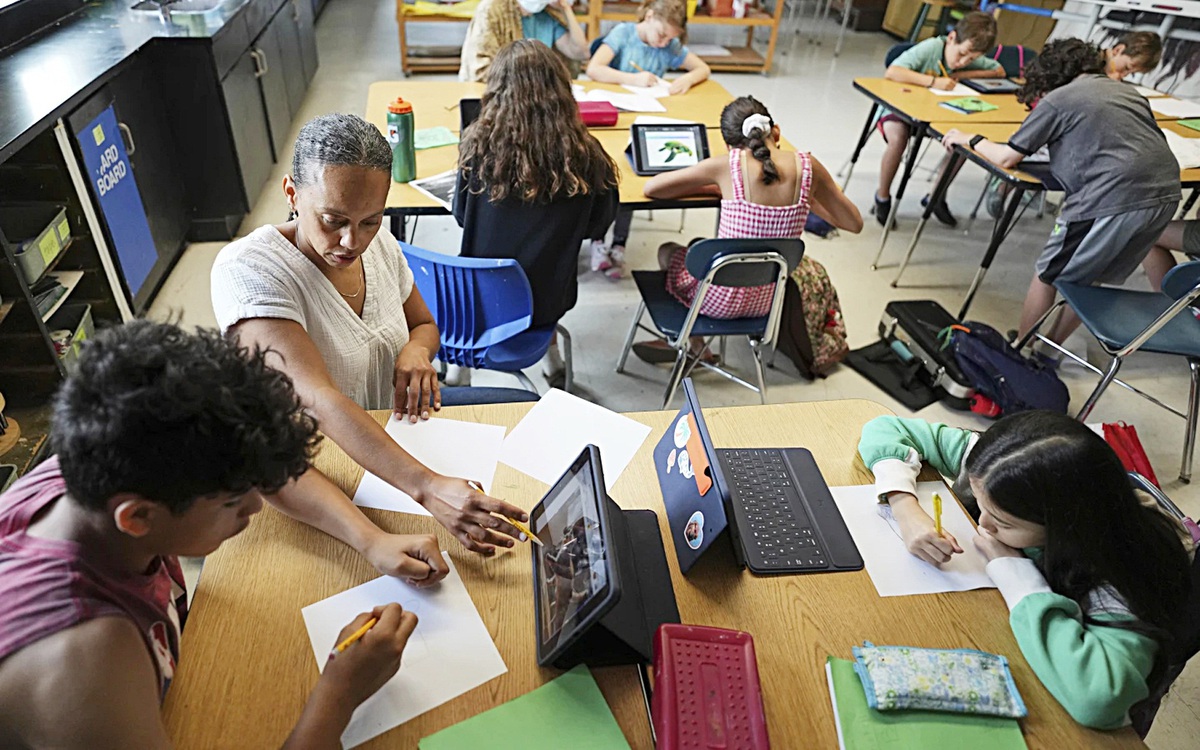
In education, many young people feel AI diminishes the value of self-discovery in learning. A master's graduate from Imperial College London noted that AI has devalued basic programming skills, with younger developers merely supervising AI rather than coding directly. Students also admit to relying on AI for assignments due to time pressure, sacrificing deeper learning experiences.
The job market presents a similar dilemma, described as an "arms race" between candidates using AI for applications and companies using AI for screening. This raises a pervasive question for the youth: if AI can perform most tasks, does it prove they are replaceable?
AI has devalued basic programming skills, with younger developers today seeming to supervise AI work rather than coding directly.
Negative reactions to AI are becoming more pronounced in the US, fueling movements like the "Luddite Club" in Brooklyn. This community meets weekly for activities like reading and drawing, intentionally disconnecting from technology. The club's model has expanded to numerous high schools and universities across the country.
Similar anxieties are global. In India, Gen Z faces mounting financial and employment instability as AI adds challenges to an economy already struggling to create jobs. In China and India's technical schools, "jobpocalypse" is a haunting keyword as companies cut jobs susceptible to automation. A 2025 University of Oxford study in the UK found 80% of students aged 13-18 use AI for homework, yet 62% believe it negatively impacts their thinking, creativity, and skill development.
AI helps optimize speed, but it also means I learn less by skipping the experience of reading materials, following references, and building arguments myself.
DistantNews Editorial
Originally published by Tuổi Trẻ in Vietnamese. Translated, summarized, and contextualized by our editorial team with added local perspective. Read our editorial standards.
More Stories


From Our Blog

What Gets Lost (and Found) When News Is Translated

The Critical Role of Diaspora Media in Global News

What Travellers Should Know About Countries with Restricted Press

A Digital Nomad's Guide to Following Local News

How the Same Story Looks Different in Different Countries
