

Hanoi Police Test AI-Powered Drones for Security Surveillance
Translated from Vietnamese, summarized and contextualized by DistantNews.
At a glance
News
Named sources
Ongoing story
- Hanoi police are piloting a drone surveillance system integrated with artificial intelligence to monitor public order and urban management.
- The drones are being tested in key areas of Hoan Kiem and Tay Ho districts, transmitting real-time data to a command center.
- This initiative aims to enhance efficiency in detecting violations, improve urban data collection, and support law enforcement.
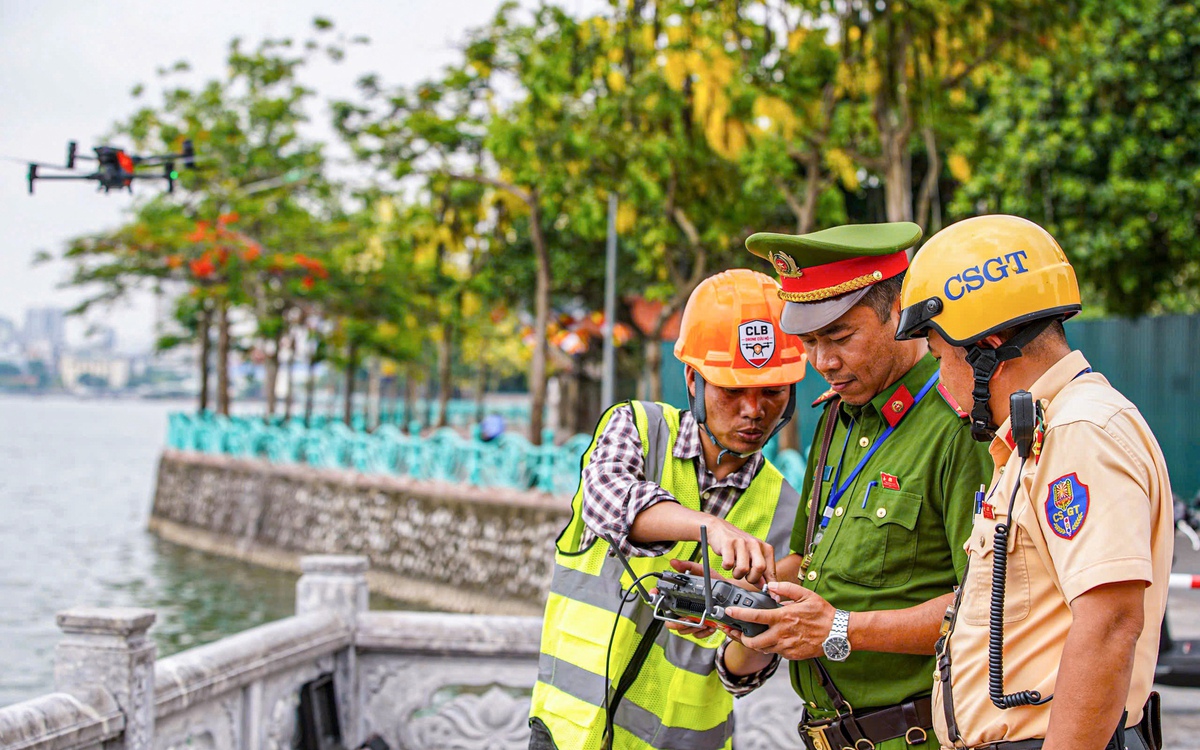
Hanoi police have launched a pilot program utilizing drones equipped with artificial intelligence to enhance public order and urban management. This initiative is part of the city's broader push towards digital transformation in security and order maintenance.
The unmanned aerial vehicles (UAVs) are currently being tested in critical zones within the Hoan Kiem and Tay Ho districts. These drones serve as "eyes in the sky," capturing real-time footage that is transmitted via 4G/5G networks to a central command center. This allows for immediate analysis and rapid response to violations.
UAVs are the 'eyes in the sky' that are flexible, combined with AI, digital GIS maps, and a smart operations center.
The integrated AI system enables the drones to automatically detect infractions such as illegal sidewalk encroachment, improper parking, and waste accumulation. The system can differentiate between various contexts, such as temporary stops versus parking violations, aiding officers in making accurate decisions. The drones also record images, videos, and coordinates, creating a dynamic urban database.
This technology is expected to reduce the burden of manual patrols, assist in investigations, and help identify urban management shortcomings. Notably, the drones used in this trial are domestically produced, allowing for customization of features to meet specific operational needs. Hanoi police anticipate completing their evaluation and reporting findings by September, potentially leading to wider deployment.
The difference of this model lies not in the flying device itself but in the AI's analytical capability.
DistantNews Editorial
Originally published by Tuổi Trẻ in Vietnamese. Translated, summarized, and contextualized by our editorial team with added local perspective. Read our editorial standards.
More Stories


From Our Blog

What Gets Lost (and Found) When News Is Translated

The Critical Role of Diaspora Media in Global News

What Travellers Should Know About Countries with Restricted Press

A Digital Nomad's Guide to Following Local News

How the Same Story Looks Different in Different Countries
