

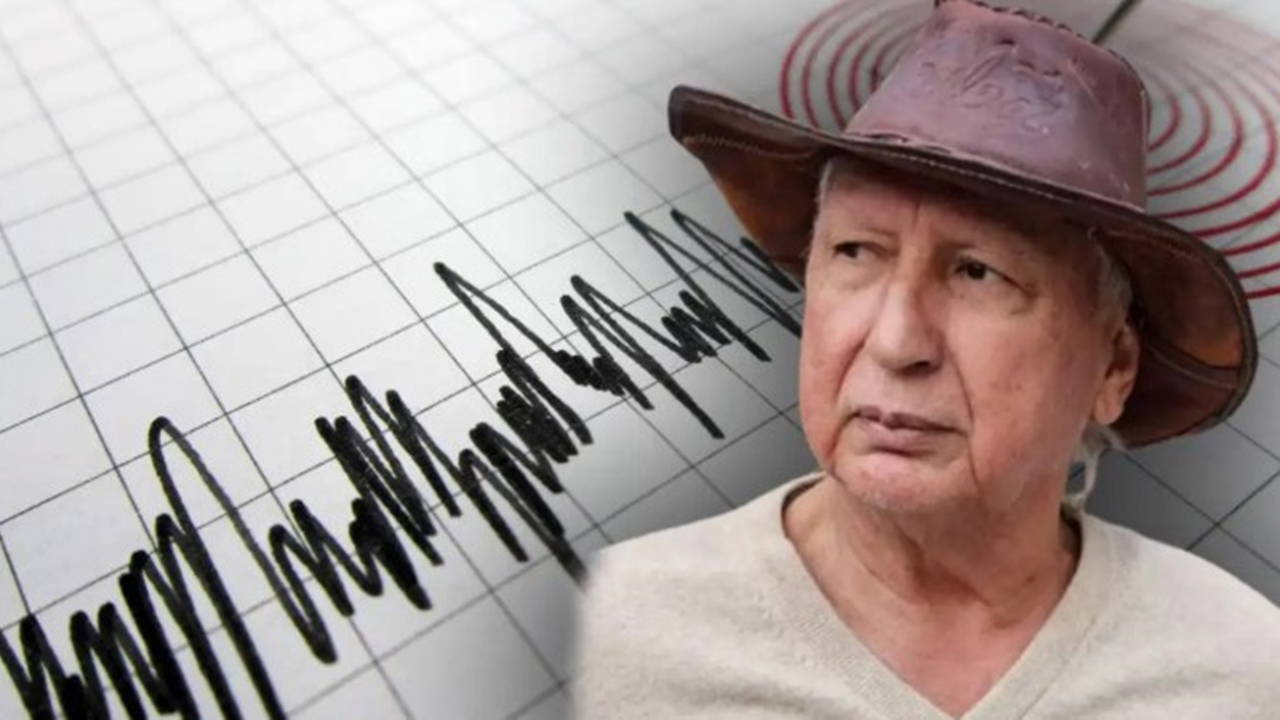
Geologist explains Pınarbaşı earthquake swarm
Translated from Turkish, summarized and contextualized by DistantNews.
At a glance
News
Sources not specified
Context piece
- A series of earthquakes in Pınarbaşı, Kayseri, Turkey, has caused public anxiety about a potential major earthquake.
- Geologist Prof. Dr. Şener Üşümezsoy explained that the tremors result from numerous small, intersecting faults, not a single large one.
- He stated the seismic activity is not directly linked to the February 6th Kahramanmaraş earthquakes and is a natural occurrence due to the region's complex tectonic structure.
A recent flurry of earthquakes in the Pınarbaşı district of Kayseri, Turkey, has sparked significant unease among residents, prompting fears of a major seismic event. The continuous tremors have led locals to question whether Kayseri might experience a large-scale earthquake.
However, Prof. Dr. Şener Üşümezsoy, a geologist, offered a different perspective, suggesting that the seismic activity in the region is being misinterpreted. He explained that the tectonic structure around Pınarbaşı is more intricate than commonly believed. Üşümezsoy clarified that the numerous small tremors are not indicative of a single, large fault rupture. Instead, they originate from a complex network of intersecting smaller faults and block structures.
Üşümezsoy noted that while this clustering of seismic events heightens public anxiety about a major earthquake, it does not, in itself, predict one. Addressing concerns about a connection to the devastating February 6th Kahramanmaraş earthquakes, he asserted that the fault systems around Pınarbaşı have a different mechanism than those responsible for the earlier major quakes. The current activity, he argued, develops across many small blocks and fractured zones, and therefore should not be directly associated with large earthquake scenarios centered in Elbistan.
The geologist also highlighted the tectonic structure between the Taurus Mountains and Çukurova. He described the Taurus block as rotating counter-clockwise, a movement that creates numerous small fractures and fault lines. This geological process, he explained, naturally leads to frequent small and medium-sized earthquakes in areas surrounding Kayseri, Sarız, Tufanbeyli, and Şarkışla, as well as in the northern parts of Çukurova.
DistantNews Editorial
Originally published by Cumhuriyet in Turkish. Translated, summarized, and contextualized by our editorial team with added local perspective. Read our editorial standards.
More Stories
From Our Blog

What Gets Lost (and Found) When News Is Translated

The Critical Role of Diaspora Media in Global News

What Travellers Should Know About Countries with Restricted Press

A Digital Nomad's Guide to Following Local News

How the Same Story Looks Different in Different Countries
