


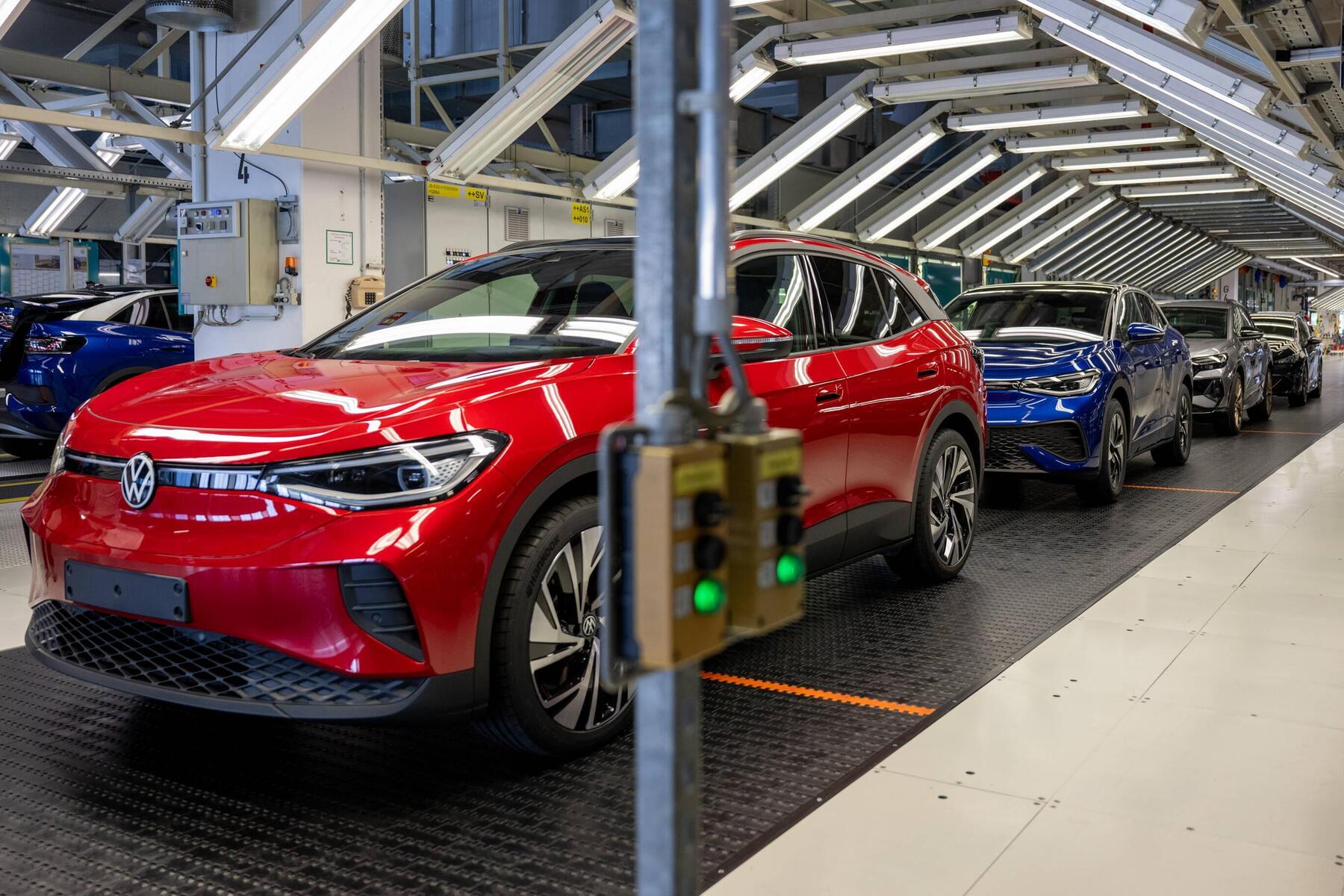
German auto industry faces economic crisis
Translated from German, summarized and contextualized by DistantNews.
At a glance
Analysis
Named sources
Context piece
- Germany's automotive industry faces an existential crisis due to the slow transition to electric mobility and high production costs.
- The sector is challenged by cheap Chinese electric vehicles entering the European market and declining sales in the US and China.
- Major automakers like Volkswagen, Mercedes, and BMW are implementing cost-saving measures, with Volkswagen potentially cutting up to 100,000 jobs and four plants facing closure.
Germany's once-dominant automotive industry is in the midst of an existential crisis, a stark departure from its historical role as a pillar of European economic prosperity. The familiar hum of engines has been replaced by alarm bells as the sector grapples with a perfect storm of challenges.
Key issues include a sluggish transition to electric mobility, high domestic production costs, and intense competition from affordable Chinese electric vehicles flooding the European market. Compounding these problems are declining sales in the United States and the crucial Chinese market, once a significant growth engine.
Volkswagen, the industry giant, is particularly affected. CEO Oliver Blume and CFO Arno Antlitz are reportedly planning radical cost-cutting measures by 2030, which could impact up to 100,000 jobs, many in Germany, and put four plants at risk of closure. An internal survey revealed that six out of nine board members consider the company existentially threatened.
Even Porsche, traditionally a reliable source of profit for the Volkswagen Group, is experiencing significant financial downturns. Its operating profit has plummeted from 5.6 billion euros in 2024 to just 410 million euros in 2025. New CEO Michael Leiters has initiated a savings package that includes eliminating around 4,000 jobs, and even Porsche's development center in Weissach is set to reduce its capacity by a third.
The Volkswagen supervisory board is set to discuss these future plans, likely leading to heated debates between major shareholders, including the Porsche and Piëch families, and employee representatives. The latter, along with representatives from the state of Lower Saxony, hold a majority on the board, potentially blocking overly aggressive cost-saving measures.
DistantNews Editorial
Originally published by Die Presse in German. Translated, summarized, and contextualized by our editorial team with added local perspective. Read our editorial standards.
More Stories

From Our Blog

What Gets Lost (and Found) When News Is Translated

The Critical Role of Diaspora Media in Global News

What Travellers Should Know About Countries with Restricted Press

A Digital Nomad's Guide to Following Local News

How the Same Story Looks Different in Different Countries
