


German Constitutional Researchers Face Questions on 75 Years of Constitutional Complaints
Translated from Korean and summarized by DistantNews. Read the original for the full story.
At a glance
News
Named sources
Context piece
- South Korean and German Constitutional Court researchers met in Seoul to discuss constitutional complaints against court judgments.
- German researchers said disagreements between courts should be viewed as part of a dialogue that clarifies constitutional standards.
- About 30 German and 40 South Korean researchers attended the meeting, held after South Korea began implementing a new court-judgment complaint system in March.
South Korean Constitutional Court researchers pressed their German counterparts on how conflicts with ordinary courts are handled during constitutional complaint proceedings.
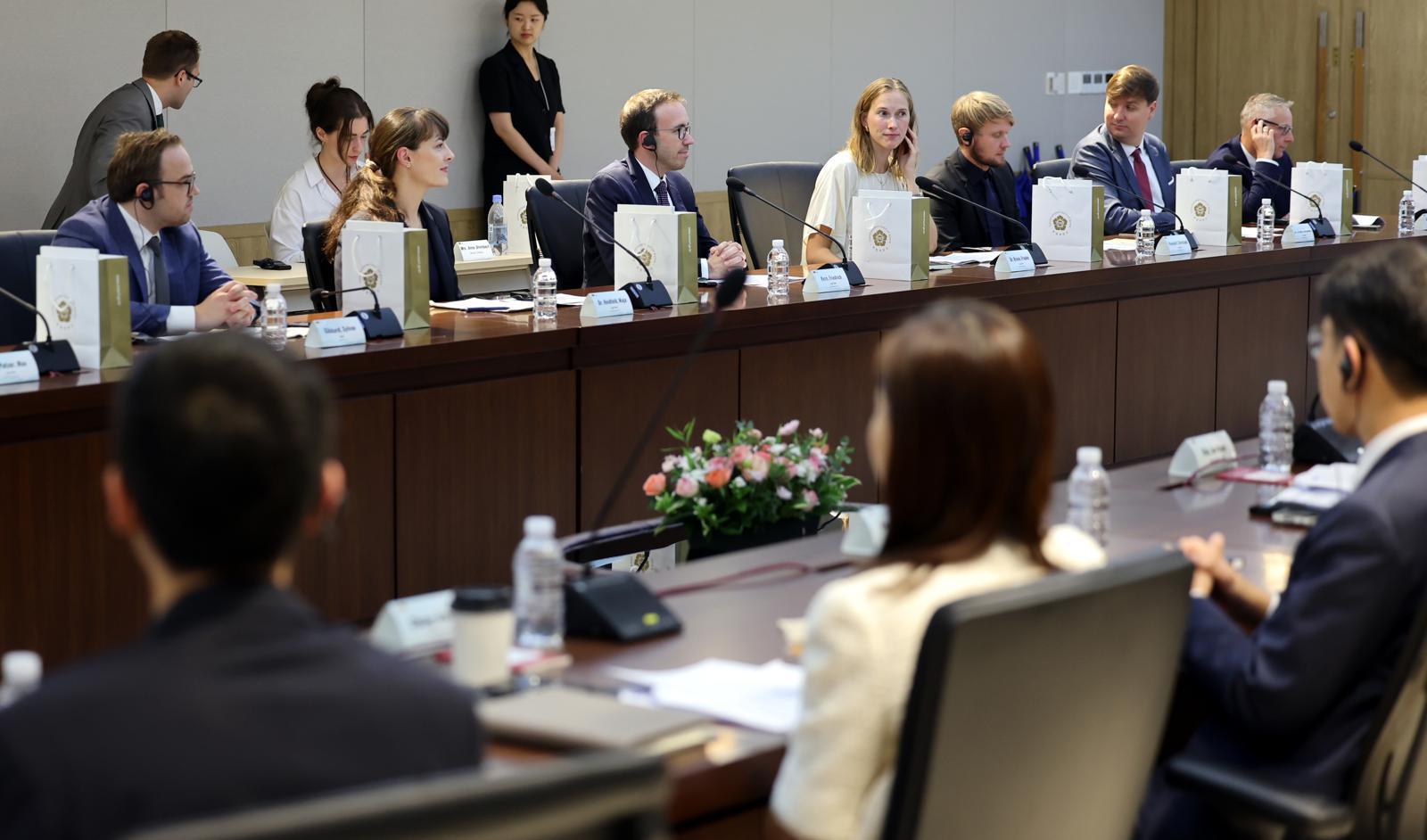
The discussion took place on the morning of the 1st at the Constitutional Court in Jaedong, Jongno District, Seoul. A South Korean researcher asked how Germany manages tensions when a court reaches a conclusion similar to one that the Federal Constitutional Court had previously overturned.
When a court implements constitutional requirements, it may go through trial and error several times.
A German Federal Constitutional Court researcher said courts can go through repeated trial and error as they work to implement constitutional requirements. The process, the researcher said, should be understood less as a conflict between courts than as a dialogue that gradually makes constitutional standards more concrete.
The meeting focused on constitutional complaints against court judgments and was divided into two groups. Around 30 current and former German constitutional researchers and 40 South Korean researchers took part. German researchers select one country each year to meet officials from its constitutional institutions and study major constitutional and legal issues. This year, they chose South Korea, whose researchers have been examining the system introduced in March.
It should be seen not as a conflict between courts, but as a dialogue that makes constitutional standards more concrete.
About this summary
Originally published by Dong-A Ilbo in Korean. Translated, summarized, and contextualized automatically by DistantNews, with a note on how the source frames the story. Not individually reviewed before publishing. How this works.
More Stories


From Our Blog

What Gets Lost (and Found) When News Is Translated

The Critical Role of Diaspora Media in Global News

What Travellers Should Know About Countries with Restricted Press

A Digital Nomad's Guide to Following Local News

How the Same Story Looks Different in Different Countries
