

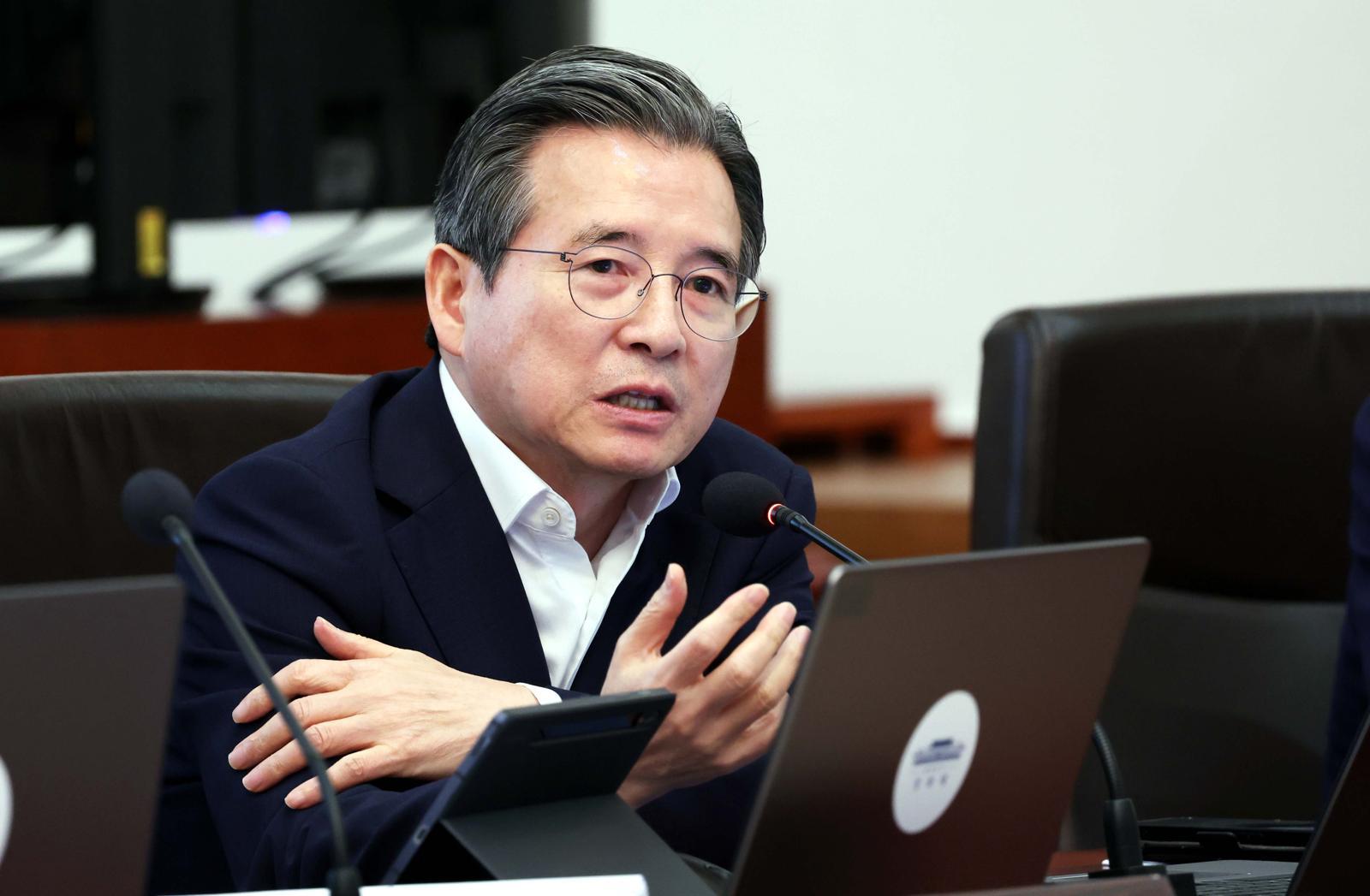

South Korea Replaces 14 of 18 Provincial Police Chiefs Overnight as National Police Appointment Nears
Translated from Korean and summarized by DistantNews. Read the original for the full story.
At a glance
News
Official statement
New plan
- South Korea replaced 14 of 18 provincial and metropolitan police chiefs and reassigned 25 senior police officials in a major personnel reshuffle.
- The appointments apply a policy to avoid officials serving in their hometowns, which the National Police Agency said would address concerns about local ties and strengthen fairness.
- The changes may speed up the appointment of the first national police chief under President Lee Jae-myung’s government, a post vacant for 20 months.
South Korea has replaced 14 of its 18 provincial and metropolitan police chiefs in a sweeping reshuffle that also changed the country’s senior police leadership.
The National Police Agency announced the transfer of 25 senior police officials. Kim Jong-cheol, formerly the South Gyeongsang provincial police chief, became deputy commissioner general, the second-ranking police post. Former South Jeolla police chief Ko Beom-seok was appointed Seoul police chief, while Yoo Seung-ryeol, a senior official at the National Office of Investigation, was promoted to lead the Incheon police.
Yoo Jae-seong, who had led the police as acting chief since the start of Lee Jae-myung’s government, and Park Jeong-bo, who directed major investigations as Seoul police chief, will leave through retirement and resignation procedures. The reshuffle changed 78% of provincial police chief posts and 81% of all senior superintendent positions.
We considered birthplaces and the locations where officials served after promotions to superintendent and senior superintendent, and made appointments that avoided their local connections.
The agency said it fully applied a policy known as hyangpije, which excludes hometown postings. It said officials’ birthplaces and previous promotion-related assignments were considered together to avoid placing them in areas where they had strong local ties. The policy responds to concerns about so-called local police networks and follows controversy over allegations including the mishandling of an investigation led by Jang Yun-gi.
The agency also promoted two investigators to key National Office of Investigation posts. Kim Gwang-sik, formerly chief of Seoul’s Gwanak police station, became investigation planning coordinator, while Oh Seung-jin, a Seoul police investigative division official, became investigations bureau chief. The agency said the appointments would strengthen accountability and field investigative capacity after amendments to the Criminal Procedure Act.
Ko Pyeong-gi, who had been designated for promotion to senior superintendent alongside Kim, Ko and Yoo, was excluded from the promotion list and transferred to the National Police Agency’s public safety and traffic bureau. The move was interpreted as disciplinary action over supervisory responsibility for a recent case involving the false closure of a missing-person investigation in Jeju. The reshuffle is expected to accelerate the selection of a national police chief, a post vacant since Cho Ji-ho’s duties were suspended after impeachment proceedings in December 2024.
We will continue to reorganize the personnel system, including expanding the application of the policy against hometown postings to key positions such as provincial and metropolitan police audit and human rights officers, so that the credibility and fairness of police work can be strengthened.
About this summary
Originally published by Hankyoreh in Korean. Translated, summarized, and contextualized automatically by DistantNews, with a note on how the source frames the story. Not individually reviewed before publishing. How this works.
More Stories


From Our Blog

What Gets Lost (and Found) When News Is Translated

The Critical Role of Diaspora Media in Global News

What Travellers Should Know About Countries with Restricted Press

A Digital Nomad's Guide to Following Local News

How the Same Story Looks Different in Different Countries
