

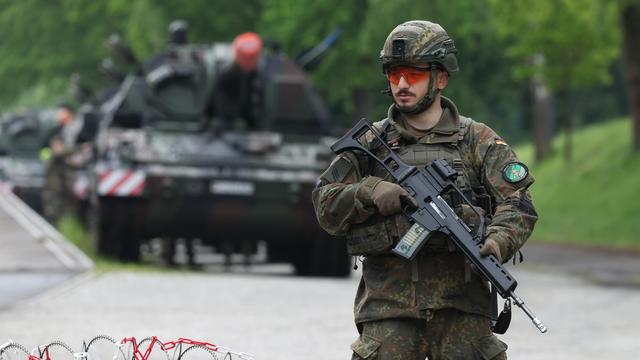

German Defense Minister Sparks Confusion Over Hormuz Mission Readiness
Translated from German, summarized and contextualized by DistantNews.
At a glance
News
Sources not specified
Ongoing story
- German Defense Minister Boris Pistorius has caused confusion within the government regarding Germany's potential involvement in a mission to secure the Strait of Hormuz.
- While the Foreign Ministry and Chancellery affirmed Germany's continued readiness, Pistorius expressed significant doubts about the feasibility of such a mission in the near future.
- The differing statements come ahead of a NATO summit, where the US is expected to press European allies for greater support.
Conflicting statements from Germany's Defense Minister Boris Pistorius have created confusion within the federal government regarding a potential Bundeswehr mission to secure the Strait of Hormuz. While the Foreign Ministry and the Chancellery have emphasized Germany's ongoing readiness to participate, Pistorius voiced considerable skepticism about the mission's immediate prospects.
At the moment, there is no scenario that I see in the coming days or weeks where the cork can quickly come out of the bottle and we could enter the Strait of Hormuz to clear mines.
Foreign Minister Johann Wadephul, speaking from Argentina, reiterated Germany's commitment to a mission, contingent on the United States clarifying prerequisites through talks with Iran. Similarly, the Chancellery stated that the mine-hunting vessel "Fulda" and its tender "Mosel," currently stationed in Djibouti, are not scheduled for withdrawal and remain available should conditions permit. Chancellor Friedrich Merz has outlined requirements for such an operation, including an international mandate, a cabinet decision, and Bundestag approval.
Pistorius, however, expressed doubts during a press conference, stating, "At the moment, there is no scenario that I see in the coming days or weeks where the cork can quickly come out of the bottle and we could enter the Strait of Hormuz to clear mines." He indicated that the two German ships would likely not remain stationed in Djibouti indefinitely awaiting a potential deployment, suggesting a decision would be made over the summer about soldiers spending their summer in Germany rather than in the Persian Gulf.
They remain ready for an operation if the conditions are met.
These diverging views emerge shortly before a crucial NATO summit in Ankara. European diplomats anticipate that U.S. President Donald Trump may use the summit to address what he perceives as a lack of support from European allies for his stance against Iran. The situation highlights internal German debate on foreign policy and military engagement in a volatile region.
Germany's readiness to participate in such an operation continues to exist.
DistantNews Editorial
Originally published by Der Spiegel in German. Translated, summarized, and contextualized by our editorial team with added local perspective. Read our editorial standards.
More Stories
From Our Blog

What Gets Lost (and Found) When News Is Translated

How the Same Story Looks Different in Different Countries

The Critical Role of Diaspora Media in Global News

What Travellers Should Know About Countries with Restricted Press

A Digital Nomad's Guide to Following Local News
