


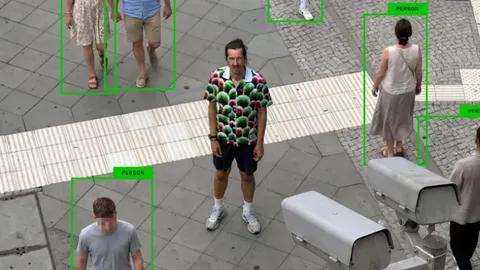
German designer creates anti-surveillance shirt to confuse AI cameras
Translated from Estonian and summarized by DistantNews. Read the original for the full story.
At a glance
In-depth
Sources not specified
Context piece
- German designer Simon Weckert has created an intentionally unappealing shirt designed to confuse AI-powered surveillance cameras.
- The shirt features a chaotic pattern intended to obscure the wearer's visual contours, making them harder for AI to identify.
- This design exploits a weakness in AI systems that rely on statistical data patterns to recognize individuals.
In a novel act of digital defiance, German designer and artist Simon Weckert has developed a shirt intended to render wearers invisible to artificial intelligence-powered surveillance systems. The design, characterized by its deliberately unappealing and chaotic pattern, aims to disrupt the visual data that AI algorithms use to identify individuals.
Weckert's creation challenges the pervasive nature of modern surveillance. By employing a visually jarring fabric with bright colors and disorienting shapes, the shirt breaks down the recognizable human form. This approach targets a specific vulnerability in AI: its reliance on statistical data patterns to recognize people. The shirt's design aims to overwhelm these patterns, effectively making the wearer a statistical anomaly that the AI cannot easily process or flag.
The effectiveness of such a system against sophisticated AI remains a subject of ongoing discussion. However, Weckert's experiment raises critical questions about the vulnerability of the digital eyes that monitor our cities. As societies increasingly entrust their security to AI-driven surveillance, understanding the limitations and potential exploits of these technologies becomes paramount.
This artistic intervention serves as a commentary on the balance between security and privacy in an increasingly digitized world. It prompts a broader conversation about how we navigate and potentially resist the ever-expanding reach of automated monitoring.
About this summary
Originally published by Postimees in Estonian. Translated, summarized, and contextualized automatically by DistantNews, with a note on how the source frames the story. Not individually reviewed before publishing. How this works.
More Stories
/nginx/o/2026/08/27/17878954t1hadf1.jpg)

From Our Blog

What Gets Lost (and Found) When News Is Translated

The Critical Role of Diaspora Media in Global News

What Travellers Should Know About Countries with Restricted Press

A Digital Nomad's Guide to Following Local News

How the Same Story Looks Different in Different Countries
