


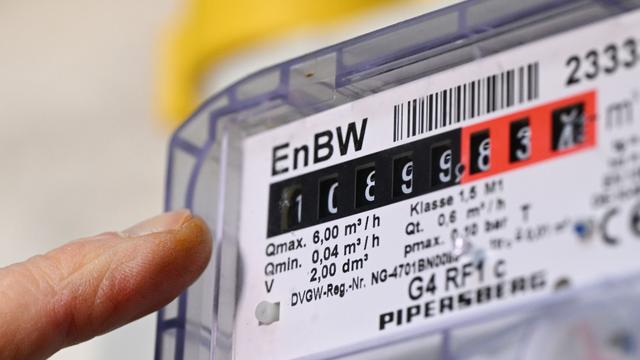
German Gas Costs May Fall in 2026 Despite Market Volatility, Verivox Reports
Translated from German, summarized and contextualized by DistantNews.
At a glance
News
Named sources
Context piece
- German households may see lower gas costs in 2026 despite recent wholesale price increases, according to comparison portal Verivox.
- For a model household in basic supply, annual costs could decrease by 4.1% to 2,687 euros from 2,802 euros in 2025.
- While prices for new customers have risen, energy suppliers' long-term purchasing strategies help stabilize costs for existing customers.
Despite rising wholesale gas prices driven by Middle East tensions, German households might experience a reduction in their gas bills in 2026. A new analysis by the comparison portal Verivox suggests that if current prices hold, millions of customers could see lower costs compared to the previous year.
The recent price increases on the wholesale market as a result of the Middle East conflict have not yet reached many households.
For a typical household consuming 20,000 kilowatt-hours annually under basic supply tariffs, Verivox projects a decrease in average yearly costs from 2,802 euros in 2025 to 2,687 euros in 2026. This represents a 4.1% reduction, potentially benefiting around 3.7 million households.
Customers with regional suppliers under special tariffs could also anticipate savings. Verivox estimates a 3% decrease in average annual costs for the most affordable special tariffs, dropping from 2,292 euros to 2,223 euros. This scenario applies to approximately 7.5 million households, assuming price stability.
Most suppliers procure gas for their existing customers long-term and can thus cushion short-term price fluctuations.
However, the situation differs for new customers, whose average gas prices have increased by 10.5% since the beginning of the year, reaching about 12.3 cents per kilowatt-hour. Energy suppliers typically secure gas through long-term contracts, which helps buffer existing customers from immediate fluctuations in wholesale markets. The German Association of Energy and Water Industries (BDEW) confirms that current tariffs, especially those with fixed prices or set at the year's start, have not yet reflected the recent wholesale price hikes. Verivox advises consumers to regularly check their tariffs, as local suppliers often charge more than supra-regional providers.
The price level of local suppliers is often significantly higher than that of supra-regional providers.
DistantNews Editorial
Originally published by Die Zeit in German. Translated, summarized, and contextualized by our editorial team with added local perspective. Read our editorial standards.
More Stories
From Our Blog

What Gets Lost (and Found) When News Is Translated

How the Same Story Looks Different in Different Countries

The Critical Role of Diaspora Media in Global News

What Travellers Should Know About Countries with Restricted Press

A Digital Nomad's Guide to Following Local News
