


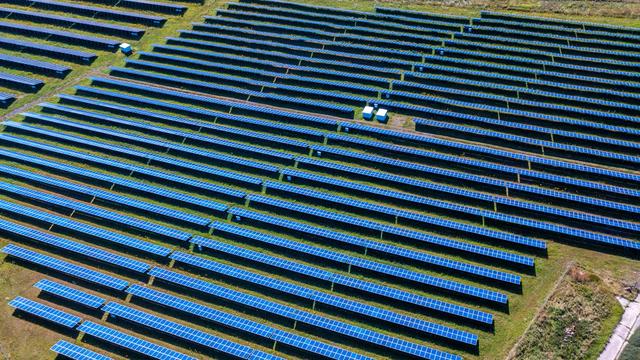
German solar industry alarmed by proposed subsidy cuts and reforms
Translated from German, summarized and contextualized by DistantNews.
At a glance
News
Named sources
New plan
- German solar industry associations are alarmed by proposed reforms to the Renewable Energy Sources Act (EEG).
- The plans include ending subsidies for new small solar installations from 2027, potentially costing billions in investments and tens of thousands of jobs.
- Critics argue the reforms create uncertainty, prolong fossil fuel dependence, and penalize renewable energy producers, especially in areas with grid constraints.
The German solar industry is sounding the alarm over proposed reforms to the Renewable Energy Sources Act (EEG), fearing they will significantly hinder the expansion of solar energy. The Bundesverband Solarwirtschaft (BSW), a key industry association, warned that the planned discontinuation of subsidies for new small solar installations starting in 2027 could lead to a collapse in investments worth billions and jeopardize tens of thousands of jobs in the medium-sized and craft sectors.
The plans are completely out of time. They keep private households dependent on fossil fuels for longer and endanger tens of thousands of jobs in the solar industry.
These proposed changes, put forth by the Federal Ministry for Economic Affairs, include a drastically reduced guaranteed remuneration period of only 36 months for solar installations up to 25 kilowatts that are built from 2027 onwards. After this transition phase, operators would be required to switch to direct marketing of their electricity, a process involving fluctuating and unpredictable market prices. BSW CEO Carsten Körnig criticized the plans as "completely out of time," arguing they would keep private households dependent on fossil fuels for longer and endanger numerous jobs.
Instead of reliable investment conditions, the federal government is creating new uncertainties.
Other industry bodies echoed these concerns. The Bundesverband Erneuerbare Energie (BEE) stated that instead of providing reliable investment conditions, the government is creating new uncertainties. The Deutsche Umwelthilfe pointed out that the burden of insufficient grid expansion is being shifted to renewable energy producers, while grid operators face less stringent requirements. The Bundesverband Neue Energiewirtschaft (BNE) criticized the slow pace set by the slowest grid operator, emphasizing the need for fast, digital, and reliable connection processes in a modern industrial nation.
The crucial mistake is that the federal government is shifting the consequences of insufficient grid expansion onto those who make the energy transition possible in the first place.
Political opposition has also emerged. The Left Party's deputy parliamentary leader, Janine Wissler, called the changes a "catastrophe" for renewable energy providers, arguing that they make renewables less economically viable. The Green Party's economic policy spokesperson also voiced criticism, though the full extent of their objections was not detailed in the provided text.
A modern industrial country needs fast, digital, and reliable connection processes nationwide.
DistantNews Editorial
Originally published by Die Zeit in German. Translated, summarized, and contextualized by our editorial team with added local perspective. Read our editorial standards.
More Stories
From Our Blog

What Gets Lost (and Found) When News Is Translated

How the Same Story Looks Different in Different Countries

The Critical Role of Diaspora Media in Global News

What Travellers Should Know About Countries with Restricted Press

A Digital Nomad's Guide to Following Local News
