

Germany accused of slow response to Russia threat; Poland pushes for regional leadership
Translated from Romanian, summarized and contextualized by DistantNews.
At a glance
Analysis
Named sources
Context piece
- Germany is criticized for its slow defense reforms, perceived as a long-term plan rather than an urgent response to Russia's threat.
- Poland, facing immediate security risks, is accelerating its defense preparations and seeking regional leadership.
- Divergent approaches to security and support for Ukraine have strained relations between Germany and Poland.
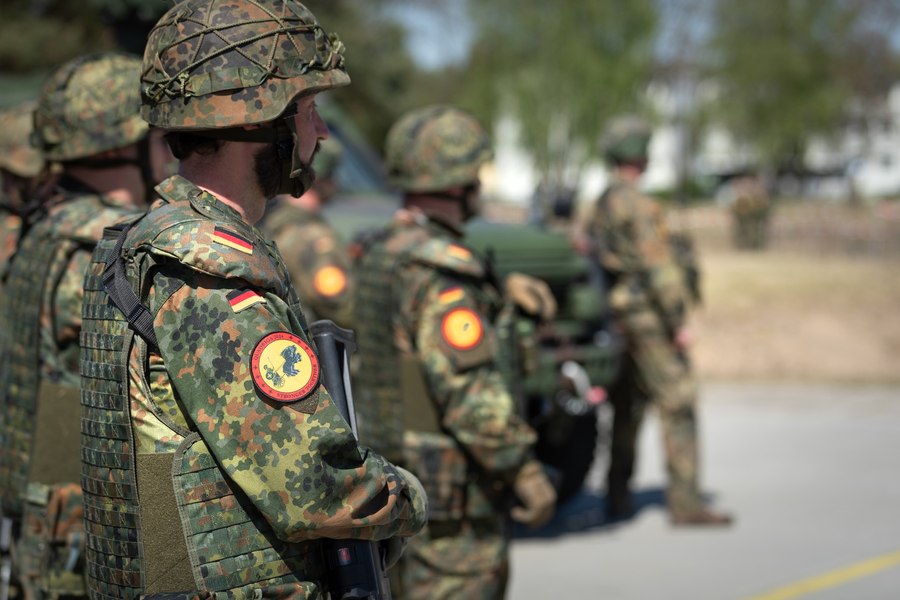
Germany faces accusations of treating the threat of a major military conflict with Russia as a distant planning exercise, rather than a pressing strategic emergency. This slow pace of defense reforms is causing concern among NATO's eastern flank states, particularly Poland, according to British political scientist Roderick Parkes.
Parkes, director at the German Society for Foreign Policy (DGAP), suggests Berlin's approach implies a reliance on the threat not materializing before the end of the decade. This contrasts sharply with Warsaw's perspective, where political and military leaders perceive immediate security risks requiring accelerated measures. German political elites reportedly hesitate to visibly militarize society, fearing political polarization and societal radicalization. Consequently, Germany favors a gradual, long-term investment and reform strategy.
In stark contrast, Poland has adopted a more aggressive strategy, significantly boosting its defense capabilities through extensive rearmament programs and investments in strategic infrastructure. This divergence in approach is increasingly impacting political dynamics, with Poland aiming to solidify its regional leadership role and exert greater influence on the European defense agenda.
The relationship between Berlin and Warsaw has been strained in recent years, exacerbated by Russia's full-scale invasion of Ukraine. Poland advocated for swift and substantial military aid to Kyiv from the outset, while Germany faced criticism for its hesitations and slow delivery of heavy weaponry. The debate over Europe's security future now extends beyond military resources to who will lead the European Union's adaptation to the new strategic reality shaped by the war in Ukraine.
DistantNews Editorial
Originally published by Adevărul in Romanian. Translated, summarized, and contextualized by our editorial team with added local perspective. Read our editorial standards.
More Stories
From Our Blog

What Gets Lost (and Found) When News Is Translated

The Critical Role of Diaspora Media in Global News

What Travellers Should Know About Countries with Restricted Press

A Digital Nomad's Guide to Following Local News

How the Same Story Looks Different in Different Countries
