

Germany’s Economy Ministry considers greater use of coal plants amid high electricity prices
Translated from German and summarized by DistantNews. Read the original for the full story.
At a glance
Newswire
Official statement
Ongoing story
- Germany’s Economy Ministry is reviewing whether coal-fired plants kept in reserve could operate more often during periods of electricity shortages.
- A government spokesman said the option is not currently imminent, while the ministry cited technical, economic and European legal constraints.
- Officials said any deployment would need to show that the old plants could have a positive effect on electricity prices.
Germany is considering bringing old coal-fired power plants into greater use, even as the country seeks to end coal-fired power generation by 2038.
The Economy Ministry said it would examine the option because electricity prices remain high. The plants under discussion currently serve as reserve capacity and operate only when the power system faces shortages.
This question does not currently arise.
Government spokesman Stefan Kornelius played down the prospect of an immediate change. “This question does not currently arise,” he said. A ministry spokesman said any use would have to comply with European rules and would not be straightforward for technical, economic and legal reasons.
This is not entirely simple for technical, economic and European legal reasons.
The plants are relatively old and inefficient. The ministry therefore said it would need to establish whether operating them could actually reduce electricity prices and whether their use would be economically worthwhile.
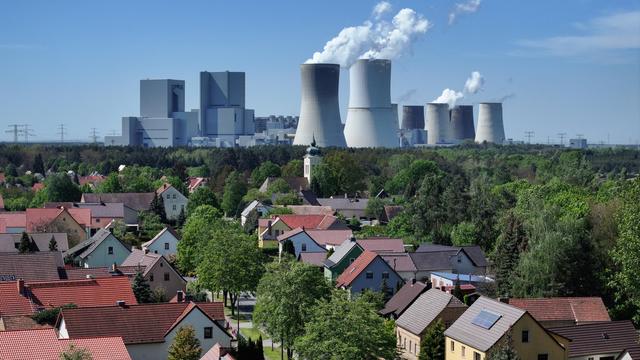
The discussion comes as Germany continues its planned shift away from coal. The Boxberg coal plant in eastern Germany, pictured alongside a solar park built on the site of a former open-pit mine, illustrates the transition described in the report.
One would have to see whether this could have any positive influence on electricity prices at all.
About this summary
Originally published by Die Zeit in German. Translated, summarized, and contextualized automatically by DistantNews, with a note on how the source frames the story. Not individually reviewed before publishing. How this works.
More Stories

From Our Blog

What Gets Lost (and Found) When News Is Translated

How the Same Story Looks Different in Different Countries

The Critical Role of Diaspora Media in Global News

What Travellers Should Know About Countries with Restricted Press

A Digital Nomad's Guide to Following Local News
