


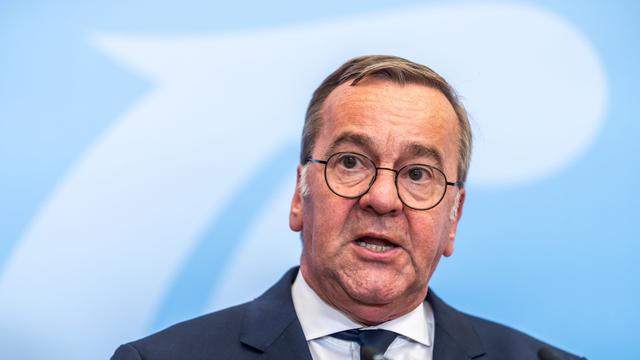
Germany to Expand Military Space Presence with New Satellites
Translated from German, summarized and contextualized by DistantNews.
At a glance
News
From a news agency
New plan
- Germany plans to expand its military presence in space with new satellite constellations.
- Defense Minister Boris Pistorius emphasized the need for early warning, reconnaissance, and communication capabilities in space.
- The ministry is collaborating with space company OHB and has formed a joint venture with Rheinmetall for a future military satellite communication system.
Germany is bolstering its military capabilities in space through the development of new satellite constellations, according to Defense Minister Boris Pistorius. During a visit to the Bremen-based space company OHB, Pistorius highlighted the critical need for "early warning, reconnaissance, detection, and communication in space."
We need the capability for early warning, reconnaissance, detection, communication in space.
The German armed forces, or Bundeswehr, aim to enhance their presence in orbit, with the ministry planning the procurement of these satellite constellations. Pistorius stressed the importance of cost-effectiveness and timely delivery, stating, "We cannot afford delays in these times."
Therefore, we are planning the procurement of satellite constellations.
OHB is set to play a significant role in this expansion. The ministry is leveraging the expertise of the space firm, which recently established a joint venture with defense contractor Rheinmetall. This new entity, OHB Rheinmetall Space Networks GmbH, is positioned to bid for the Bundeswehr's future military satellite communication system, known as "SatComBw 4."
The crucial factor is that the prices for the satellite constellations do not skyrocket and delivery times are met.
This system is designed to connect soldiers, vehicles, platforms, and drones, ensuring secure transmission of voice, data, and real-time information across all command levels. The initiative underscores Germany's commitment to modernizing its defense infrastructure and adapting to evolving geopolitical landscapes.
We cannot afford delays in these times.
DistantNews Editorial
Originally published by Die Zeit in German. Translated, summarized, and contextualized by our editorial team with added local perspective. Read our editorial standards.
More Stories



From Our Blog

What Gets Lost (and Found) When News Is Translated

How the Same Story Looks Different in Different Countries

The Critical Role of Diaspora Media in Global News

What Travellers Should Know About Countries with Restricted Press

A Digital Nomad's Guide to Following Local News
