


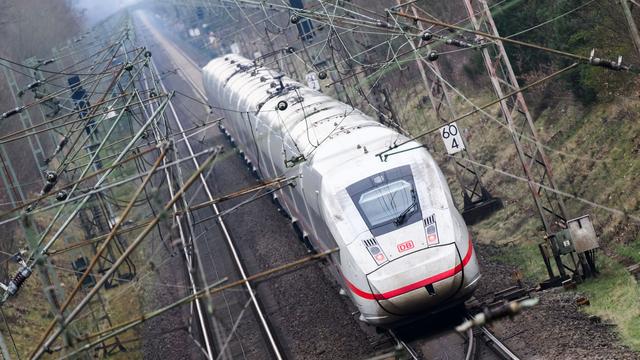
Germany to force Deutsche Bahn to share rail capacity with rivals
Translated from German, summarized and contextualized by DistantNews.
At a glance
News
Sources not specified
New plan
- Germany's Federal Network Agency will require Deutsche Bahn to free up at least a quarter of its capacity on busy long-distance routes for competitors.
- The move aims to increase competition, potentially leading to lower ticket prices and improved quality for passengers.
- Deutsche Bahn warns that reducing capacity on lucrative routes could force cuts to less-trafficked regional services.
Germany's Federal Network Agency (Bundesnetzagentur) is set to break Deutsche Bahn's near-monopoly in long-distance rail travel. The agency announced a decision requiring the state-owned company to allocate at least 25% of its capacity on congested routes to competing operators.
The competitor clause only applies if the company offers scheduled services.
DB InfraGo, the rail network subsidiary, will be limited to using 60% to 75% of capacity on busy lines, with the exact percentage determined by the subsidiary itself. This mandate ensures that competitors can operate on high-demand corridors, such as those planned for Munich and Frankfurt. The "competitor clause" applies only to services offered at least four times daily in a two-hour interval. Additionally, InfraGo must provide space for competitors at stations, allocating it based on objective, non-discriminatory criteria.
The Federal Network Agency anticipates that this increased competition will benefit passengers through lower fares and better service quality. However, Deutsche Bahn argues that ceding capacity on profitable routes could jeopardize its ability to fund less profitable regional services. The company stated that the regulation would exacerbate existing capacity issues at key hubs and that at least two long-distance providers would secure track access on busy lines.
With this rule, at least two providers of long-distance rail passenger transport would receive track access on busy routes.
Experts suggest that increased competition is unlikely to improve punctuality, which is primarily hampered by the aging and overloaded rail infrastructure, frequent construction sites, and congestion in major hubs.
This regulation would thus exacerbate the structural problem of hubs and capacity.
DistantNews Editorial
Originally published by Die Zeit in German. Translated, summarized, and contextualized by our editorial team with added local perspective. Read our editorial standards.
More Stories


From Our Blog

What Gets Lost (and Found) When News Is Translated

How the Same Story Looks Different in Different Countries

The Critical Role of Diaspora Media in Global News

What Travellers Should Know About Countries with Restricted Press

A Digital Nomad's Guide to Following Local News
