


Germany Trials Winter Service Vehicle to Cool Roads in Heatwave
Translated from German, summarized and contextualized by DistantNews.
At a glance
News
Sources not specified
Ongoing story
- A winter service vehicle in Thuringia, Germany, is being used to spray water onto asphalt roads to cool them during a summer heatwave.
- The unusual measure aims to prevent "bleeding" of bitumen, a sticky surface layer that forms when asphalt softens under extreme heat.
- This is a trial to combat heat damage on roads, with the vehicle operating during the hottest hours until temperatures decrease.
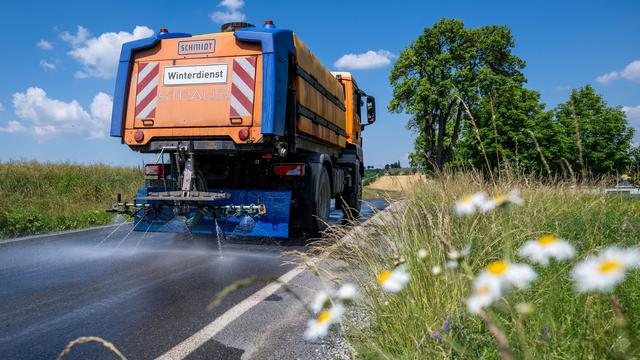
In an unusual sight, a winter service vehicle is being deployed on a rural road in Germany's Thuringia region, not to combat snow, but to cool down asphalt under the summer sun. The vehicle is spraying water onto the Landstraße 2038 in the Unstrut-Hainich district, a measure aimed at mitigating the effects of a severe heatwave.
According to a spokesperson for the Thuringian State Office for Construction and Transport, the primary concern is "bleeding," a phenomenon where high temperatures soften the bitumen binder in the asphalt, causing it to rise to the surface. This creates a shiny, sticky layer, particularly problematic after prolonged heat and heavy traffic, leading to potential road deformations.
Winter service vehicle is spraying water to cool the asphalt.
Traditionally, to combat this, grit is spread to reduce slipperiness, or warning signs are posted, sometimes leading to road closures. However, this trial introduces a proactive cooling method, similar to techniques used on airport runways. The winter service vehicle is operating between 8 a.m. and 6 p.m. during the warmest hours, continuing its work until temperatures drop.
The spokesperson noted that this is a first-time experiment in Thuringia, utilizing vehicles that are currently idle during the summer months and are already equipped for water distribution. It remains unclear if similar methods are being tested in other German states.
This is a first-time attempt in Thuringia.
DistantNews Editorial
Originally published by Die Zeit in German. Translated, summarized, and contextualized by our editorial team with added local perspective. Read our editorial standards.
More Stories
From Our Blog

What Gets Lost (and Found) When News Is Translated

How the Same Story Looks Different in Different Countries

The Critical Role of Diaspora Media in Global News

What Travellers Should Know About Countries with Restricted Press

A Digital Nomad's Guide to Following Local News
