


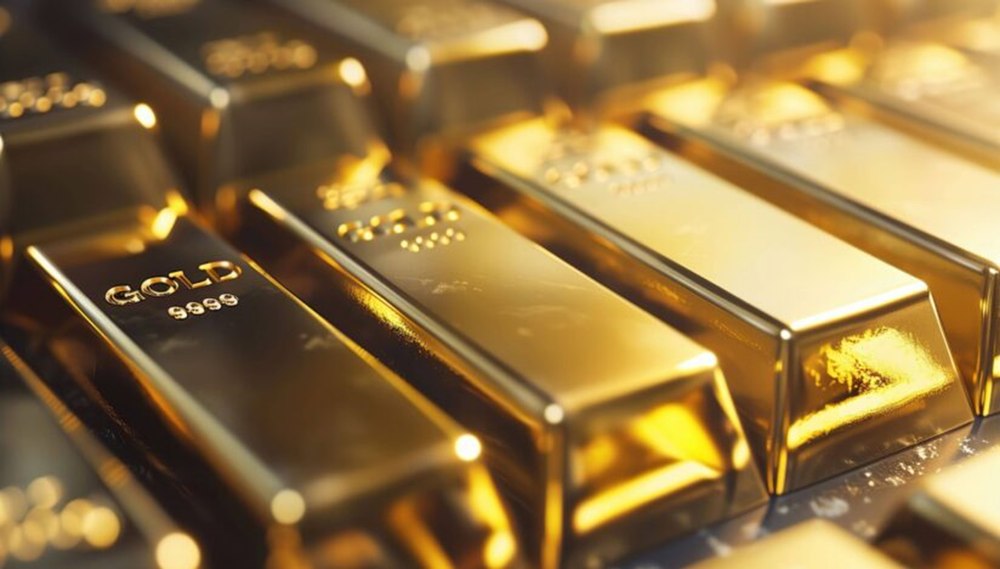
Gold Surges 7.7% in a Week, Nearing Key Financial Threshold
Translated from Romanian, summarized and contextualized by DistantNews.
At a glance
News
Sources not specified
Context piece
- Gold prices surged 7.7% in one week, nearing $4,400 per troy ounce, and are up nearly 32% year-over-year.
- This recent rally follows several difficult months where gold prices fell to around $4,000.
- Analysts are watching the $4,500 per troy ounce level as a key indicator for a potential sustained trend change.
Gold has experienced a significant resurgence, with prices climbing 7.7% in a single week to approach $4,400 per troy ounce. This marks a substantial increase of nearly 32% compared to the same period last year, shifting market perspectives and drawing analysts' attention to key price levels.
The area around the $4,500 level is important because here the market will have to show whether the recent development represents only a short-term recovery or marks the beginning of a more durable trend change.
The recent surge follows a challenging period for the precious metal, during which it faced downward pressure from various factors, causing prices to dip to around $4,000 per troy ounce. This level, however, established important technical support. The market direction has since reversed, with gold prices climbing back above the $4,400 mark. The weekly gain of 7.7% is the strongest week-over-week increase since March 2020.
Analysts are now closely monitoring the $4,500 per troy ounce level. This price point is significant as it coincides with the 200-day moving average, a key indicator for investors tracking market trends. Victor Dima, Treasury Manager at Tavex Romania, explained that this area will reveal whether the recent rise is a short-term rebound or the beginning of a more durable trend shift. He cautioned that individual price levels should not be seen as guarantees of future market performance.
Investors should not consider any price level, taken individually, as a guarantee regarding the future evolution of the market.
Several factors are contributing to gold's recovery. These include hopes for a de-escalation in regional conflicts, potentially easing maritime transport through the Strait of Hormuz, and increased demand from exchange-traded funds, particularly in Asian markets. Dima highlighted that the combination of investment demand through ETFs, heightened activity in Asian markets, and the easing of previous pressures on gold are more relevant than the percentage increase itself.
A 7.7% increase in a single week undoubtedly represents a significant move, but the percentage itself is not the most important signal. What is more relevant is what lies behind this recovery.
DistantNews Editorial
Originally published by Adevărul in Romanian. Translated, summarized, and contextualized by our editorial team with added local perspective. Read our editorial standards.
More Stories


From Our Blog

What Gets Lost (and Found) When News Is Translated

The Critical Role of Diaspora Media in Global News

What Travellers Should Know About Countries with Restricted Press

A Digital Nomad's Guide to Following Local News

How the Same Story Looks Different in Different Countries
