

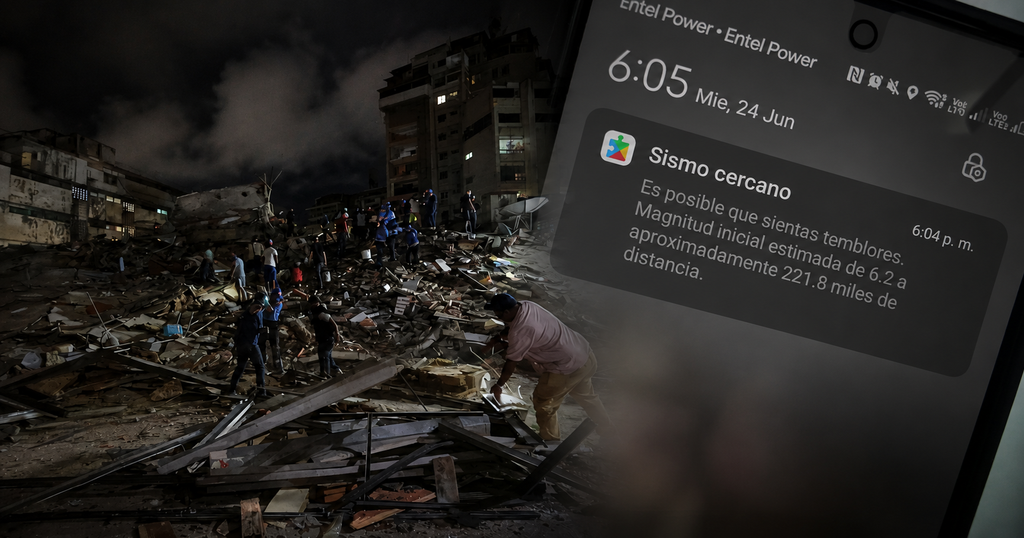
Google alerts saved thousands of lives minutes before Venezuela earthquakes
Translated from Greek, summarized and contextualized by DistantNews.
At a glance
News
Sources not specified
Outcome reported
- Google's Earthquake Alerts system sent timely warnings to 11.4 million residents in Venezuela, potentially saving lives.
- The system utilizes Android smartphones' built-in accelerometers to detect seismic waves and issue alerts before major tremors hit.
- Venezuela lacks its own early warning mechanism, making Google's technology crucial for disaster preparedness.
Google's Earthquake Alerts system provided life-saving warnings to millions in Venezuela just minutes before devastating earthquakes struck. The system, which leverages the accelerometers in Android smartphones, detected the initial seismic waves and sent alerts to 11.4 million residents. This timely intervention proved critical as Venezuela does not possess its own early warning mechanism, unlike countries such as the United States, Mexico, or Japan.
All modern smartphones have sensors that record device movement. This technology is used by many applications. When a large number of phones are near the epicenter, they can detect the first seismic waves.
Experts explain that modern smartphones contain sensors capable of detecting device movement. When a large number of phones are near an earthquake's epicenter, they can identify the first seismic waves. The system specifically utilizes P-waves, which travel faster than the destructive S-waves. By analyzing data from numerous devices, it can detect an impending earthquake.
The system uses Android devices, which have built-in accelerometers (those that allow automatic screen rotation). It takes advantage of the so-called P-waves, which precede the destructive S-waves. When phones remain stationary, they record these vibrations. Aggregating data from multiple devices allows for early detection of an impending earthquake.
In Venezuela, mobile phones registered the initial tremors just three seconds after the first earthquake. This allowed for the rapid dispatch of mass notifications, giving millions of people crucial time to seek safety before the main seismic waves arrived. The technology's effectiveness highlights its potential to mitigate disaster impact in regions lacking advanced warning infrastructure.
In Venezuela, mobile phones detected the first waves just 3 seconds after the first earthquake. Almost instantly, mass notifications began to be sent, managing to save millions of people before the main seismic waves hit.
DistantNews Editorial
Originally published by Ta Nea in Greek. Translated, summarized, and contextualized by our editorial team with added local perspective. Read our editorial standards.
More Stories


From Our Blog

What Gets Lost (and Found) When News Is Translated

The Critical Role of Diaspora Media in Global News

What Travellers Should Know About Countries with Restricted Press

A Digital Nomad's Guide to Following Local News

How the Same Story Looks Different in Different Countries
