


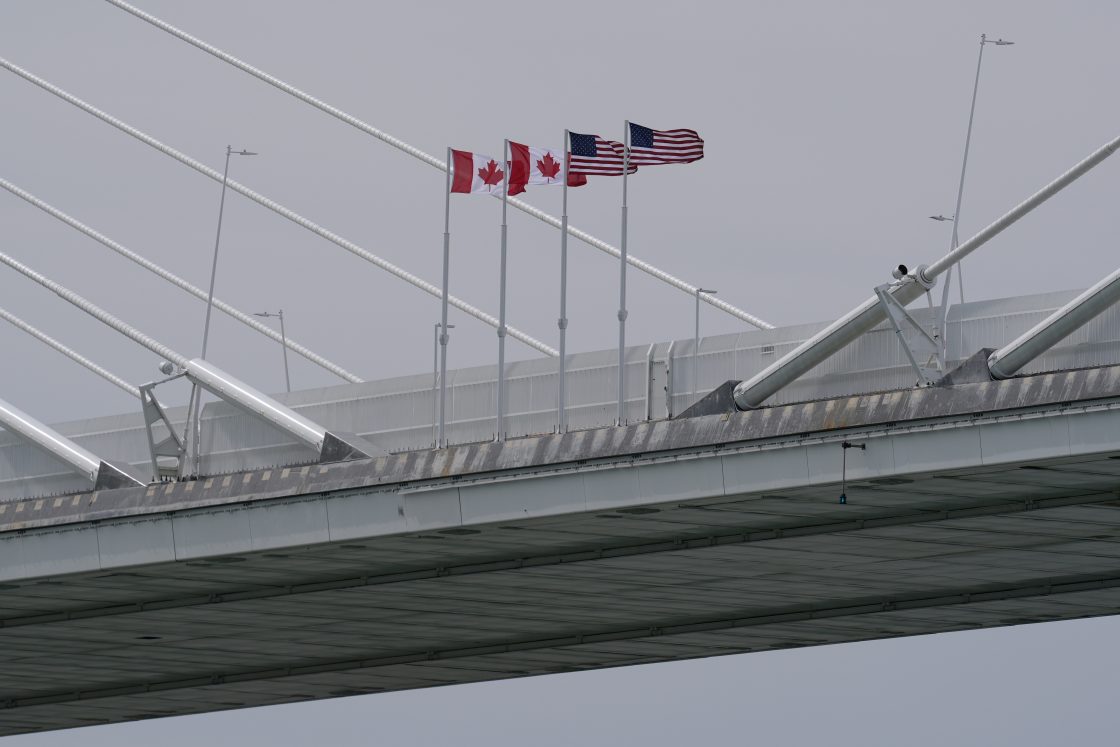
Gordie Howe Bridge profit-share deal sparks questions between Canada and U.S.
Translated from English, summarized and contextualized by DistantNews.
At a glance
News
Named sources
New plan
- Canada and the U.S. have agreed to an earlier profit-sharing deal for the Gordie Howe Bridge, funded entirely by Canadian taxpayers.
- The new agreement will reportedly send about half of the collected money, including toll revenues, to the U.S. for a 15-year economic development fund.
- This comes amid tense trade negotiations and after U.S. President Trump suggested the deal is "MUCH BETTER DEAL for America."
Questions have arisen regarding the profit-sharing agreement for the Gordie Howe Bridge, which was funded entirely by Canadian taxpayers but will now split profits with the U.S. earlier than initially planned. Details of the new deal, announced late Friday, indicate that approximately half of the revenue collected, including toll fees, will be directed to the United States.
To support this opening and ensure that benefits are felt on both sides of the border, Canada and the United States have agreed to a series of cooperative measures focused on toll governance and transparency, as well as investments in the region, including through the establishment of a 15-year economic development fund tied to a portion of profits from bridge operations.
The federal government stated in a release that the agreement includes cooperative measures focused on toll governance, transparency, and regional investments. A 15-year economic development fund, tied to a portion of bridge profits, will be established. The Windsor-Detroit Bridge Authority will also collaborate with the U.S. on toll-rate adjustments, requiring concurrence for certain non-market-related changes.
The Windsor-Detroit Bridge Authority will also work collaboratively with the Government of the United States on toll-rate adjustments, seeking concurrence for certain non-market related toll changes.
Prime Minister Mark Carney suggested on Thursday that modifications to the original deal might be necessary to facilitate the bridge's opening after several delays. This development occurs amidst strained trade negotiations between Canada and the U.S. and follows the expiration of the Canada-U.S.-Mexico Agreement (CUSMA) deadline without an official extension or replacement.
I think we’re willing to clarify aspects of the current arrangements.
Under the original terms, Canada would have retained all toll revenues to recoup the $6.4 billion construction cost. However, a source familiar with the negotiations revealed that the new deal allocates 50 percent of toll profits, after operational expenses, to a U.S.-run regional development project for 15 years. U.S. President Donald Trump publicly endorsed the arrangement, calling it a "MUCH BETTER DEAL for America." The bridge is scheduled to open on July 27, following months of delays.
this new arrangement was “a MUCH BETTER DEAL for America.”
DistantNews Editorial
Originally published by Global News in English. Translated, summarized, and contextualized by our editorial team with added local perspective. Read our editorial standards.
More Stories

From Our Blog

What Gets Lost (and Found) When News Is Translated

The Critical Role of Diaspora Media in Global News

What Travellers Should Know About Countries with Restricted Press

A Digital Nomad's Guide to Following Local News

How the Same Story Looks Different in Different Countries
