


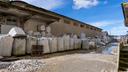
Gospić Ecological Scandal Could Shake Croatian Politics; Systemic Corruption Hinders Change
Translated from Croatian, summarized and contextualized by DistantNews.
At a glance
Analysis
Sources not specified
Context piece
- An ecological scandal in Gospić, Croatia, is expected to significantly impact the Croatian political scene.
- The article suggests that governments in corrupt societies are resilient, often prioritizing personal interests over ideology or politics.
- The ruling HDZ party's extensive network, from national to local levels, makes fundamental political change difficult, leaving little room for opposition parties.
A burgeoning ecological scandal in Gospić, Croatia, is poised to shake the nation's political landscape, though its full impact may not be felt for several months. Predictions about whether this scandal could bring down the government remain uncertain, built on shaky foundations.
Governments, particularly in societies riddled with corruption, do not fall easily. Personal interests often overshadow ideology and politics, making established power structures remarkably resilient. Croatia, while distinct from its neighbor Serbia, shares this characteristic. Serbia's government, for instance, has weathered months of mass demonstrations involving diverse societal segments.
The ruling HDZ party has cultivated a deeply entrenched system. This network extends from the highest national echelons, where ministers frequently face allegations, down through counties, cities, and municipalities. It encompasses numerous officials, their families, party youth seeking lucrative positions, and entrepreneurs reliant on state contracts. Additionally, loyal party voters and coalition partners whose parliamentary seats depend on aligning with the dominant party contribute to its stability.
This pervasive influence leaves opposition parties, spanning the political spectrum, with limited maneuvering room. The challenge lies in building sufficient momentum to genuinely alter the political dynamics. The article also notes a significant portion of the population remains disengaged, either refusing to vote or participate in societal or political efforts for improvement, further complicating prospects for change.
DistantNews Editorial
Originally published by Večernji List in Croatian. Translated, summarized, and contextualized by our editorial team with added local perspective. Read our editorial standards.
More Stories



From Our Blog

What Gets Lost (and Found) When News Is Translated

The Critical Role of Diaspora Media in Global News

What Travellers Should Know About Countries with Restricted Press

A Digital Nomad's Guide to Following Local News

How the Same Story Looks Different in Different Countries
