


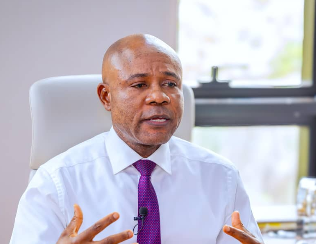
Gov Mbah charges Enugu public officers on accountability
Summarized and contextualized by DistantNews.
At a glance
News
Named sources
Context piece
- Enugu State Governor Peter Mbah urged public officers to embrace transparency, accountability, and traceability.
- He stated that every naira lost to corruption deprives the state of development and quality social services.
- The governor emphasized these principles during a training program on anti-corruption policies and financial regulations for state officials.
Enugu State Governor Peter Mbah has charged public office holders to champion transparency, accountability, and traceability, the core pillars of his administration. He stressed that financial misconduct and corruption divert resources, ultimately hindering the state's development and its capacity to provide essential social services and critical infrastructure.
Governor Mbah articulated these points during a two-day training program organized for the state's political appointees and civil servants. The program, themed “Enhancing Governance through Compliance: Navigating Anti-Corruption Policies, Financial Regulations and Emerging Taxation Frameworks,” aimed to equip participants with knowledge to uphold ethical standards and improve public sector governance. The governor, represented by the Secretary to the State Government, Prof. Chidiebere Onyia, highlighted that corruption remains a significant obstacle to progress.
The administration's governance model is built on the three pillars of transparency, traceability, and accountability, influencing procurement, systems thinking, e-governance, and financial management. Mbah asserted that ignorance of the law would no longer be an excuse for non-compliance and urged public servants to stay updated on evolving taxation and regulatory frameworks. He also tasked attendees with cascading their acquired knowledge to colleagues across various Ministries, Departments, and Agencies (MDAs), assuring continuous monitoring of compliance.
Consultant Justin Kuatsea, a retired Deputy Director of the Independent Corrupt Practices and Other Related Offences Commission (ICPC), echoed the governor's sentiments. He described corruption as deeply entrenched and emphasized that overcoming it requires collective action and exemplary leadership, starting from individuals in their homes and workplaces.
Every naira lost to corruption, financial irregularities and non-compliance means fewer resources for smart schools, primary healthcare centres, roads and other critical infrastructure. Our governance is built on transparency, traceability and accountability, and compliance begins with knowledge.
DistantNews Editorial
Originally published by Vanguard. Summarized and contextualized by our editorial team with added local perspective. Read our editorial standards.
More Stories



From Our Blog

How the Same Story Looks Different in Different Countries

What Gets Lost (and Found) When News Is Translated

The Critical Role of Diaspora Media in Global News

What Travellers Should Know About Countries with Restricted Press

A Digital Nomad's Guide to Following Local News
