

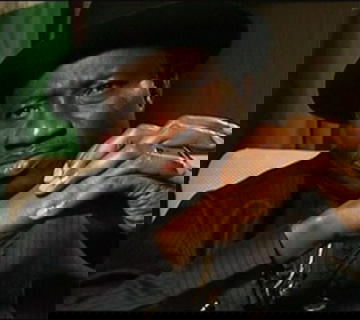

Governance must inspire confidence, says LP Rep candidate
Summarized and contextualized by DistantNews.
At a glance
News
Named sources
Context piece
- A Labour Party candidate stressed that public confidence in governance is earned through transparency, accountability, and the rule of law.
- He argued that institutional legitimacy relies on public trust, which erodes with perceived unfairness or corruption.
- The candidate also stated that Africa's development challenge is building enduring institutions, not a lack of talent.
Chimaobi Anyaso, a Labour Party candidate for the House of Representatives, asserts that public trust is the cornerstone of effective governance. Speaking at the 10th Anniversary Conference of the IFE Institute of Advanced Studies at Harvard University, Anyaso emphasized that confidence in institutions is not solely derived from legal frameworks but from the people's belief in their fairness and consistency.
Public confidence declines when institutions are perceived as unfair, inconsistent, politicised, or corrupt.
Anyaso warned that public trust diminishes when institutions are seen as biased, corrupt, or politicized. He called for governments and public bodies to prioritize transparency, meritocracy, accountability, and adherence to the rule of law. "Leadership without character creates power without purpose," he stated, adding that public office is an act of stewardship and that trust is the most valuable currency for leaders.
The legitimacy of institutions is not determined by law alone but by the confidence people place in them.
Drawing on his private sector experience, Anyaso identified Africa's primary development hurdle as the failure to construct lasting institutions, rather than a deficit of talent. He observed that organizations heavily reliant on their founders often falter after one generation, a principle he believes also applies to nations. "A business survives when systems replace personalities. The same principle applies to nations," he said.
Leadership without character creates power without purpose.
He also urged capable citizens not to withdraw from public life, cautioning that "When good people shy away from politics, bad people take over governance, and society becomes the victim." Anyaso concluded by defining leadership not as a position but as a profound responsibility and the highest form of service.
The most valuable currency in leadership is not money, influence or position, it is trust. Once trust is established, institutions can thrive. Once trust is broken, even the strongest institutions begin to weaken.
DistantNews Editorial
Originally published by The Punch. Summarized and contextualized by our editorial team with added local perspective. Read our editorial standards.
More Stories


From Our Blog

How the Same Story Looks Different in Different Countries

What Gets Lost (and Found) When News Is Translated

The Critical Role of Diaspora Media in Global News

What Travellers Should Know About Countries with Restricted Press

A Digital Nomad's Guide to Following Local News
