


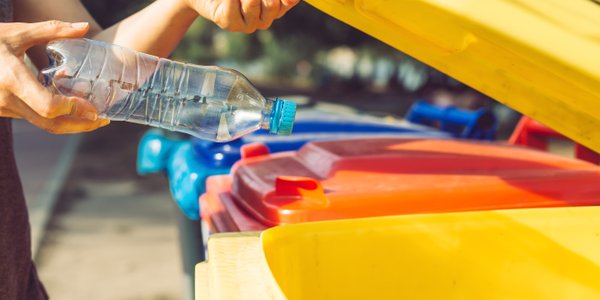
Government again changes waste regulations. Billions and prices in stores at stake
Translated from Polish, summarized and contextualized by DistantNews.
At a glance
News
Named sources
Ongoing story
- Poland's government is again changing waste management regulations, with significant financial implications.
- The proposed changes, part of project UC100, could increase retail food prices by 5-20%.
- The Ministry of Climate and Environment is pushing the legislation despite criticism from the Ministry of Agriculture and the business sector.
Warsaw – The Polish government is once again revising waste management regulations, a move that carries significant financial stakes and could impact consumer prices. The Ministry of Climate and Environment has developed a new version of project UC100, which is currently being reviewed by the Economic Committee of the Council of Ministers and other ministries.
According to business organizations, the project is expected to be sent to the Committee for European Affairs by the end of the week. Despite earlier reports suggesting the project was nearing this stage, it has yet to reach the final step before the Standing Committee of the Council of Ministers. The government's legislative center last updated the project on March 20, introducing a controversial provision that permits the incineration of waste designated for recycling.
Maciej Białek, director of the Waste Management Department at the Ministry of Climate and Environment, stated that the changes are not part of a new law but an update to the existing UC100 project. He indicated that the modifications stem from inter-ministerial agreements, possibly influenced by consultations with the Ministry of Agriculture and Rural Development, which has been a vocal critic.
This is not a new law. The existing UC100 project will be updated and published on the RCL website when it goes to the Committee for European Affairs. The changes being introduced result from inter-ministerial agreements.
The Ministry of Agriculture and Rural Development highlighted that the food industry introduces 60% of packaging in Poland. Analyses commissioned by the ministry suggest that the proposed amendments could lead to a 5-20% increase in retail food prices. The ministry's press office reiterated its opposition to the bill in its current form, stating that the proposed Extended Producer Responsibility (ROP) model inadequately considers the specifics of the agri-food sector regarding eco-modulation of fees.
Experts following the legislative process suggest that if the project does not advance to the Committee for European Affairs by now, it is unlikely to be sent to the Sejm before September. This is particularly true as projects that could decrease public support for the government are typically downplayed before elections. The ROP legislation has generated considerable controversy, with businesses frequently complaining that their concerns have been ignored. A key point of contention is the perceived transfer of surplus funds from producers to the waste management industry.
The bill on packaging and packaging waste (UC100) contains proposals that are unacceptable to the agri-food processing sector. The proposed ROP model does not sufficiently take into account the specifics of the agri-food sector regarding eco-modulation of fees.
DistantNews Editorial
Originally published by Rzeczpospolita in Polish. Translated, summarized, and contextualized by our editorial team with added local perspective. Read our editorial standards.
More Stories

From Our Blog

What Gets Lost (and Found) When News Is Translated

The Critical Role of Diaspora Media in Global News

What Travellers Should Know About Countries with Restricted Press

A Digital Nomad's Guide to Following Local News

How the Same Story Looks Different in Different Countries
